
Custom Battery Packs for Harsh Environment Industrial IoT
Core Engineering Principles of Harsh-Environment IoT Power Systems
A harsh-environment industrial IoT custom battery pack is a purpose-built electrochemical power source engineered to maintain stable voltage delivery, physical integrity, and low self-discharge rates across wide temperature swings (-40°C to +85°C), heavy mechanical vibration, and hazardous or corrosive atmospheres.
- Chemistry Selection: High-density, wide-temperature formulations like Lithium Thionyl Chloride (Li-SOCl2) or Lithium Iron Phosphate (LiFePO4).
- BMS Thermal Protection: Advanced firmware monitoring cell balancing, current limiting, and active thermal cutoff thresholds.
- IP67/IP68 Rugged Enclosure: Specialized potting resins, aluminum-welded casings, and hermetic feedthroughs preventing moisture and gas ingress.
- Hazardous Location Certifications: Compliance with intrinsic safety standards including ATEX Directive, IECEx, and UL 1642.
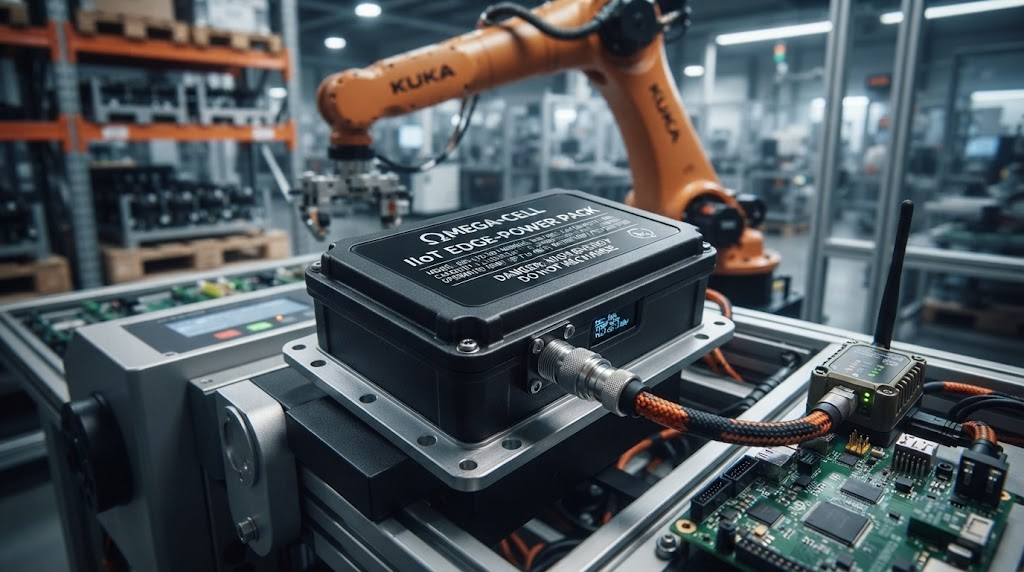
Off-the-shelf consumer lithium cells degrade rapidly when exposed to non-climate-controlled field conditions. Selecting industrial-grade custom lithium battery packs ensures that the internal cell chemistry, casing materials, and safety electronics are tightly matched to the operational demands of the deployment site.
Industrial Internet of Things (IIoT) sensors deployed across smart utilities, oil pipelines, and railway tracks require power packs that outlive the structural life of the sensor node itself without human intervention.
Addressing IIoT Operating Constraints: Duty Cycles, Passivation, and Thermal Stress
Industrial IoT sensors operate with distinct load profiles: long periods of microamp-level (µA) sleep mode interrupted by intermittent multi-amp pulse draws lasting milliseconds during LPWAN (NB-IoT, LTE-M, LoRaWAN, or satellite) transmission bursts.
Over 75% of industrial IoT sensor premature field failures in remote deployments are traced directly to power supply degradation and thermal stress.
When primary cells like Li-SOCl2 sit idle in elevated ambient temperatures, a lithium chloride (LiCl) passivation layer forms across the lithium anode. While this passivation film prevents self-discharge and extends shelf life up to 10+ years, it induces a transient “voltage delay” when a transmission burst spikes current demand. If the terminal voltage drops below the microcontroller’s brownout threshold, the sensor resets.
Integrating hybrid pulse capacitors (HPC) with primary Li-SOCl2 cells reduces voltage delay by up to 92% during high-power LPWAN transmission bursts.
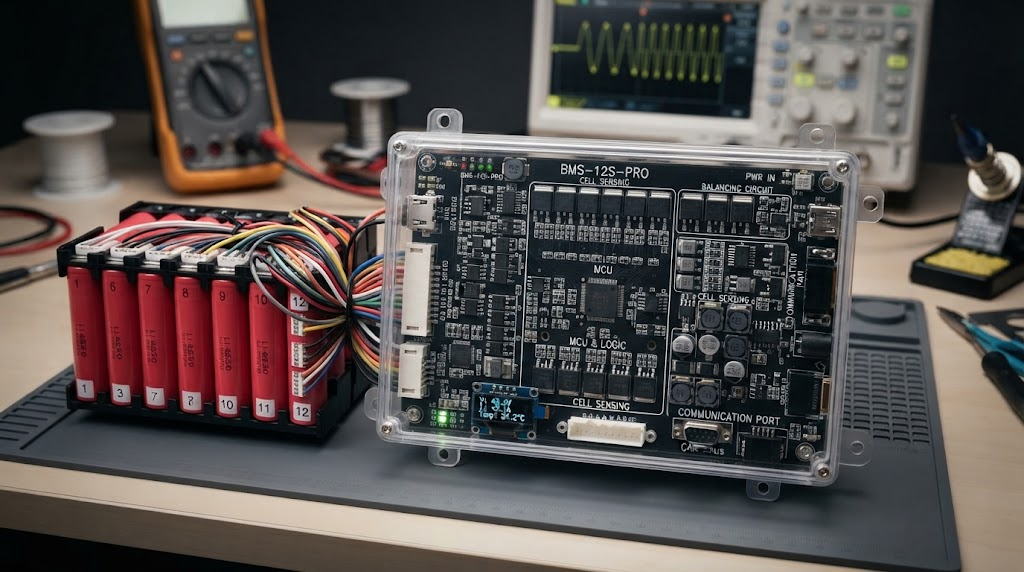
The HPC acts as a high-rate charge reservoir, supplying peak pulse current while the primary cell continuously replenishes the capacitor at a low, stable rate. This setup preserves cell chemistry and eliminates brownout resets in cold operating environments down to -40°C.
Thermal Stress Dynamics
At low temperatures, electrolyte viscosity increases, driving up internal resistance and diminishing instantaneous power delivery. At elevated temperatures (+70°C to +85°C), standard separator membranes soften, parasitic chemical side reactions accelerate, and seal elastomers break down. Custom engineering utilizes non-flammable inorganic electrolytes, fluoropolymer gaskets, and ceramic separators to maintain physical integrity across dynamic thermal cycling.
Chemistry Comparison: Primary Li-SOCl2 vs. Rechargeable LiFePO4
Choosing the correct cell chemistry depends directly on whether energy harvesting (such as small solar arrays or thermal generators) is available and the expected operational lifespan of the hardware platform.
| Parameter | Primary Li-SOCl2 + HPC | Rechargeable LiFePO4 | Standard Li-ion (NMC/LCO) |
|---|---|---|---|
| Nominal Cell Voltage | 3.6 V | 3.2 V | 3.7 V |
| Energy Density (Gravimetric) | 400 – 650 Wh/kg | 100 – 160 Wh/kg | 180 – 260 Wh/kg |
| Operating Temp Range | -55°C to +85°C (extended to +125°C) | -20°C to +60°C (charge limit) | -10°C to +50°C |
| Annual Self-Discharge Rate | < 1% per year at 25°C | 1.5% – 3% per month | 3% – 5% per month |
| Cycle Life / Service Life | 10 to 20 Years (Single Use) | 2,000 to 5,000+ Cycles | 300 to 800 Cycles |
| Best Application Scenario | Standalone remote sensors, oil/gas flowmeters | Solar-assisted tracking, mining equipment | Consumer devices, short-lifecycle electronics |
For systems pairing continuous real-time data transmission with field energy harvesting, deploying robust industrial LiFePO4 battery solutions provides the required thermal stability and long cycle life without the thermal runaway risks seen in consumer nickel-manganese chemistries.
Mechanical Ruggedization: Potting, Hermetic Sealing, and Damping
Electrochemical cells cannot withstand physical abuse without protective structural packaging. Harsh IIoT environments expose battery packs to high humidity, corrosive gas exposure, pressure differentials, and continuous vibrational shock.
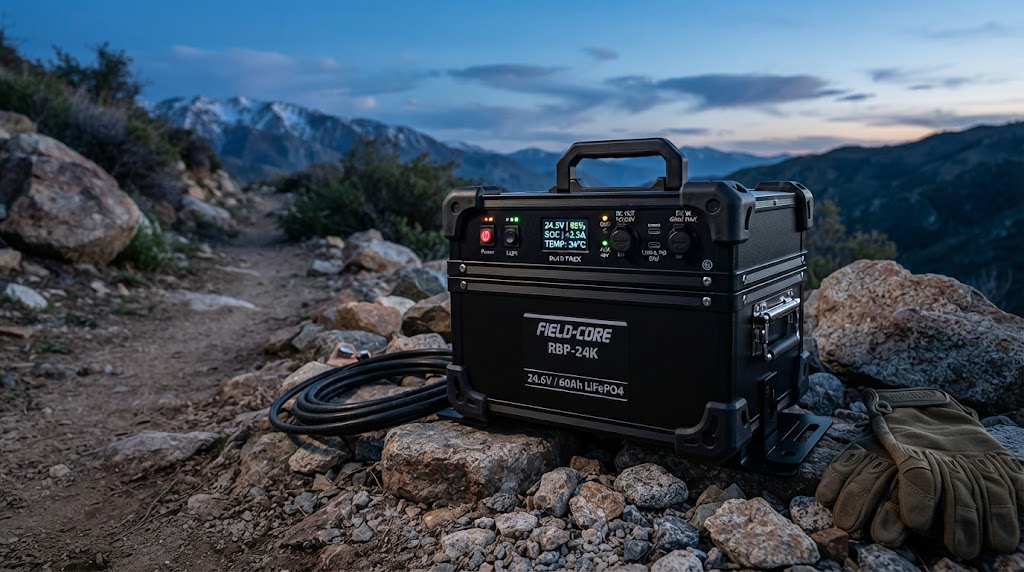
Encapsulation and Potting Strategies
Potting involves completely filling the battery enclosure with a liquid polymer compound that cures into a solid barrier. Two main chemical formulations are used based on thermal and structural needs:
- Polyurethane Potting: Excellent moisture resistance and mechanical impact absorption. Ideal for maritime and pipeline monitoring equipment exposed to constant water immersion.
- Silicone Potting: Superior elasticity and broad thermal stability (-50°C to +150°C). Silicone cushions sensitive surface-mount electronics and relieves mechanical stress during severe thermal cycling.
Ingress Protection and Vibration Dampening
To achieve certified IP67 or IP68 ingress protection ratings, custom enclosures feature ultrasonic plastic welding, laser-welded stainless steel cans, and specialized Viton O-rings resistant to hydrocarbons.
For assets subjected to continuous mechanical agitation—such as heavy mining machinery, vibratory screeners, or rail bogies—packs undergo qualification against ISO/IEC standards and MIL-STD-810H Method 514.8 vibration profiles. Internal cell retainers, custom nickel-plated copper busbars, and anti-vibration structural foams ensure weld joints and electrical interconnects remain intact over years of vibration.
Explosive Atmospheres and Compliance: ATEX, IECEx, and UL Standards
Industrial IoT sensors deployed in chemical refineries, underground coal mines, grain silos, and offshore platforms operate in potentially explosive gas and dust environments. These installations require adherence to intrinsically safe (IS) design principles outlined by the IECEx System and the European ATEX Directive (2014/34/EU).
Intrinsic Safety Engineering Principles
Intrinsically safe battery systems prevent sparks and thermal ignition of ambient gases under both normal and internal fault conditions (such as a direct short-circuit or BMS component breakdown):
- Current-Limiting Resistors: Series thick-film or encapsulated wirewound resistors prevent excessive discharge current if an external output shorts.
- Triple Redundant Zener Barriers: Clamping output voltages to levels below the spark ignition energy of Class I, Div 1 (Zone 0/1) atmospheres.
- Non-Resettable Thermal Fuses: Surface-mounted thermal cutoffs that permanently break the circuit if cell surface temperatures exceed the ATEX gas group limit (e.g., T4: ≤135°C).
Achieving compliance requires comprehensive custom BMS design and safety integration. JHY Battery designs electronic hardware architecture specifically to meet intrinsic safety isolation distances (creepage and clearance per IEC 60079-11).
Transport and Cell Certifications
Every commercial custom pack must meet stringent international testing before transport and deployment:
- UN 38.3: 8-part transport safety testing including altitude simulation, thermal shock, vibration, impact, external short-circuit, and overcharge.
- UL 1642 / UL 2054: Rigorous electrical, mechanical, and fire-exposure evaluations validating lithium cell and pack safety.
- ISO 9001: Traceable quality control across incoming raw material inspection, automated spot welding, and batch impedance testing.
The JHY 4-D RuggedPack Framework: Custom Engineering Protocol
To eliminate premature field failures and optimize electrochemical longevity, JHY Battery employs a structured four-stage design methodology for extreme-environment battery systems:
Stage 1: Duty-Cycle Profiling
We measure exact micro-ampere sleep currents, peak pulse durations, RF transmit power, and standby intervals to calculate true daily capacity depletion across the full operating temperature range.
Stage 2: Dielectric & Thermal Modeling
Finite Element Analysis (FEA) models thermal dissipation under peak pulse loads and environmental heat flux. Dielectric potting materials and casing wall thicknesses are simulated to balance heat transfer with mechanical shock absorption.
Stage 3: Dynamic Safety Architecture
Our engineering team develops a dedicated BMS layout featuring triple redundancy, intrinsic safety barriers, low-quiescent-current sleep circuits (<2 µA), and custom conformal coatings for chemical and moisture resistance.
Stage 4: Durability Stress Testing
Prototypes undergo environmental chamber cycling (-40°C to +85°C), vacuum pull tests, IP68 water immersion submersion, and multi-axis drop vibration testing before volume production.
Total Cost of Ownership (TCO): Custom Reliability vs. Field Truck-Roll Costs
Procurement teams often compare the unit cost of off-the-shelf commercial batteries against custom-engineered packs. However, evaluating power systems strictly by initial purchase price creates substantial financial risk for remote industrial deployments.
A single offshore or hazardous-zone field service truck roll costs an average of $1,500 to $4,000, making battery longevity the single largest driver of IoT TCO.
| Cost Category | Commercial Generic Battery | Custom JHY RuggedPack |
|---|---|---|
| Initial Battery Hardware Cost | $15,000 ($15 / unit) | $45,000 ($45 / unit) |
| Expected Operating Lifespan | 2 to 3 Years (Passivation / Heat failure) | 10+ Years (Engineered duty match) |
| Replacement Cycles (10 Years) | 3 Replacements | 0 Replacements |
| Labor & Truck-Roll Costs ($2,000 / site) | $600,000 (Based on batched site maintenance) | $0 |
| Hardware Replacement Hardware Cost | $45,000 | $0 |
| Total 10-Year Lifecycle Cost | $660,000 | $45,000 |
Investing upfront in an application-tailored, ruggedized pack design eliminates unplanned field dispatches, reduces data loss risk, and delivers a fast payback across remote IIoT networks.
Frequently Asked Questions About Harsh-Environment IoT Battery Packs
How do you accurately estimate battery life for an IIoT device?
Battery operating life is calculated by combining the energy consumed during active communication pulses, microamp sleep-current draw, and annual chemical self-discharge:
Life (Years) = [Nominal Usable Capacity (mAh) × (1 – Self-Discharge Rate)^Years] / [Annual Average Current Consumption (mAh)]
We always apply an engineering derating factor (typically 15% to 20%) to account for temperature extremes and voltage-delay losses.
Does full potting add significant weight to the sensor pack?
While potting resin adds mass, polyurethane and low-density syntactic epoxy formulations are selected specifically to protect fragile electrical components without exceeding the structural or mounting limits of field enclosures.
What is the typical Minimum Order Quantity (MOQ) for custom OEM battery packs?
At JHY Battery, prototype builds and initial validation batches start with low MOQ requirements to support hardware testing, followed by scalable mass manufacturing with full ISO9001 quality tracking.
About the Author and Technical Review Board
Lead Author: Senior Electrochemical Systems Engineer at JHY Battery (Juheyuan Science & Technology Co., Ltd.), specializing in primary Li-SOCl2 pulse discharge optimization and intrinsically safe lithium pack architecture.
Compliance Review: Verified in accordance with ISO9001:2015 Quality Management Protocols, UL1642 Lithium Battery Standards, UN 38.3 Transport Testing Manuals, and IEC 60079-11 Intrinsic Safety Regulations.
Power Your Industrial IoT Fleet with JHY Custom Packs
Submit your pulse profiles, operating temperature requirements, and enclosure dimensions for a comprehensive engineering assessment.
