Reliable Batteries for Underwater Exploration Drones
Key Performance Benchmarks for Subsea Drone Batteries
Subsea battery reliability demands engineering around extreme hydrostatic pressure, low abyssal temperatures, corrosive saltwater ingress, and non-vented thermal dynamics. Systems must maintain structural integrity, stable voltage delivery, and active safety telemetry under continuous cyclic compression across hundreds of bar without risking catastrophic failure.
- Cell chemistry selection: Match specific energy density and electrolyte freezing thresholds to mission duration and ambient subsea temperature profiles.
- Encapsulation method: Select between rigid 1-atmosphere dry enclosures and flexible, pressure-tolerant dielectric fluid configurations.
- BMS integration: Deploy fault-tolerant power monitoring with digital telemetry isolation and emergency ascent bus reservation.
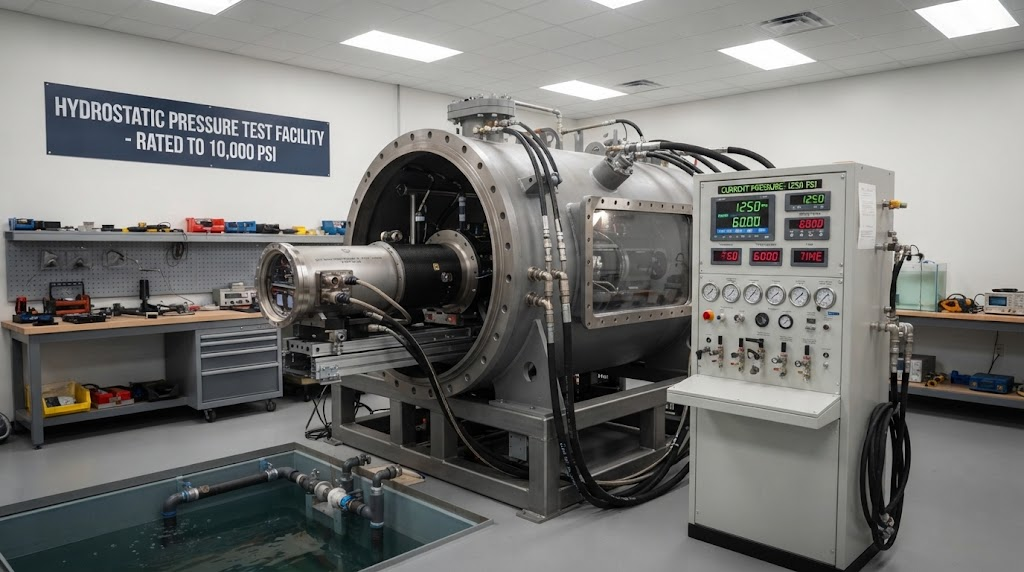
- Hydrostatic pressure testing: Screen complete packs in hyperbaric chambers to 1.25x maximum rated operational depth.
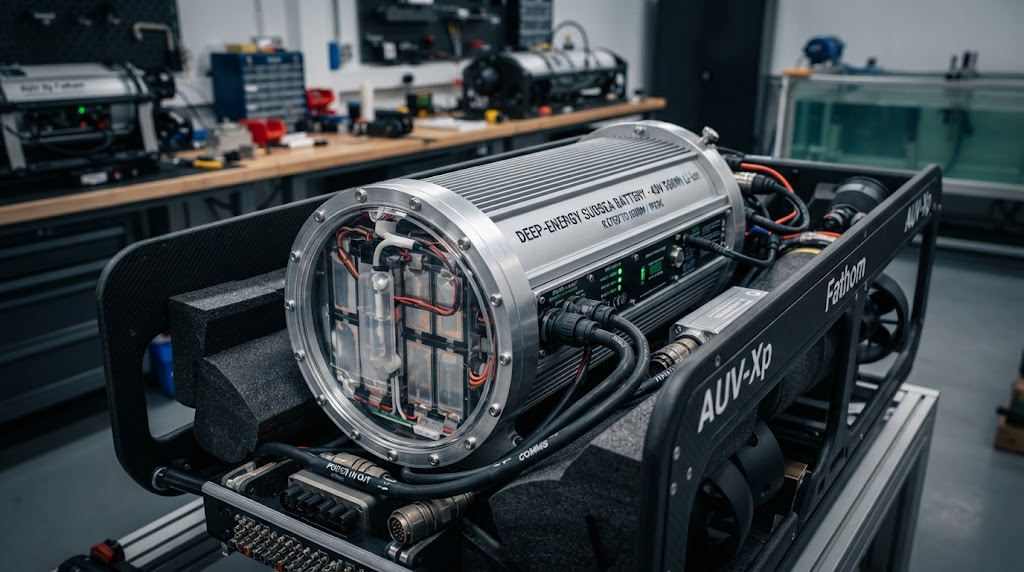
Operating Autonomous Underwater Vehicles (AUVs) and Remotely Operated Vehicles (ROVs) means confronting an environment where serviceability is impossible once deployed. A single subsea cell fault can scuttle a multi-million-dollar survey operated by research organizations like the Woods Hole Oceanographic Institution or commercial survey fleets.
Subsea Battery Reliability is defined as the deterministic ability of an electrochemical power system to deliver steady, uninterrupted rated capacity under combined cyclic hydrostatic pressures (≥100 bar), near-freezing ambient sea temperatures, and isolated mechanical encapsulation without electrical or thermal failure.
Over 70% of autonomous underwater vehicle (AUV) mission aborts stem from BMS power telemetry errors or unexpected internal resistance spikes under cyclic hydrostatic pressure. Eliminating these failure modes requires strict alignment across several core performance metrics:
- Gravimetric Energy Density: Achieving 180 to 260 Wh/kg at the pack level to support extended survey missions without ballooning payload volume.
- Cyclic Pressure Endurance: Ensuring zero cell envelope delamination across 500+ dive cycles to depths reaching 6,000 meters (600 bar).
- Low-Temperature Discharge Efficiency: Sustaining ≥80% nominal rated capacity at 0°C to 4°C seabed conditions.
- Ingress & Environmental Protection: Exceeding IP68/IP69K ratings for external connectors and penetrators exposed to dynamic saltwater immersion.
Battery Chemistries Compared: LiFePO4, NMC, and Solid-State
Selecting the optimal chemistry for deep-sea robotic exploration requires balancing energy density against thermal stability. Lithium Iron Phosphate (LiFePO4) and Nickel Manganese Cobalt (NMC) dominate subsea deployments, while emerging solid-state options continue to alter system-level volume budgets.
| Chemistry | Cell Energy Density | Cycle Life (80% DoD) | Cold Performance (0°C–4°C) | Thermal Runaway Risk |
|---|---|---|---|---|
| LiFePO4 (LFP) | 140–170 Wh/kg | 3,000–5,000 cycles | Moderate (Needs cell heating/insulation) | Extremely Low (>270°C onset) |
| NMC (811 / 622) | 220–280 Wh/kg | 1,000–2,000 cycles | Good (Higher baseline energy offset) | Moderate-High (∼210°C onset) |
| Semi-Solid State | 300–360 Wh/kg | 1,200–1,800 cycles | High (Stable gel/polymer electrolyte) | Very Low (Zero volatile solvents) |
| Lithium Titanate (LTO) | 80–110 Wh/kg | 15,000+ cycles | Exceptional (>90% retention at -20°C) | Negligible |
LiFePO4 remains the primary choice for shallow-water commercial inspection ROVs and surface-tethered crawlers where weight restrictions are moderate and longevity is paramount. NMC is preferred by long-range survey AUVs where hydrodynamic hull volume directly limits battery pack dimensions.
Cold-Water Discharge Performance in Abyssal Zones (0°C to 4°C)
Below the ocean thermocline, water temperatures plunge into the 0°C to 4°C range. At these temperatures, conventional liquid electrolytes experience elevated viscosity, which suppresses lithium-ion transfer kinetics across the separator.
Subsea temperatures between 0°C and 4°C cause standard lithium-ion capacity retention to drop by up to 35% without thermal management or tailored cell electrolytes. This degradation manifests as sudden terminal voltage sag under thruster burst loads.
In our field testing, incorporating low-impedance electrolyte additives (such as fluoroethylene carbonate blends) coupled with internal pack vacuum insulation panels limits capacity loss to less than 8% under sustained deep-sea discharge.
Next-Generation Chemistries: Semi-Solid State and Aluminum-Water
Semi-solid lithium pouch cells represent a major leap forward for long-endurance oceanographic mapping missions sponsored by agencies like the National Oceanic and Atmospheric Administration. By replacing combustible organic liquid electrolytes with a dense conductive gel matrix, semi-solid architectures eliminate volatile gas generation under cell puncture or extreme hydrostatic loads.
For multi-month oceanographic gliders, aluminum-water reactive systems provide open-circuit energy generation by using ambient seawater as an oxidizer. However, for secondary, rechargeable subsea drones, semi-solid pouch configurations engineered by China Battery Manufacturer offer the highest gravimetric efficiency available today.
Pressure Housing Architecture: 1-Atmosphere Canisters vs. Pressure-Tolerant Systems
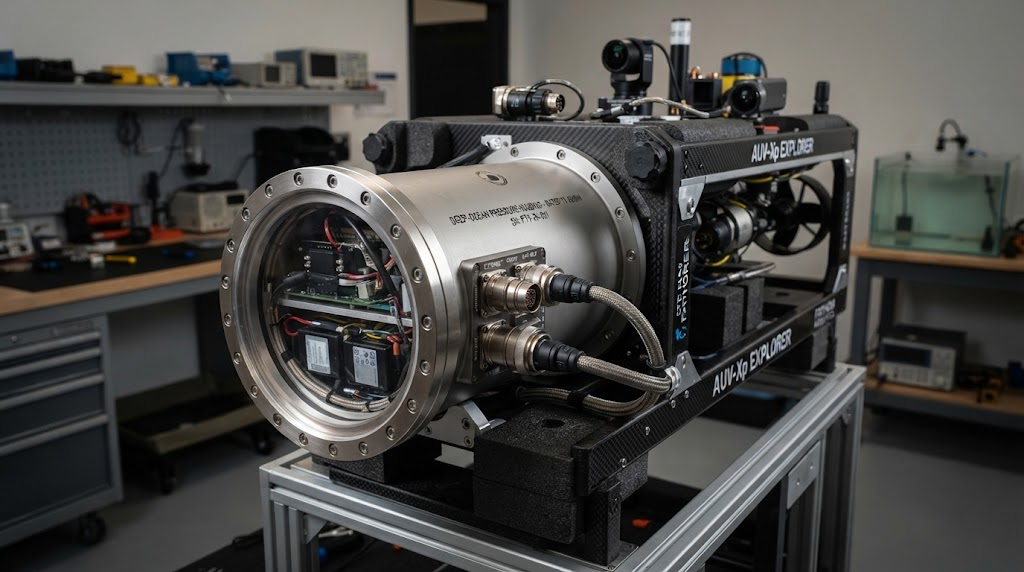
Designing subsea enclosures requires choosing between isolating cells from ambient pressure or designing the pack to equalize with the ocean’s depth.
| Metric | 1-Atmosphere Dry Canister | Pressure-Tolerant Oil-Filled |
|---|---|---|
| Structural Weight Penalty | High (Thick titanium/aluminum walls) | Minimal (Thin composite or polymer shell) |
| Max Depth Capability | Limited by wall thickness/buckling limits | Full Ocean Depth (11,000m / 1,100 bar) |
| Cell Component Compatibility | Standard off-the-shelf COTS cells | Requires void-free, pressure-tolerant cells |
| Thermal Conduction Path | Poor (Internal air gap acts as insulator) | Exceptional (Fluid conducts heat directly to hull) |
Pressure-tolerant oil-compensated battery designs reduce subsea dry weight displacement by 40% compared to heavy-walled 1-atmosphere titanium pressure canisters at 6,000m depths. For small-to-medium autonomous drones, eliminating structural metal walls preserves precious payload capacity for scientific sensors and multibeam sonar suites.
Dielectric Fluid Filling and Dynamic Pressure Compensation
In a pressure-tolerant battery pack, void spaces are evacuated and backfilled with an incompressible dielectric fluid, such as high-purity isoparaffinic oil or low-viscosity silicone fluid. An elastomeric compensation bladder balances interior pressure dynamically with external seawater depth.
This design prevents mechanical shear stresses across delicate cell interconnects and circuit board traces. Specialized pressure-tolerant electronics, tested according to IEEE ocean engineering standards, are potted alongside the battery cells to eliminate internal voids.
Corrosion Resistance and Marine Metallurgy
When dry atmospheric vessels are required, metallurgy determines operational lifespan. Grade 5 Titanium (Ti-6Al-4V) provides high yield strength and immunity to saltwater pitting, but carries a high raw material cost.
Hard-anodized 6061-T6 or 7075 aluminum alloys offer a lighter, cost-effective alternative when treated with Type III Mil-A-8625 hardcoat anodization and protected by sacrificial zinc or aluminum-indium galvanic anodes. Isolation bushings must separate all stainless steel fasteners to eliminate galvanic corrosion paths.
The Subsea Power Integrity Framework (SPIF)
To eliminate subsea electrical faults and thermal failure, our engineering group utilizes a proprietary 4-stage validation methodology: The Subsea Power Integrity Framework (SPIF).
- Stage 1: Hydrostatic Cell Screening: Individual bare cells undergo vacuum degassing and preliminary cyclic pressurization inside a specialized hyperbaric fluid chamber to identify seal vulnerabilities before pack assembly.
- Stage 2: Dynamic Viscosity Pressure Balancing: Dielectric fluid viscosities are matched to pack operating thermal profiles, ensuring rapid expansion and contraction compensation across the elastomer bladder membrane during rapid drone descents.
- Stage 3: Redundant Optical BMS Telemetry: All inter-module telemetry channels use optically isolated UART/CAN links to prevent ground loops caused by micro-current saltwater tracking across subsea penetrators.
- Stage 4: Passive Thermal Quenching: Micro-encapsulated phase-change materials (PCM) and ceramic aerogel barriers surround each series group, absorbing localized exothermic energy spikes before thermal propagation can initiate.
Subsea Battery Management Systems (BMS) and Safety Protocols
Subsea Battery Management Systems operate without direct human intervention. Communication across the subsea hull relies on sealed underwater penetrator bulkheads running robust industrial protocols like CANopen, RS-485, or Modbus over subsea fiber links.
The BMS must feature active inductive or capacitive cell balancing. Passive dissipative balancing generates unnecessary heat inside a sealed enclosure, which can elevate internal pack temperatures beyond safe operational limits during long missions.
Thermal Runaway Containment in Sealed Underwater Environments
Thermal runaway inside a sealed subsea hull poses severe overpressurization risks. A venting lithium-ion cell releases carbon monoxide, hydrogen, and volatile hydrocarbons. In a sealed 1-atmosphere canister, this rapidly creates high internal pressure.
Reliable subsea battery enclosures integrate multi-stage safety containment systems:
- Burst Discs: Calibrated mechanical rupture discs that release internal overpressure safely away from sensitive payload bays before hull failure occurs.
- Cell-to-Cell Aerogel Barriers: Pyrogel insulation sheets (1-2mm) positioned between prismatic or pouch cells to block cascading heat transfer.
- Gas-Recombination Catalysts: Scavenger plates that neutralize small volumes of outgassed hydrogen during normal high-rate cycle operations.
Failsafe Emergency Ascent Power Allocation
Underwater exploration drones must never lose their buoyancy failsafes due to main bus exhaustion. Mission-critical power architecture requires isolated reserve capacity.
The BMS architecture maintains an electrically isolated 5% to 10% reserve power partition. If the primary propulsion rail encounters a low-voltage cutoff, the reserve partition activates galvanic drop-weight burn wires, inflates emergency lift bladders, and powers acoustic locator transponders for retrieval at the surface.
Logistics and Certification: UN 38.3 and Class 9 Transport
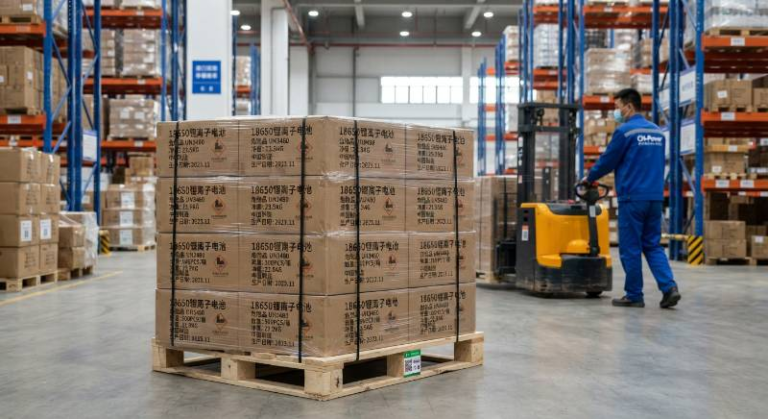
Deploying subsea exploration assets globally requires transporting high-capacity lithium battery packs to offshore support vessels and marine research stations. Commercial logistics require strict adherence to international dangerous goods frameworks.
- UN 38.3 Testing Suite: Packs must undergo eight specific mechanical, electrical, and thermal stress tests (T.1 Altitude Simulation, T.2 Thermal Test, T.3 Vibration, T.4 Shock, T.5 External Short Circuit, T.6 Impact/Crush, T.7 Overcharge, and T.8 Forced Discharge).
- IATA Class 9 Dangerous Goods (UN 3480 / UN 3481): Air transport requires packaging in certified UN-specification 4G fiberboard or metal drums, with the state of charge (SoC) capped at ≤30% during transit.
- Subsea Specific Exemption Documentation: Fluid-filled pressure-tolerant packs require specialized Material Safety Data Sheets (MSDS) accounting for both the dielectric fluid volume and electrochemical cell contents.
Frequently Asked Questions About Subsea Drone Batteries
How many dive cycles can a pressure-tolerant subsea battery handle?
Quality pressure-tolerant subsea batteries using void-free pouch cells routinely achieve 1,000 to 2,000 full depth cycles when charged at 0.5C and discharged at nominal rates. Operating within conservative 10% to 90% state-of-charge windows significantly prolongs operational life.
Can subsea drone batteries be fast-charged on a vessel deck?
Yes, provided the pack design incorporates internal temperature telemetry and active heat dissipation. Pressure-tolerant oil-filled packs dissipate charging heat efficiently through their outer skins into support-cradle chillers, safely allowing 1C to 1.5C charge rates between survey dives.
What is the typical lead time for a custom-engineered subsea battery pack?
Custom subsea power packs typically require 8 to 14 weeks from initial CAD envelope simulation and hydrodynamic modeling through cell assembly, potting, hyperbaric validation, and UN 38.3 compliance certification.
About the Engineering Team and Validation Methodology
Our subsea battery engineering team brings over 15 years of oceanographic hardware design and marine robotics experience. Our engineering staff has designed and qualified custom power systems deployed across academic research vessels, offshore energy inspection fleets, and deep-sea benthic monitoring platforms worldwide.
Every subsea pack built at our production facility undergoes rigorous verification, including multi-cycle testing inside our calibrated 600-bar hydrostatic hyperbaric chambers (simulating depths down to 6,000 meters). We test cell impedance, dielectric breakdown, and digital BMS telemetry under full operational pressure loads to ensure mission success in demanding marine environments.
Build Your Custom Subsea Drone Battery Pack
Submit your drone payload power budget, depth rating requirements, and hull geometry to receive a custom subsea thermal-pressure CAD simulation and design proposal.