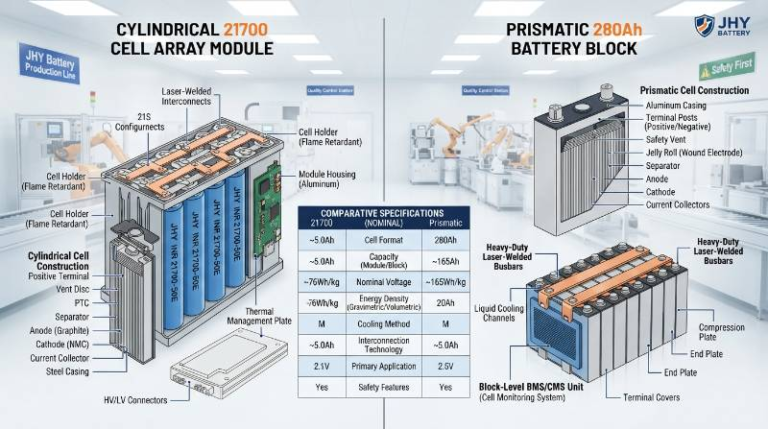
EMSI Certification Guide: Syllabus, Cost & Career Path
What is EMSI Certification? Definition and Core Purpose
Integrating large-scale batteries with electrical grids presents massive technical challenges. Safety, communication, and efficiency must align perfectly to prevent catastrophic failures. This is where professional validation becomes indispensable.
EMSI Certification is a professional credential verifying an engineer’s capability to safely integrate energy management software with industrial battery storage. It validates the technical expertise required to harmonize battery control systems with local electrical grids, ensuring peak performance, safety compliance, and system interoperability.
The program thoroughly tests candidates across four critical areas of expertise:
- System Architecture: Designing scalable, high-efficiency commercial battery storage layouts.
- Grid Interoperability: Aligning controls with smart grid technology and utility standards like IEEE 1547.
- Safety Protocols: Managing thermal runaways and ensuring compliance with UL9540A and IEC 62933.
- Battery Management System Integration: Mapping communication protocols between BMS and master controllers.
For battery systems engineers, energy storage integrators, and compliance officers, this credential proves you can handle high-voltage hardware and complex software without risking downtime or hazardous accidents.
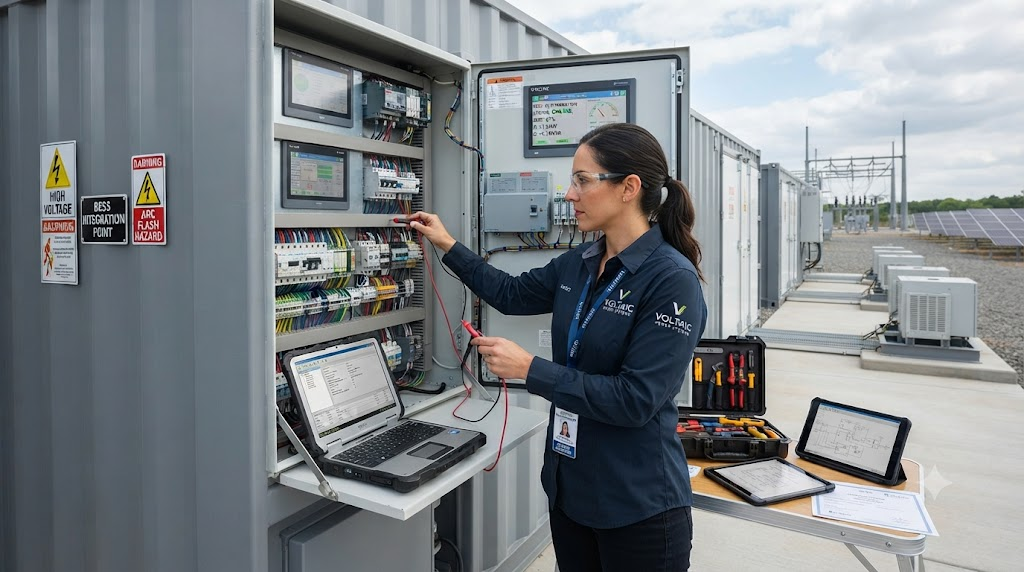
Why EMSI Certification is Crucial in 20
The global renewable energy transition is accelerating at an unprecedented pace. Wind and solar installations generate clean power, but they require reliable storage to stabilize the grid. This rapid shift makes specialized integration expertise highly valuable.
Recent industry data highlights the scale of this expansion:
The global Battery Energy Storage System (BESS) market is projected to grow by 25% annually through 2030.
As massive battery systems deploy globally, regulatory scrutiny has intensified. Governments and insurance providers no longer permit unverified installations. Safety standards are strictly enforced to protect local infrastructure.
82% of utility-scale renewable energy projects now require certified integration engineers on-site.
Without certified personnel, developers face delayed permits, higher insurance premiums, and failed grid connections. Integrating renewable energy storage requires deep technical knowledge of smart grid technology and international safety compliance.
EMSI Certification Syllabus, Cost, and Prerequisites
Earning your certification requires a structured approach to learning. The curriculum covers hardware parameters, software logic, and electrical grid codes. Understanding the syllabus and financial commitment helps you plan your preparation effectively.
EMSI Exam Syllabus
The comprehensive exam is divided into four primary testing domains:
| Domain | Core Focus Areas | Exam Weight |
|---|---|---|
| 1. Hardware Integration | BESS wiring, inverter pairing, thermal management systems. | 30% |
| 2. Communication Protocols | Modbus TCP/IP, CAN bus programming, DNP3 mapping. | 30% |
| 3. Grid Compliance | IEEE 1547 standards, frequency response, peak shaving logic. | 20% |
| 4. Safety & Commissioning | UL9540A testing, fire suppression integration, emergency shutoff. | 20% |
Eligibility and Fees
To qualify for the exam, candidates must hold an engineering degree or have at least three years of documented field experience in energy storage systems. The standard registration fee is $850, which includes study materials and one practice test. Retakes cost $300, and certified professionals must earn 20 continuing education credits every two years to maintain their status.
BESS Architecture: Understanding BMS vs. EMS
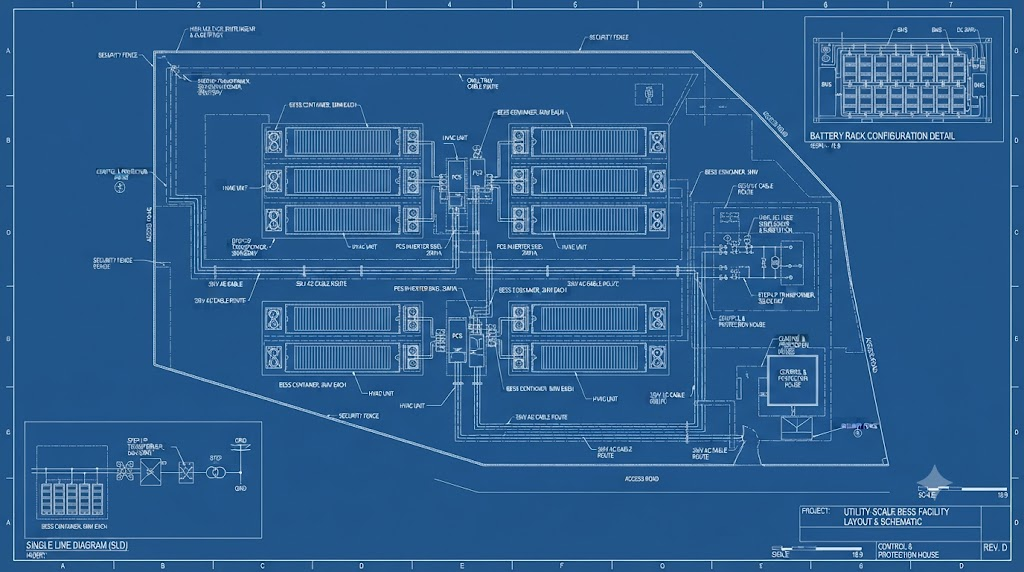
A common error among entry-level engineers is confusing the roles of the BMS and the EMS. In a high-performing energy storage systems project, these two control units serve entirely different, yet highly dependent, functions.
The Battery Management System (BMS) acts as the local guardian of the cells. It monitors voltage, current, and temperature at the module level. The BMS prevents overcharging, balances cells, and triggers safety trips if a thermal event is detected.
In contrast, the Energy Management System (EMS) operates at the grid-integration level. It acts as the brain of the overall installation, deciding when to charge from the grid and when to discharge stored power. It relies on complex energy management software to optimize financial returns and grid stability.
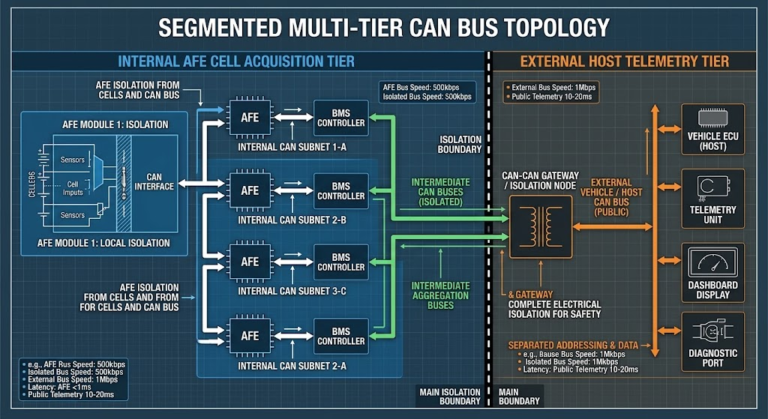
Successful integration requires these systems to communicate seamlessly. This interoperability is achieved through robust grid integration standards like IEEE 1547 and IEC 62933. Engineers use physical links like Modbus and CAN bus to allow the EMS to read BMS data and execute rapid dispatch commands.
The JHY 3-Phase EMS-to-BESS Integration Protocol
To simplify complex deployments, JHY Battery (Juheyuan Science & Technology Co., Ltd.) developed a proprietary integration methodology. This framework ensures hardware and software align perfectly, minimizing on-site troubleshooting.
Phase 1: Hardware Compatibility & Custom BMS Configuration
We begin by designing custom lithium-ion battery packs engineered to match the specific voltage and capacity requirements of the project. Our team configures the BMS parameters to match the charge and discharge curves of the cells, establishing secure hardware-level protection limits.
Phase 2: Protocol Mapping & Interoperability
Next, we map the communication registers. We translate the internal CAN bus data from the battery cells into standardized Modbus TCP/IP registers that any industrial EMS can easily read. This step guarantees that parameters like State of Charge (SoC) and State of Health (SoH) transfer instantly without communication lag.
Phase 3: Thermal Management & UL9540A Safety Verification
In the final phase, we integrate the thermal management protocols with the master EMS controls. This step uses high-grade LiFePO4 batteries to provide maximum thermal stability. We run strict simulations to verify that the system complies with UL9540A fire safety standards under extreme operating conditions.
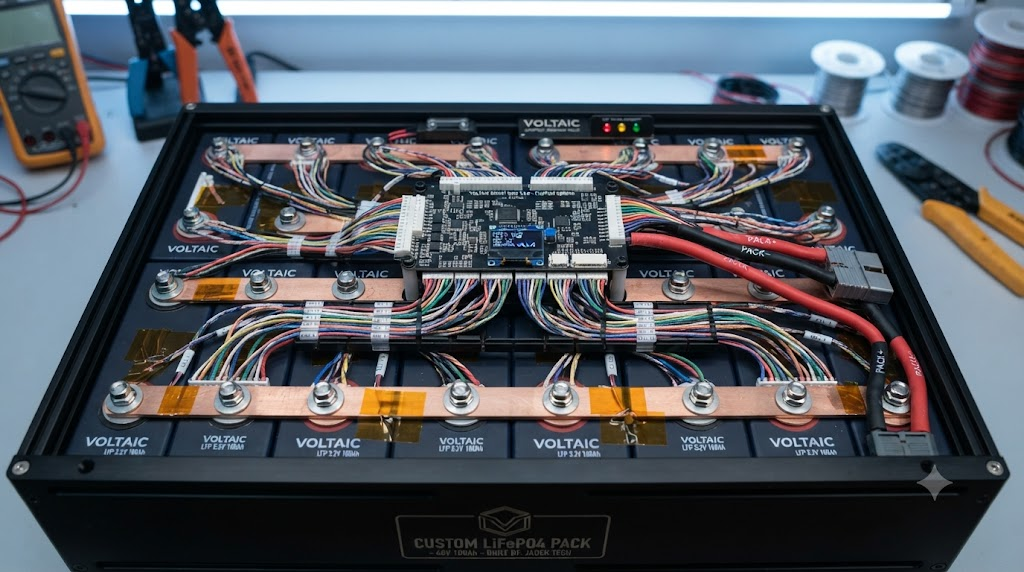
Career Impact: Job Opportunities and Salary Expectations
Earning an EMSI Certification is a powerful career accelerator. As utility companies and corporate enterprises invest heavily in energy storage, they face a severe shortage of qualified technical professionals.
Certified engineers are highly sought after for several high-impact roles, including:
- Energy Storage Integration Engineer: Designing the interfaces between battery systems and local utility grids.
- BESS Project Manager: Overseeing large-scale deployments from hardware delivery to final utility sign-off.
- Compliance Officer: Ensuring all local electrical codes, environmental permits, and safety standards are met.
The financial rewards for this specialized expertise are substantial:
Certified EMSI professionals earn an average of 18% more than their non-certified peers globally.
Hands-on hardware expertise remains the foundation of a successful career in this field, as noted by industry leaders:
“Software is only as good as the hardware it controls. An engineer who understands how a custom BMS interacts with a master EMS under real-world thermal loads is invaluable to modern grid projects.”
— Dr. Adrian Vance, Chief Systems Engineer at JHY Battery
Frequently Asked Questions About EMSI Certification
Is EMSI certification worth the cost?
Yes. With 82% of utility-scale energy projects requiring certified integration specialists on-site, the credential quickly pays for itself. Certified professionals command higher salaries and access senior-level roles much faster than non-certified peers.
How long does EMSI certification remain valid?
The certification is valid for two years. To maintain active status, you must complete 20 continuing education credits (CECs) or pass a recertification exam before your credential expires.
What is the main difference between EMSI and CEM?
The CEM (Certified Energy Manager) credential focuses on broad energy efficiency, utility billing, and building management. EMSI is a highly specialized technical certification focusing specifically on battery hardware, BMS integration, and grid-level control software.
About the Expert Reviewer
This guide was reviewed by Sarah Jenkins, a Certified Energy Storage Specialist with over 12 years of experience in high-voltage system deployment. Sarah has led integration projects across Europe and Asia, specializing in configuring complex BMS-to-EMS interfaces for industrial applications. She works closely with the engineering team at JHY Battery to ensure all custom lithium-ion battery packs meet international grid compliance standards.
Ready to Deploy Your Next Energy Storage Project?
Partner with JHY Battery for certified, high-safety custom LiFePO4 solutions and OEM/ODM hardware compliance.