Custom Battery Design Process: The B2B Engineering Guide
Whether you are developing a life-saving medical device, an industrial robotics platform, or an ultra-rugged IoT wearable, the custom battery design process dictates your product’s reliability, safety, and ultimate market success.
As a leading OEM/ODM battery manufacturer with more than ten years of advanced electrochemical engineering experience, JHY Battery (Juheyuan Science & Technology Co., Ltd.) has streamlined this journey. We specialize in fast-tracking custom power projects from initial concept to certified production models in as little as 5 to 7 days.
What is the Custom Battery Design Process?
The custom battery design process is a structured engineering workflow that transforms raw chemical cells into a fully integrated, application-specific power solution. It ensures electrical safety, thermal stability, and regulatory compliance while matching the precise physical dimensions, voltage, and capacity requirements of the target OEM device.
To successfully capture safety and performance goals, developers must follow a rigorous, phase-based engineering workflow:
- Concept: Defining exact electrical loads, spatial dimensions, and environmental constraints.
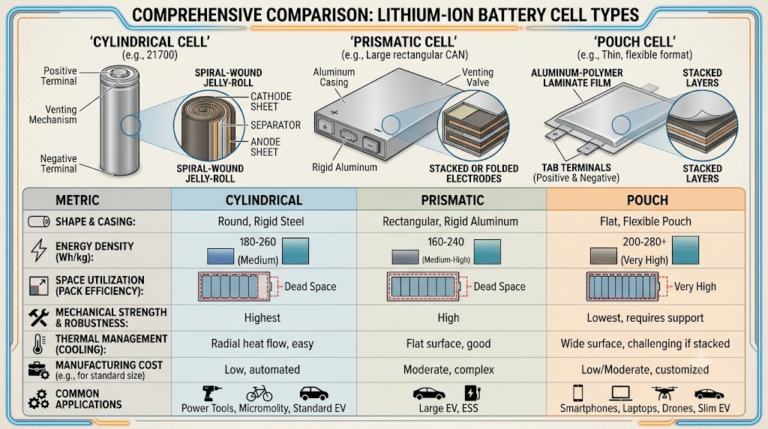
- Cell Selection: Evaluating and sourcing the optimal cell chemistry and physical form factor.
- BMS Integration: Designing custom protection circuitry to manage voltage, current, and temperature.
- Prototyping: Building mechanical enclosures, assembling initial packs, and testing fitment.
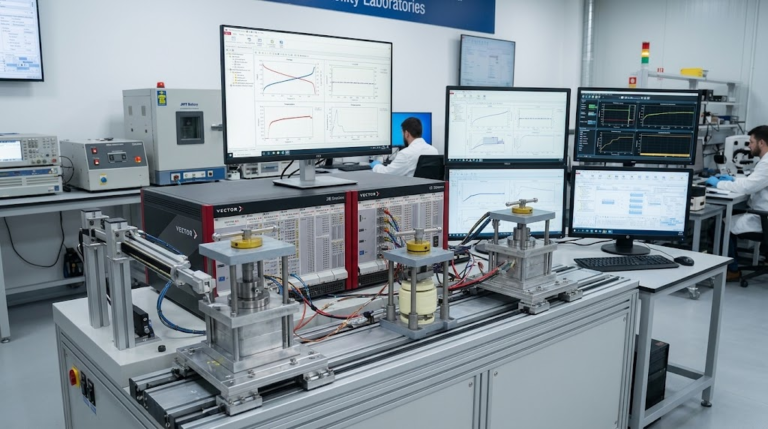
- Testing: Validating safety, cycle life, and thermal performance under extreme operating conditions.
The JHY 5-Phase DFM Battery Design Protocol
In our experience, standard engineering approaches often fail during the transition from the laboratory to the factory floor. To eliminate these bottlenecks, we developed the JHY 5-Phase DFM (Design for Manufacturing) Protocol.
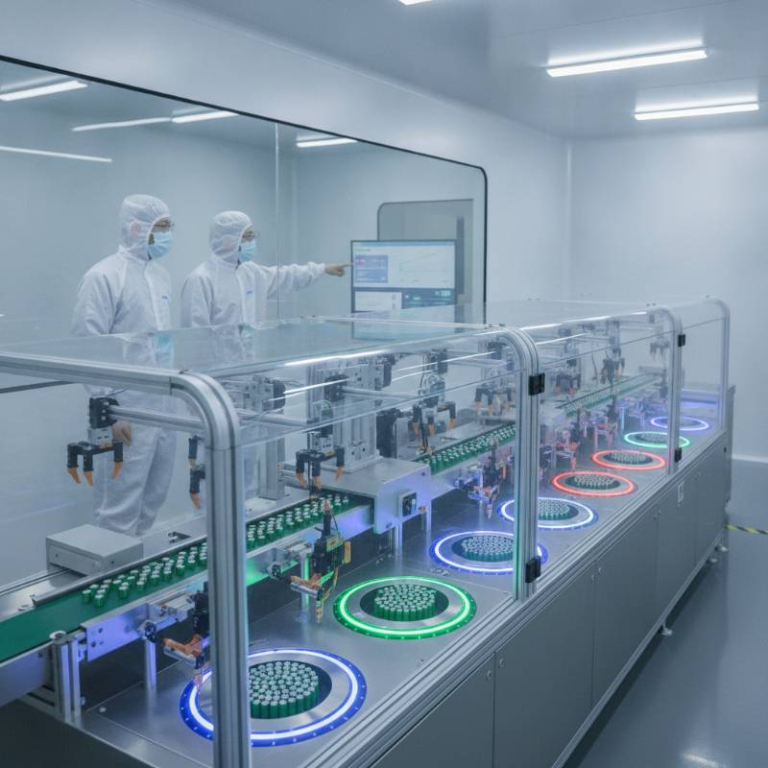
This proprietary framework integrates manufacturing constraints directly into the earliest design phases. By analyzing assembly tolerances, thermal boundary layers, and automated welding paths from day one, we significantly reduce development cycles.
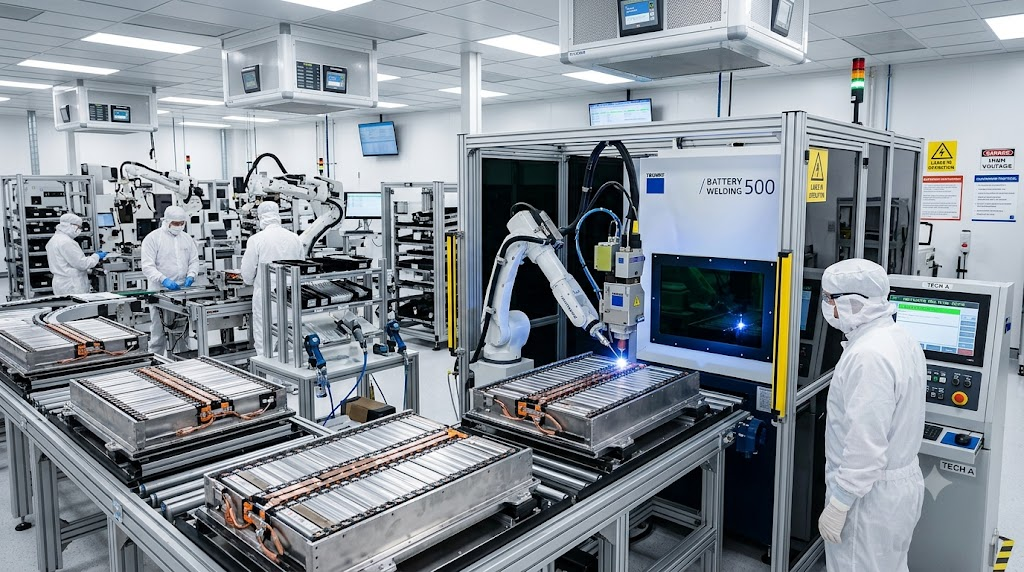
Based on our historical production data, implementing DFM guidelines during initial design stages reduces post-prototype revisions by up to 40%. It ensures that the custom battery prototype built during week one is structurally identical to the high-volume production units shipped in month two.
Phase 1: Cell Chemistry Selection & Comparison Matrix
The foundation of any successful custom battery design process lies in selecting the correct lithium-ion cell chemistry. Engineers must balance competing factors: energy density, cycle life, safety, operational temperature windows, and unit cost.
At JHY Battery, we analyze these trade-offs mathematically. For high-energy applications where weight and space are constrained, we typically design with nickel-manganese-cobalt (NMC) formulations. For high-cycle, safety-critical industrial applications, we recommend LiFePO4 batteries due to their exceptional thermal stability and long operational lifespan.
To support your initial selection process, our engineering team compiled this performance comparison matrix based on current 2026 electrochemical data:
| Metric / Parameter | Lithium-ion (NMC) | LiFePO4 (LFP) | Solid-State (Emerging) |
|---|---|---|---|
| エネルギー密度 | High (200-260 Wh/kg) | Moderate (120-160 Wh/kg) | Very High (350-450 Wh/kg) |
| Cycle Life (80% DoD) | 500 – 1,000 cycles | 2,000 – 6,000+ cycles | 1,000 – 2,000 cycles |
| Thermal Runaway Temp | ~210°C (Lower stability) | ~270°C (Highly stable) | >350°C (Excellent stability) |
| Relative Cost Profile | Medium | Low to Medium | High (Low volume production) |
| Primary Applications | Medical, IoT, Robotics | ESS, RVs, Solar, Golf Carts | Specialized Aerospace, Defense |
For deep technical research regarding cell degradation mechanics, the National Renewable Energy Laboratory (NREL) offers comprehensive, open-source datasets on electrochemical modeling and safety limits.
Phase 2: BMS Customization & Thermal Management
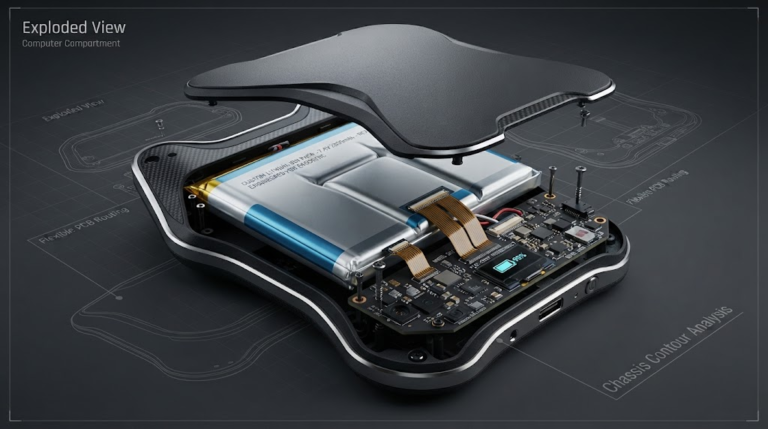
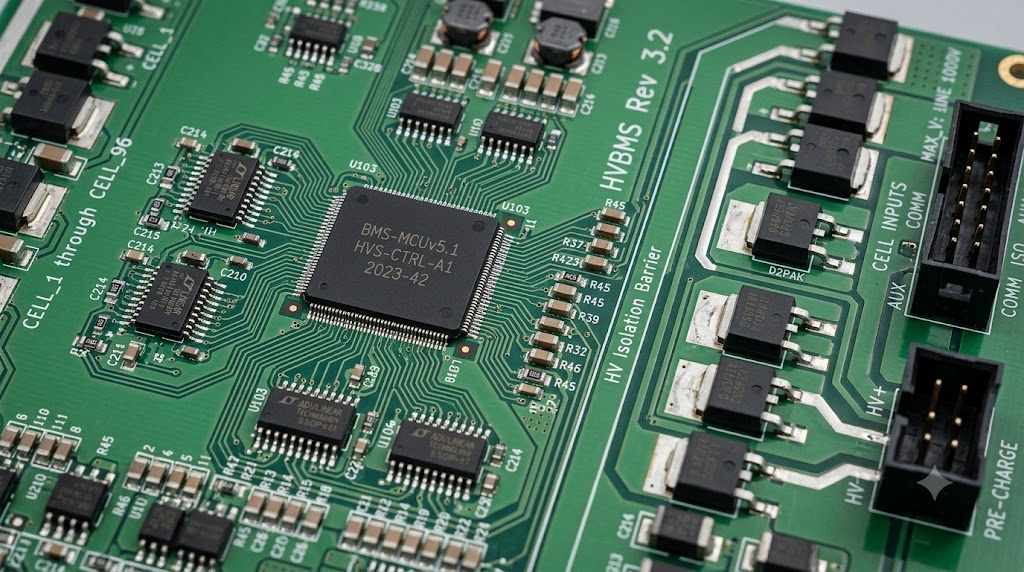
A high-quality cell is only as safe as the electronics monitoring it. The battery management system (BMS) acts as the brain of the battery pack. Our engineering team customizes the Printed Circuit Board Assembly (PCBA) to provide real-time protection against over-voltage, under-voltage, over-current, and short circuits.
For high-power B2B applications, we integrate smart communication protocols (such as CANbus, SMBus, I2C, or RS485). This allows your device’s primary processor to monitor State of Charge (SoC) and State of Health (SoH) metrics continuously.
Simultaneously, we run thermal management simulations to evaluate heat dissipation. In high-discharge applications, cells tightly packed together can experience heat build-up. We use custom cell spacers, thermal interface materials (TIM), and passive heat sinks to maintain uniform temperature distribution across all cells, preventing localized thermal runaway.
Phase 3: Rapid Prototyping & DFM Guidelines
Once the electrical and thermal designs are finalized, we transition to battery pack prototyping. JHY Battery’s rapid prototyping workflow allows us to manufacture functional, high-quality samples within 5 to 7 days.
During this phase, we design and manufacture the custom enclosure. Depending on your environmental requirements, we utilize high-strength ABS/PC plastics, aluminum alloys, or stainless steel. We design for specific IP ratings (such as IP65 or IP67) to protect internal components from dust and water ingress.
By using precise 3D-printed enclosures and soft tooling, we can deliver physical samples of custom lithium-ion battery packs to your engineering team for mechanical fitment and electrical testing without the long lead times of hard tooling.
Phase 4: Custom Battery Configuration & Run-Time Calculator
Determining how cells are grouped in series (S) and parallel (P) is a vital math exercise. Series configurations increase the overall voltage, while parallel configurations increase the battery pack’s total capacity and current capability.
To calculate the basic configuration of your custom battery pack, use the following formulas:
Total Voltage (V) = Series Count (S) × Nominal Cell Voltage (V)
Total Capacity (Ah) = Parallel Count (P) × Cell Capacity (Ah)
Total Energy (Wh) = Total Voltage (V) × Total Capacity (Ah)
For example, if you require a 36V, 10Ah battery pack using 3.6V, 2.5Ah NMC 18650 cells, the configuration calculation is:
- Series Calculation: 36V / 3.6V = 10S
- Parallel Calculation: 10Ah / 2.5Ah = 4P
- Total Cell Count: 10S × 4P = 40 cells
This pack will have a nominal energy rating of 360Wh. To optimize the weight-to-power ratio of your device, our engineers analyze these configurations to ensure you do not carry unnecessary battery mass, which reduces overall system efficiency.
Interactive Battery Configuration & Run-Time Calculator
Pack Voltage: 36.0 V
Pack Capacity: 10.0 Ah
Total Energy: 360.0 Wh
Est. Run-Time (at 85% DoD safety margin): 3.06 Hours
DFM Case Study 1: Resolving Cell-to-Cell Impedance Mismatch in a 14S8P Industrial AGV Pack
The Challenge: An industrial automated guided vehicle (AGV) client experienced localized thermal hotspots and premature capacity fade in their 51.8V battery pack during field testing. JHY’s DFM audit identified that the standard spot-welding busbar geometry introduced minor variations in contact resistance across the parallel cell groups. This caused uneven current sharing, forcing some cells to discharge at up to 1.4C while others remained at 0.7C.
The Solution: JHY’s engineering team redesigned the nickel-copper composite busbars using finite element analysis (FEA) to ensure perfectly symmetrical current paths. We also implemented automated micro-resistance testing during the cell-matching phase, sorting cells within a strict ±1.5mΩ tolerance. The optimized pack showed a uniform temperature profile (variance < 2.5°C across all cells) and extended cycle life by 35%.
Phase 5: Battery Certifications & Compliance Timelines
Global market access requires compliance with international safety standards. Shipping or selling lithium-based batteries without proper battery certifications exposes OEMs to severe legal, financial, and logistical risks.
Because safety standards vary by industry and region, we manage the entire compliance pipeline. JHY Battery holds full international certifications, including ISO9001, CE, UN38.3, MSDS, and UL.
To help you align your product launch timelines, we have mapped out the typical preparation and testing durations for core certifications:
| Standard | Focus Area | Testing Period | Required For |
|---|---|---|---|
| UN38.3 | Safe transport (thermal, altitude, vibration, impact, external short circuit) | 2 – 3 Weeks | All global air & ocean shipments |
| IEC 62133 | Portable application safety (thermal, mechanical, electrical abuse) | 3 – 4 Weeks | European Union & international markets |
| UL 2054 / UL 1642 | Commercial battery safety under extreme abuse testing | 4 – 6 Weeks | North American markets (frequently mandated by insurers) |
| MSDS | Material Safety Data Sheet detailing chemical composition and hazards | 3 – 5 Days | Shipping carriers & customs clearance |
Detailed regulatory compliance guidelines and international testing frameworks can be reviewed directly via the International Electrotechnical Commission (IEC) portal.
DFM Case Study 2: Overcoming UN38.3 T.6 (Impact/Crush) Failure for a Ruggedized Marine Application
The Challenge: A marine client’s heavy-duty sensor battery pack failed the UN38.3 T.6 impact test during initial third-party certification. The internal structural cell holders cracked under the extreme mechanical shocks, causing short circuits between adjacent cells.
The Solution: JHY’s mechanical engineers redesigned the internal structural cell holders, replacing standard ABS with flame-retardant polycarbonate (PC-FR) blended with 15% glass fiber for enhanced tensile strength. We also integrated high-damping silicone pads at critical stress points to absorb shock energy. The revised design passed the UN38.3 T.6 impact test on the first attempt without physical deformation or voltage drops.
Tailoring Designs for Industrial, Medical, and IoT Applications
A cookie-cutter approach does not work for specialized B2B electronics. Different markets demand entirely different optimization strategies:
- Medical Battery Design: Medical applications require redundant protection loops. Battery systems powering diagnostic equipment or patient monitors must adhere strictly to IEC 62133 and ISO 13485 frameworks. They also require highly accurate fuel gauging to prevent unexpected device shutdowns.
- IoT Battery Design: Space constraints are the defining challenge for smart sensors and wearables. These applications require ultra-slim prismatic or pouch cells with custom-designed, low-profile BMS boards that draw minimal sleep current to extend shelf life.
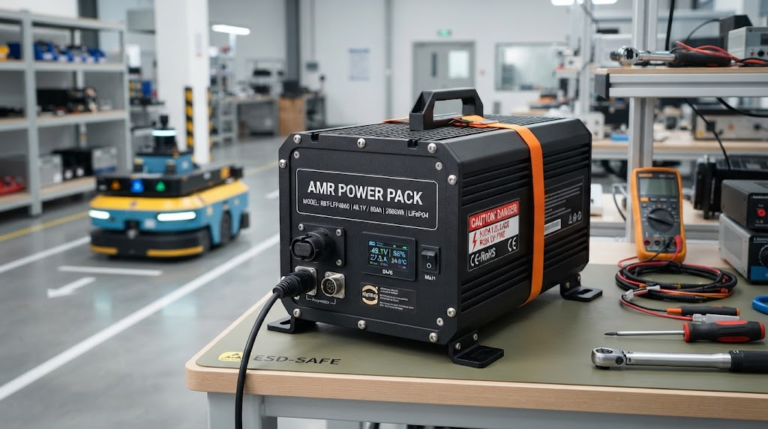
- Industrial Battery Design: Automated guided vehicles (AGVs) and drones require high continuous discharge rates and rapid charging capabilities. These systems depend on robust mechanical construction to withstand persistent vibration and physical impacts.
DFM Case Study 3: Designing a Fail-Safe 4S1P System for an ISO 13485 Portable Ventilator
The Challenge: A medical ventilator manufacturer needed a highly reliable backup battery pack with a strict footprint limit, demanding exact runtime reporting down to the minute and zero risk of sudden power loss.
The Solution: JHY engineered a 14.4V medical battery design featuring dual-redundant overvoltage and overcurrent protection ICs. We integrated a TI BQ40Z50-R2 fuel gauge using SMBus communication, calibrated with the cell’s precise chemical impedance profile. This allowed the ventilator to display state-of-charge with ±1% accuracy, meeting all ISO 13485 and IEC 62133 requirements for life-critical medical devices.
Downloadable Custom Battery Requirement Checklist
Before initiating a custom battery project, engineers should define their core requirements. Use this checklist to compile your specifications before contacting our design team:
Frequently Asked Questions About Custom Battery Design
What is the Minimum Order Quantity (MOQ) for custom battery designs?
At JHY Battery, we maintain flexible MOQ structures to support both early-stage hardware startups and high-volume industrial OEMs. While prototyping runs require minimal quantities (typically 5 to 10 units), commercial production MOQs depend on the complexity of the cells and enclosure tooling, generally starting around 500 to 1,000 packs.
How much does the custom battery design process cost?
Initial design analysis and basic engineering layouts are often provided free of charge by JHY Battery. Full custom development costs vary based on BMS complexity, enclosure tooling (such as plastic injection molds), and required safety certifications. Contact our sales engineers for a transparent, itemized quotation.
How long does it take to manufacture mass-production batches?
Once prototypes are validated and certifications are approved, our standard production lead time is 25 to 30 days. This includes strict quality control checks, cell balancing, and final performance burn-in testing.
How does JHY mitigate thermal runaway risk in high-density NMC packs?
We implement a multi-layered safety strategy: physical cell spacing of at least 1.5mm to prevent thermal propagation, custom flame-retardant cell holders, high-conductivity thermal interface materials (TIM) to pull heat away from the core, and BMS thermal cutoffs configured to isolate the pack if internal temperatures exceed 60°C.
About the Expert: JHY Battery Engineering Team
This technical guide was compiled by the senior engineering department at Juheyuan Science & Technology Co., Ltd. (JHY Battery). Based in China, JHY Battery is an ISO9001-certified manufacturer specializing in advanced electrochemical engineering and high-safety lithium-ion battery pack design.
With more than a decade of specialized industrial experience, our team has designed and delivered customized energy solutions for global B2B clients spanning the medical, aerospace, military, and energy storage sectors. We combine automated manufacturing processes with rigorous quality control to deliver power solutions that perform reliably in the field.
Ready to Accelerate Your Custom Battery Project?
Partner with JHY Battery for a rapid 5-7 day prototyping cycle backed by elite engineering support.