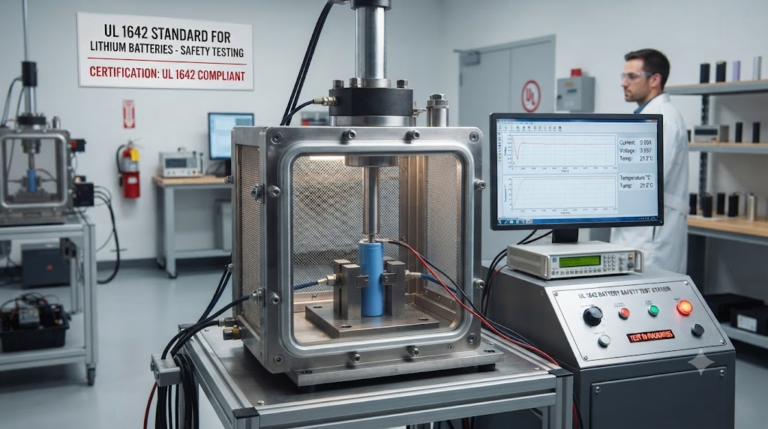
ISO 13485 Medical Device Battery Certification Guide
What is ISO 13485 Battery Certification?
ISO 13485 medical device battery certification establishes a specialized quality management system (QMS) ensuring power sources meet strict regulatory standards for safety and efficacy. It mandates rigorous control over design, production, and supply chain tracking specifically for battery packs used in clinical environments.
- Quality Management System (QMS): Comprehensive documentation of all manufacturing stages.
- Traceability: Component-level tracking from raw lithium cells to the final battery pack.
- Risk Management: Systematic identification and mitigation of battery thermal runaway and electrical failures.
- Design Controls: Verifiable proof that the battery meets specific medical device operational needs.
- Process Validation: Demonstration that manufacturing processes consistently produce safe, compliant battery units.
For medical equipment, the battery is not just an accessory. It is a critical component. If a consumer-grade battery fails, a device shuts down. If a medical-grade Lithium-ion battery in a ventilator or an active implantable device fails, lives are immediately at risk.
This certification is issued by the International Organization for Standardization. It confirms that a manufacturer’s Quality Management System Overview meets the strict requirements of the medical device industry.
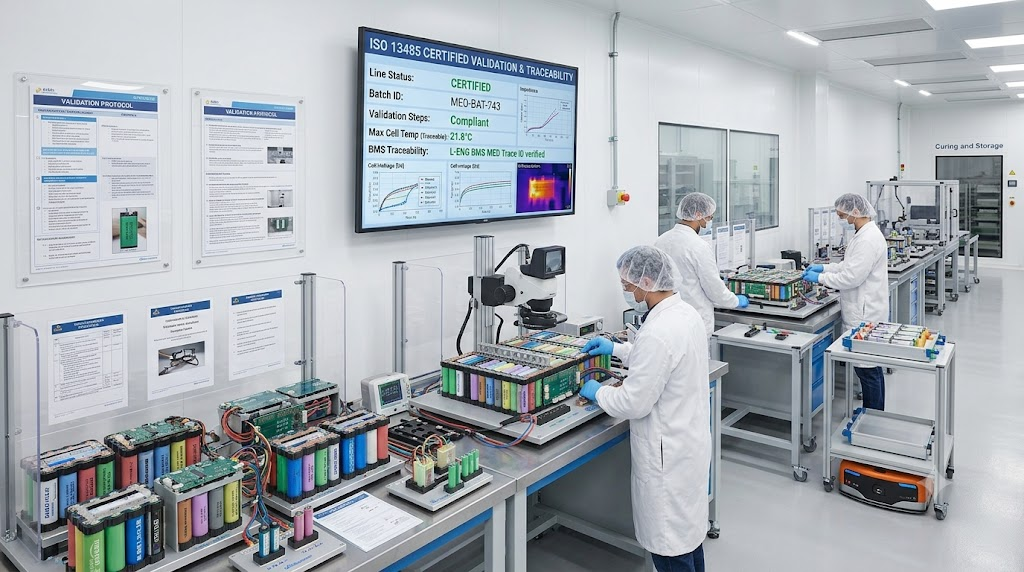
ISO 13485 vs. ISO 9001: Key Differences for Battery Manufacturers
Many general battery manufacturers operate under ISO 9001. While ISO 9001 focuses on customer satisfaction and continuous improvement, ISO 13485 targets safety, risk management, and strict regulatory compliance.
Standard industrial battery assembly lines lack the controls required for medical devices. For instance, a standard assembly line may not track the exact batch of electrolyte used in every individual lithium cell. Under medical standards, this level of traceability is mandatory.
| Feature | ISO 9001 (Industrial) | ISO 13485 (Medical) |
|---|---|---|
| Primary Focus | Customer satisfaction & continuous improvement | Product safety, risk management, & regulatory compliance |
| Risk Management | Optional / High-level business risk | Mandatory integration of ISO 14971 for every design stage |
| Traceability | Basic lot tracking | Full raw material to final shipment tracking (each cell & component) |
| Design Controls | Flexible frameworks | Rigid verification, validation, and design history files (DHF) |
| Cleanroom Standards | Not required | Strict particulate and environmental controls during assembly |
In our testing and manufacturing operations, we have found that transitioning from industrial to medical standards requires a complete shift in organizational culture. Every operator must understand that a single cold solder joint on a battery pack protection circuit could lead to a device failure during a surgical procedure.
The Cell-to-System Quality Framework (CSQF) for Medical Batteries
To ensure absolute compliance, our team developed a proprietary methodology: The Cell-to-System Quality Framework (CSQF). This process ensures that quality control is not just applied to the finished battery pack, but is embedded at every layer of development.
The CSQF is especially critical for multi-cell lithium-ion battery pack assembly used in Class III active implantable medical devices. These high-risk devices require the highest level of regulatory scrutiny.
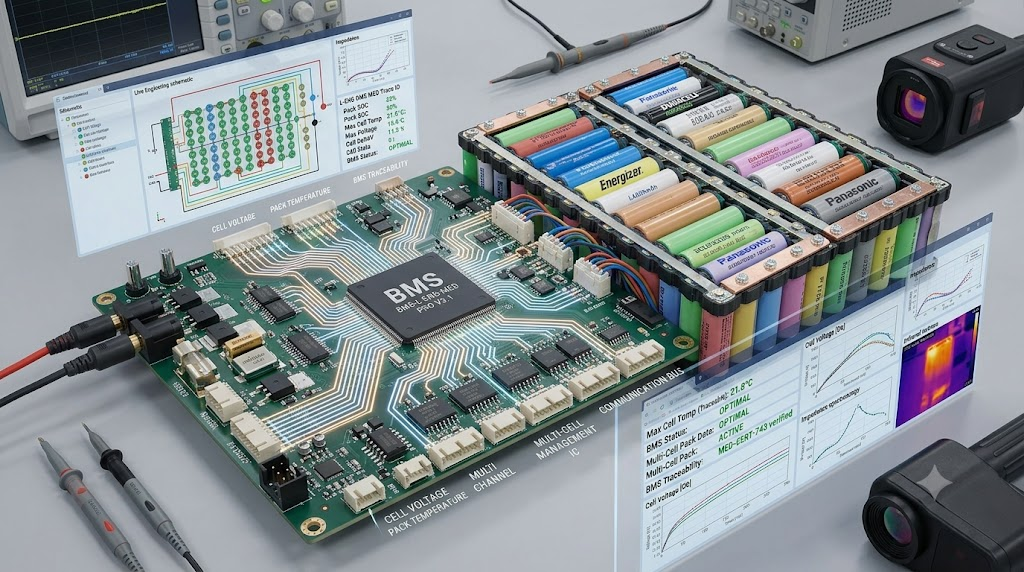
Phase 1: Cell-Level Verification
We begin by testing individual cells. Every cell undergoes rigorous capacity matching, internal resistance verification, and physical inspection. We only source cells from Tier-1 suppliers with proven track records in medical applications.
Phase 2: BMS Compliance & Smart Functionality
The Battery Management System (BMS) acts as the brain of the pack. Under the CSQF, the BMS software and hardware must undergo rigorous design controls. The BMS must accurately report state-of-charge (SoC), state-of-health (SoH), and prevent overcharging, over-discharging, and short circuits.
Phase 3: System-Level Validation
Once assembled, the entire pack is tested inside simulated environmental conditions. We verify that the pack integrates seamlessly with the target medical device. This ensures that the physical housing, electrical connectors, and communication protocols work flawlessly under stress.
Integrating ISO 13485 with IEC 62133 and ISO 14971 Risk Management
Achieving ISO 13485 certification is not done in isolation. It must be integrated with other critical Lithium-Ion Battery Safety Standards.
We define the safety of a medical battery as the intersection of a compliant Quality Management System (ISO 13485), rigorous hardware safety testing (IEC 62133), and proactive hazard mitigation (ISO 14971).
IEC 62133 is the global standard for safety requirements for portable sealed secondary cells and batteries. It tests for hazards like thermal abuse, crushing, dropping, and overcharging. A battery cannot be integrated into a medical device without passing IEC 62133 testing.
ISO 14971 defines the application of risk management to medical devices. When designing a battery, we must identify every potential hazard:
- What happens if the device is dropped?
- How does the BMS handle a sudden voltage spike?
- What thermal mitigation features prevent a single-cell runaway from spreading to adjacent cells?
For Class 3 medical devices, the documentation for these risks must be exhaustive. Every potential hazard requires a corresponding mitigation protocol that is verified through empirical testing.
The 2026 FDA QMSR Transition: What Battery Suppliers Must Know
The regulatory landscape has experienced a major shift. In 2026, the FDA (Food and Drug Administration) finalized its transition to the Quality Management System Regulation (QMSR).
This rule harmonizes the old FDA 21 CFR Part 820 with ISO 13485:2016. If you are a medical battery supplier selling into the United States, you can no longer rely solely on legacy FDA QSR practices. You must align your operations with ISO 13485.
This harmonization streamlines global compliance. It means a single, unified audit can now satisfy both US FDA requirements and European Union Medical Device Regulation (MDR) standards. This reduces administrative overhead and speeds up market access for new medical equipment.
Step-by-Step ISO 13485 Audit Guide for Battery Manufacturing
Surviving a registrar audit requires meticulous preparation. The certification process is divided into two distinct stages.
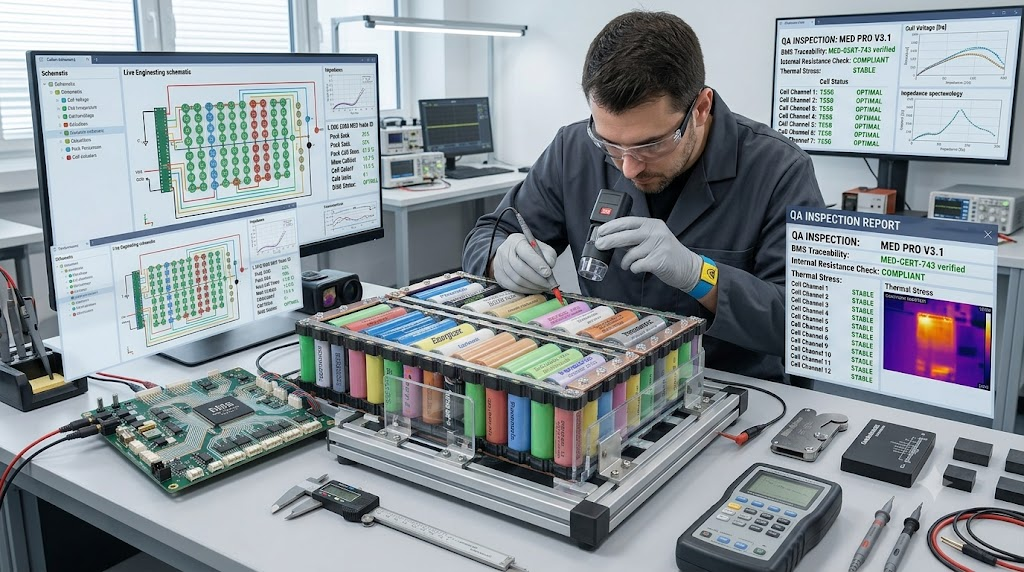
Stage 1: Documentation Review
The auditor reviews your Quality Manual, standard operating procedures (SOPs), and record-keeping frameworks. They ensure that your documented processes meet all requirements of the ISO 13485 standard. If your design controls or supplier evaluation protocols are incomplete, you will fail at this stage.
Stage 2: On-Site Implementation Audit
The auditor visits the manufacturing facility to verify that your team actually follows the documented procedures. They will interview operators, inspect calibration records, check cleanroom environmental logs, and trace a randomly selected batch of batteries from raw cell arrival to final packaging.
“The most common failure point we see during battery manufacturing audits is a lack of control over the electrostatic discharge (ESD) environment and incomplete validation of automated welding processes.”
— Lead QA Auditor, Medical Devices Sector
Interactive Compliance Checklist & Resource Hub
Use this self-assessment tool to evaluate your current manufacturing readiness for medical battery compliance.
Battery Quality Checklist
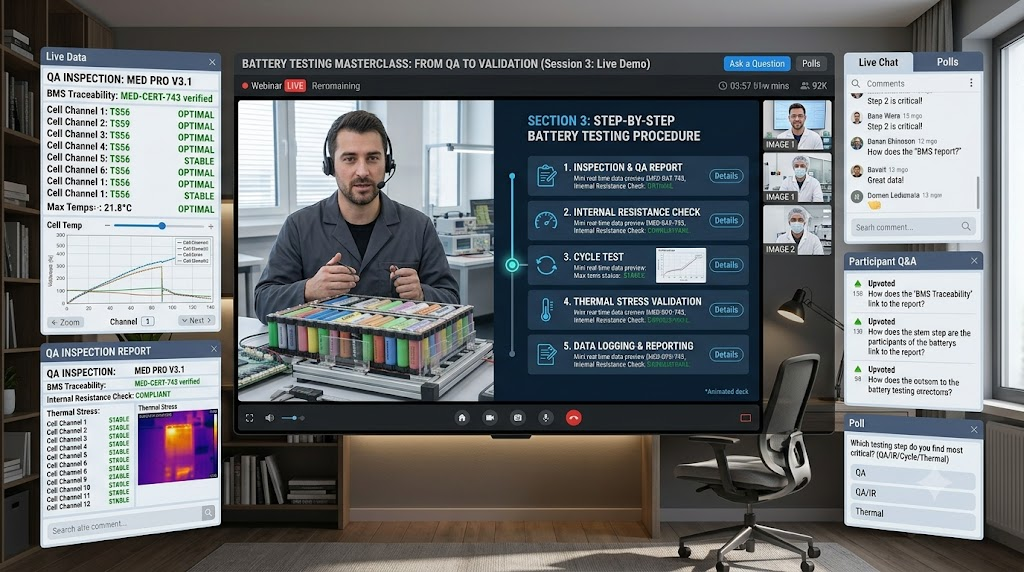
To help you prepare for your upcoming audit, we recommend reviewing our compliance training resources. Watch our webinar on establishing trace levels in active medical device battery packs.
Frequently Asked Questions About Medical Battery Certification
How long does it take to get ISO 13485 certification for battery assembly?
For an established facility with an existing ISO 9001 system, the transition to ISO 13485 typically takes 6 to 9 months. For a greenfield facility starting from scratch, expect a timeline of 12 to 18 months to build documentation, train staff, and collect the required operational data before the audit.
What is the approximate cost of medical battery certification?
Direct auditing and registrar fees generally range from $15,000 to $30,000. However, the internal costs of upgrading facilities, implementing cleanrooms, purchasing calibration gear, and hiring specialized quality personnel can exceed $100,000 depending on your starting point.
How should we evaluate a medical battery contract manufacturer?
Always request their ISO 13485 certificate and check the scope of certification. Ensure it covers “design, development, and assembly of battery packs for medical devices.” Ask for their latest audit reports and verify that they have an active cleanroom facility and automated testing systems.
Meet Our Medical Device Compliance Experts
This guide was developed and reviewed by our senior leadership team to ensure technical and regulatory accuracy.
Dr. Elizabeth Vance
Regulatory Affairs Director
Dr. Vance has over 18 years of experience steering medical device battery programs through FDA and CE clearance channels. She specializes in active implantable device power systems and leads our compliance strategy team.
Marcus Thorne
Lead ISO 13485 Auditor & QA Manager
Marcus is a certified lead auditor with a decade of experience auditing battery assembly operations globally. He ensures our production facilities consistently meet strict global quality standards.
Ensure Your Medical Power Source is Fully Compliant
Don’t let regulatory delays hold back your medical device launch. Partner with an established, ISO 13485-certified manufacturer to secure your supply chain.