LFP vs NCM Battery: Chemistry & Cost Comparison (2026)
Executive Summary: Core Differences Between LFP and NCM
Choosing between Lithium Iron Phosphate (LiFePO4/LFP) and Nickel Cobalt Manganese (NMC/NCM) comes down to balancing energy density against thermal stability, cycle life, and production economics. LFP delivers exceptional operational life and structural safety at lower cost, while NCM provides the high gravimetric density required for long-range transport and tight volumetric envelopes.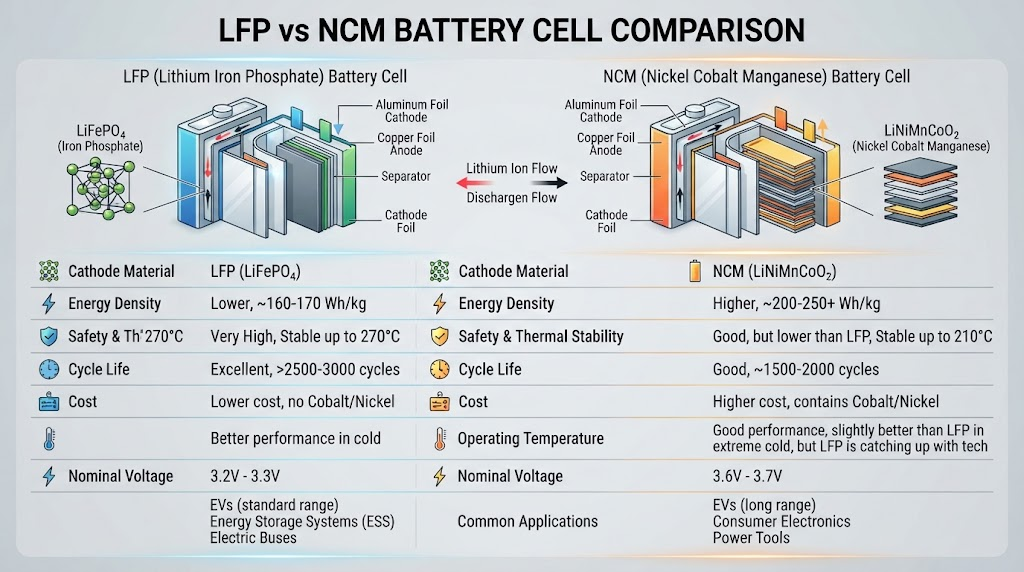
| Metric / Parameter | Lithium Iron Phosphate (LFP) | Nickel Cobalt Manganese (NCM 622 / 811) | Primary Application Fit |
|---|---|---|---|
| Cell Energy Density | 140 – 190 Wh/kg (300 – 400 Wh/L) | 240 – 300 Wh/kg (550 – 700 Wh/L) | NCM leads for long-range EVs; LFP fits stationary & commercial packs. |
| Cycle Life (80% DoD) | 3,000 to 6,000+ cycles | 1,000 to 2,000 cycles | LFP dominates heavy-duty daily cycling and stationary storage. |
| Thermal Runaway Temp | ~270°C (518°F) | ~210°C (410°F) for NCM 811 | LFP provides inherent runaway mitigation and no oxygen release. |
| Nominal Cell Voltage | 3.2V (Operating: 2.5V – 3.65V) | 3.6V – 3.7V (Operating: 2.8V – 4.2V) | NCM requires fewer cells in series to hit high pack voltages. |
| Relative Cell Cost ($/kWh) | Baseline (20% – 25% lower) | +25% to +35% premium (Cobalt/Nickel tied) | LFP eliminates expensive critical minerals for project CAPEX gains. |
Electrochemical Architecture: Cathode Chemistry and Crystal Stability
The core differences between LFP and NCM originate at the atomic level. The structural arrangement of atoms within the cathode dictates how lithium ions enter and exit during charge and discharge cycles, which directly affects thermal resilience and long-term mechanical degradation.
Olivine Structure (LFP): A three-dimensional crystalline lattice (LiFePO4) featuring strong covalent phosphorus-oxygen (P-O) bonds that resist oxygen liberation under severe thermal and electrical stress.
In an LFP cell, the phosphorus-oxygen polyanion unit forms a rigid framework. The tetrahedral P-O bonds have high dissociation energy, meaning the cathode does not release oxygen gas even when punctured or overcharged. This lattice exhibits negligible structural strain during lithium intercalation and deintercalation, which explains its multi-thousand-cycle durability.
Layered Oxide Structure (NCM): A crystal architecture [Li(NixCoyMnz)O2] composed of alternating sheets of transition metal oxides and lithium ions, offering rapid 2D lithium diffusion channels but weaker metal-oxygen bonds.
NCM cathodes utilize nickel for high capacity, cobalt for structural stabilization, and manganese for thermal robustness. Formulations have evolved from balanced stoichiometries like NCM 111 and NCM 523 to high-nickel variants such as NCM 622 and NCM 811 (80% nickel, 10% cobalt, 10% manganese). As nickel content rises, gravimetric energy density increases significantly. However, high-nickel layered oxides suffer from micro-cracking and phase transitions during deep cycling, as confirmed by electrochemical analyses indexed on ScienceDirect cathode research publications.
Performance Benchmarks: Energy Density, C-Rates, and Lifespan
Battery selection requires comparing real-world throughput, volumetric limits, and continuous C-rate capabilities under actual industrial workloads.
Gravimetric and Volumetric Energy Density
NCM remains the clear leader in energy per unit mass and volume. Modern NCM 811 cylindrical and pouch cells reach 260 to 300 Wh/kg at the cell level. In contrast, commercial LFP prismatic cells typically max out between 160 and 190 Wh/kg.
For applications where weight directly limits operational range—such as performance passenger electric vehicles or aerospace platforms—NCM provides unmatched range. However, advanced Cell-to-Pack (CTP) and Cell-to-Chassis (CTC) engineering pioneered by manufacturers like CATL and Tesla has allowed LFP pack-level volumetric efficiency to jump from 40% to over 60%, closing the effective range gap for standard vehicles.
Discharge C-Rates and Power Output
Both chemistries can be engineered for high continuous output, but their internal impedance characteristics vary:
- Continuous Discharge: High-rate LFP power cells easily sustain 3C to 5C continuous discharge, with peak pulses reaching 10C for industrial equipment.
- Internal Resistance: High-nickel NCM exhibits slightly lower internal resistance at moderate temperatures, yielding higher overall round-trip electrical efficiency (typically 95% to 97% for NCM versus 92% to 95% for LFP).
Cycle Life and Degradation Kinetics
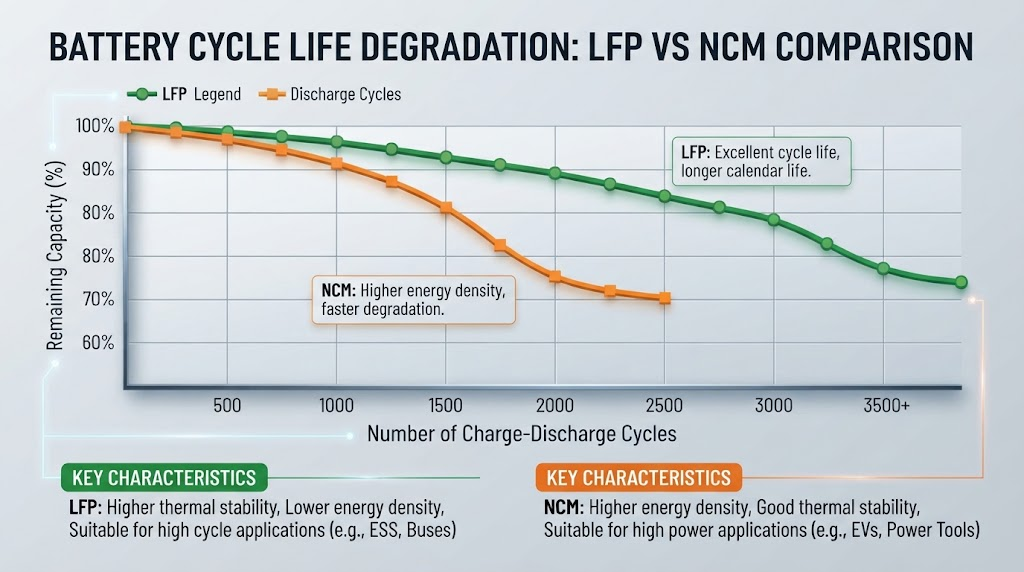
Cycle stability is where LFP clearly outperforms NCM. LFP cells achieve between 3,000 and 6,000+ full cycles at 80% DoD, compared to 1,000 to 2,000 cycles for conventional high-nickel NCM cells.
In stationary setups with one full charge/discharge cycle per day, an LFP pack can operate for 10 to 15 years before dropping to 80% of its initial capacity. Under identical daily duty cycles, an NCM pack typically hits that same degradation threshold within 3 to 6 years.
Thermal Stability and Runaway Dynamics
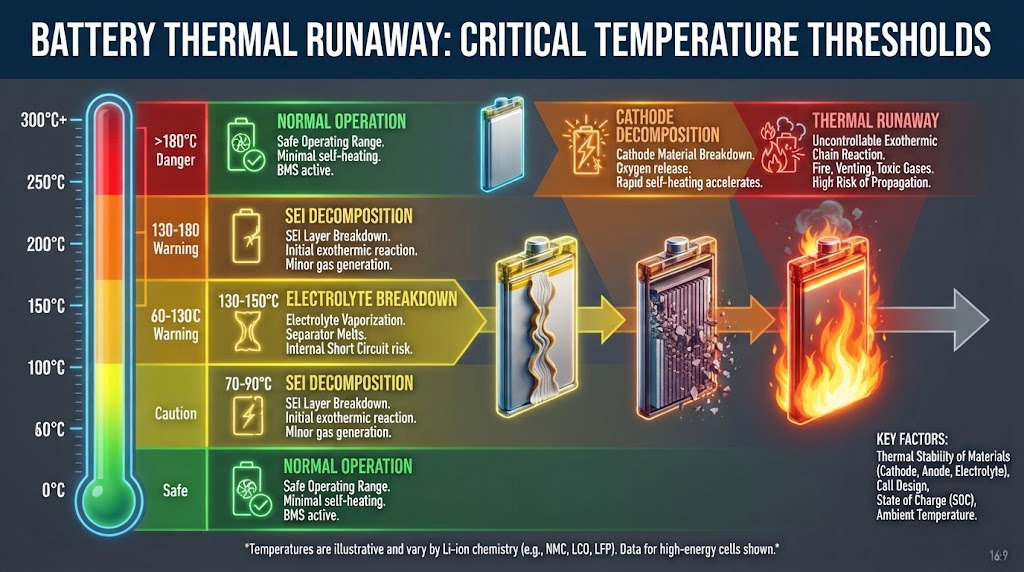
Safety considerations are central to industrial energy storage and heavy machinery design. The thermal runaway characteristics of these two chemistries differ fundamentally under electrical abuse, mechanical damage, or manufacturing defects.
Thermal Runaway Initiation Thresholds
Thermal runaway onset temperature for LFP sits at approximately 270°C (518°F) compared to 210°C (410°F) for NCM 811 chemistries. In laboratory nail-penetration and crush tests, LFP cells generate smoke and moderate venting without sustained open flames. Conversely, when NCM 811 cathodes exceed their thermal threshold, the metal-oxygen bonds break down exothermically, releasing pure oxygen (O2) directly into the cell chamber.
Off-Gassing and Flame Propagation
Because NCM produces internal oxygen during decomposition, it can sustain combustion even inside hermetically sealed battery enclosures without atmospheric air. This creates self-accelerating fires that are difficult to extinguish with conventional fire suppression systems.
LFP does not release cathode oxygen during thermal breakdown. As a result, catastrophic cell-to-cell propagation is far easier to contain with basic passive thermal barriers, simplifying UL9540A and IEC 62619 compliance for large-scale enclosures.
BMS Management: Voltage Curves and State-of-Charge (SOC) Calibration
Integrating lithium cells into commercial hardware requires matching cell electrochemistry to the battery management system (BMS) tracking algorithms.
LFP features an exceptionally flat open-circuit voltage (OCV) profile across its central operating window. Between 20% and 80% state of charge, an LFP cell’s terminal voltage sits between 3.20V and 3.28V. This minimal 80mV variance makes voltage-based SOC estimation unreliable during operation.
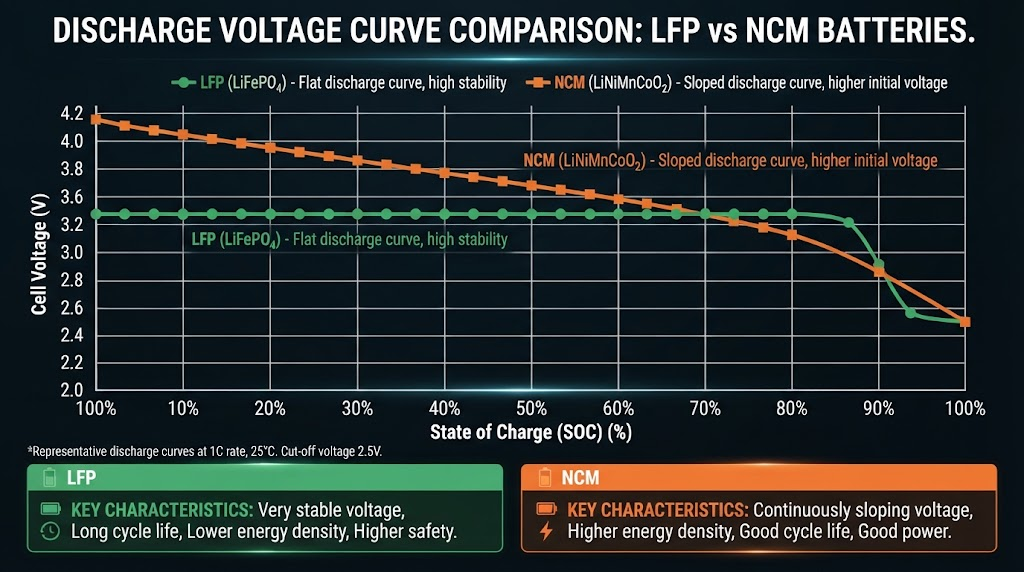
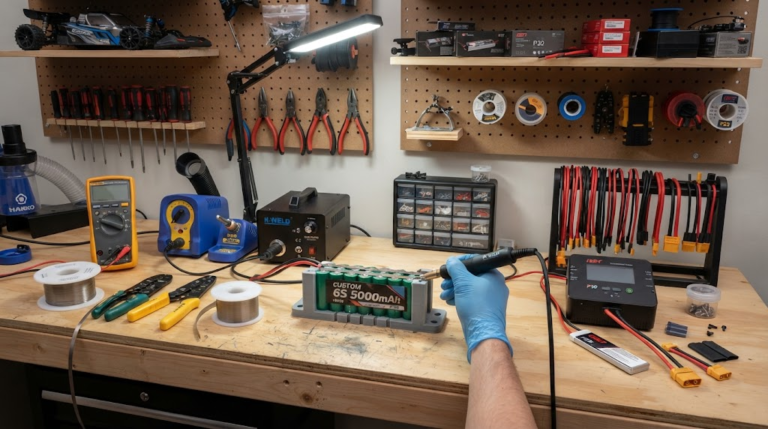
To prevent cumulative SOC drift, LFP systems require dedicated coulomb-counting algorithms combined with regular top-balancing at 100% SOC (3.65V per cell), where the voltage knee rises sharply. Engineering teams looking for pre-calibrated, high-accuracy BMS integrations often turn to custom LiFePO4 battery solutions to eliminate field-calibration issues.
In contrast, NCM exhibits a steep, linear open-circuit voltage curve from 3.0V (0% SOC) up to 4.2V (100% SOC). This linear profile allows the BMS to determine accurate SOC directly from resting cell voltage at any point in the discharge cycle. However, maintaining NCM cells at 100% SOC accelerates transition metal dissolution and electrolyte oxidation, so high-nickel packs are typically capped at 80% to 90% SOC for daily use.
Sub-Zero Temperature Behavior: Charging Kinetics and Impedance
Low-temperature operating conditions highlight a distinct advantage for nickel-based chemistries.
As temperatures drop below 0°C (32°F), internal charge transfer resistance rises sharply in all lithium-ion cells. However, LFP suffers from slower solid-state lithium-ion diffusion within its olivine channels. At -20°C (-4°F), an unheated LFP cell can lose 40% to 55% of its usable discharge capacity, compared to only a 20% to 30% drop for an equivalent NCM cell.
Attempting to charge any lithium-ion cell below freezing without active heating risks permanent lithium plating on the graphite anode. Plated metallic lithium forms dendrites that can pierce cell separators and trigger internal short circuits, as documented in safety bulletins by the U.S. Department of Energy.
To safely charge in sub-zero environments, LFP battery enclosures must incorporate PTC heating elements or active thermal management loops to warm cells to at least +5°C before high-current charging begins.
The JHY 4CSM Framework: 4-Factor Chemistry Selection Matrix
To eliminate guesswork in cell chemistry selection, our engineering team developed the JHY 4CSM Framework (4-Factor Chemistry Selection Matrix). This framework scores projects across four core parameters to identify the optimal cell choice:
- Volumetric & Weight Limits: If the pack must fit fixed dimensional cavities with gravimetric requirements exceeding 200 Wh/kg, NCM is mandatory. If the packaging volume allows a 25% larger footprint, LFP is the preferred choice.
- Thermal Operating Range: Deployments exposed to ambient operating conditions above 45°C (113°F) require LFP to prevent accelerated thermal degradation. Deployments regularly operating below -10°C (14°F) without external power favor NCM.
- Duty Cycle Frequency: Systems requiring more than 1.5 full equivalent cycles per day demand LFP to deliver an acceptable return on investment across multi-year operational horizons.
- Target Total Cost of Ownership (TCO): When long-term amortized cost per kWh delivered matters more than initial pack weight, LFP’s lower cell cost and long cycle life yield a much lower levelized cost of storage (LCOS).
Supply Chain Dynamics, Raw Material Volatility, and ESG
Battery procurement involves both cell-level performance and long-term raw material supply chain risk.
NCM chemistries rely on cobalt and nickel, materials prone to geographic concentration, speculative trading spikes, and ethical mining scrutiny. Cobalt refining remains heavily concentrated, and extraction carries significant ESG compliance liabilities for global OEMs.
LFP cathodes use abundant, non-toxic, and widely distributed iron and synthetic phosphate precursors. By 2026, raw material market dynamics position LFP cell-level production costs roughly 20% to 25% lower per kWh than high-nickel NCM alternatives. This cost advantage provides insulation against raw material price shocks and aligns with corporate ESG mandates by eliminating cobalt entirely.
Application Mapping: Commercial EVs, Stationary ESS, and Industrial Equipment
Every commercial application presents unique operating constraints that dictate chemistry selection.
Stationary Energy Storage Systems (ESS)
For containerized solar-plus-storage, microgrids, and peak shaving installations, weight and volume are secondary to cycle life, safety, and levelized cost. LFP holds more than 90% of new stationary storage deployments globally. Explore our turnkey commercial energy storage systems designed specifically for utility-scale and industrial microgrid installations.
Electric Vehicles: Standard vs. Performance Range
Modern passenger and fleet EVs show a clear chemistry split:
- Entry & Standard-Range Fleet Vehicles: LFP is the standard choice (e.g., standard-range Tesla Model 3/Y, commercial delivery vans, city transit buses), providing low cost, high daily cycle tolerance, and safe 100% charging routines.
- Long-Range & Performance EVs: Premium SUVs, sports cars, and heavy-haul highway trucks rely on high-nickel NCM 811 packs to maximize range between charges.
Industrial Material Handling, AGVs, and Marine/RV
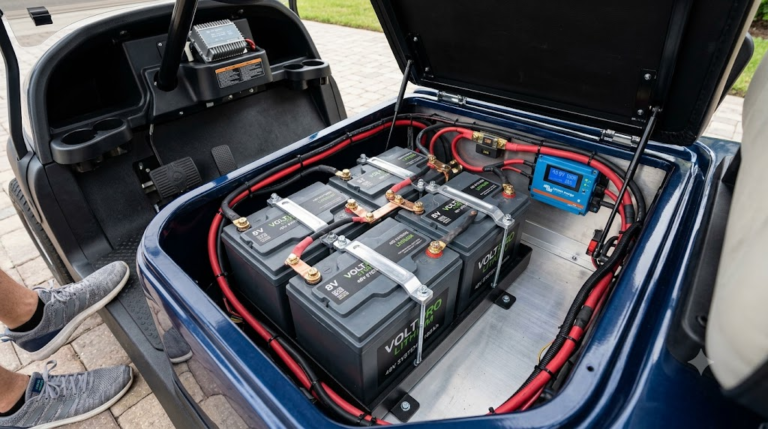
Forklifts, autonomous mobile robots (AMRs), automated guided vehicles (AGVs), golf carts, and marine house-power banks operate under frequent opportunity charging and rough mechanical shock. LFP’s long cycle life and high thermal tolerance make it the preferred chemistry for these off-highway and industrial applications.
Next-Gen Chemistries: LMFP and Advanced High-Nickel Variants
Electrochemical research is actively bridging the gap between LFP safety and NCM energy density.
Lithium Manganese Iron Phosphate (LMFP) blends manganese into the olivine crystal structure. This increases the nominal cell operating voltage from 3.2V to 3.7V, boosting gravimetric energy density by roughly 15% to 20% (reaching 220–240 Wh/kg) while preserving the intrinsic safety of the P-O covalent bond.
On the nickel front, single-crystal NCM formulations and ultra-high-nickel variants (90/05/05) combine with semi-solid-state electrolytes to reduce micro-cracking and improve thermal stability thresholds toward 230°C. These developments will provide specialized options across the cost-versus-density spectrum over the coming years.
Engineering Custom Battery Packs with JHY Battery
Off-the-shelf battery modules rarely match the exact enclosure dimensions, communication protocols, and thermal profiles required for custom industrial machinery and high-reliability systems.
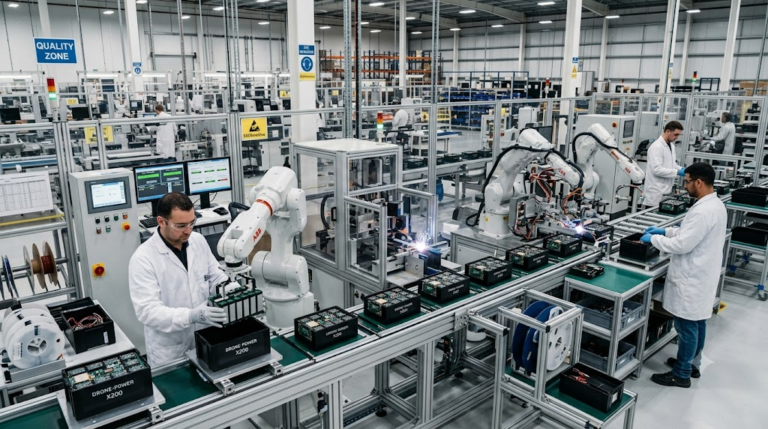
With more than a decade of specialized manufacturing experience, JHY Battery (Juheyuan Science & Technology Co., Ltd.) provides end-to-end OEM/ODM custom battery manufacturing for global B2B clients. We engineer bespoke solutions across LFP and NCM chemistries, including:
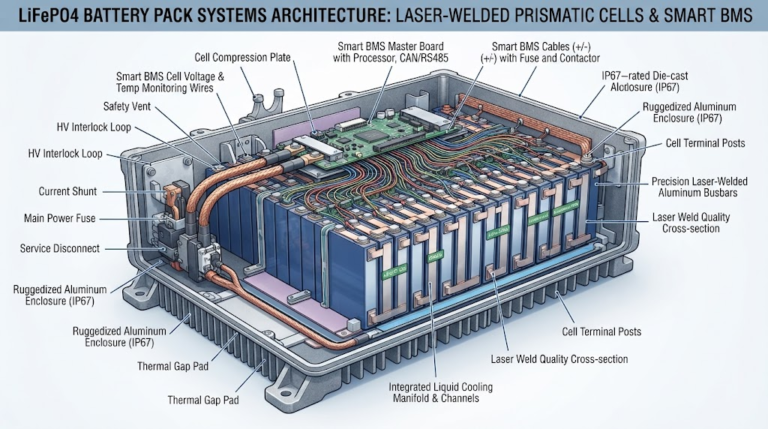
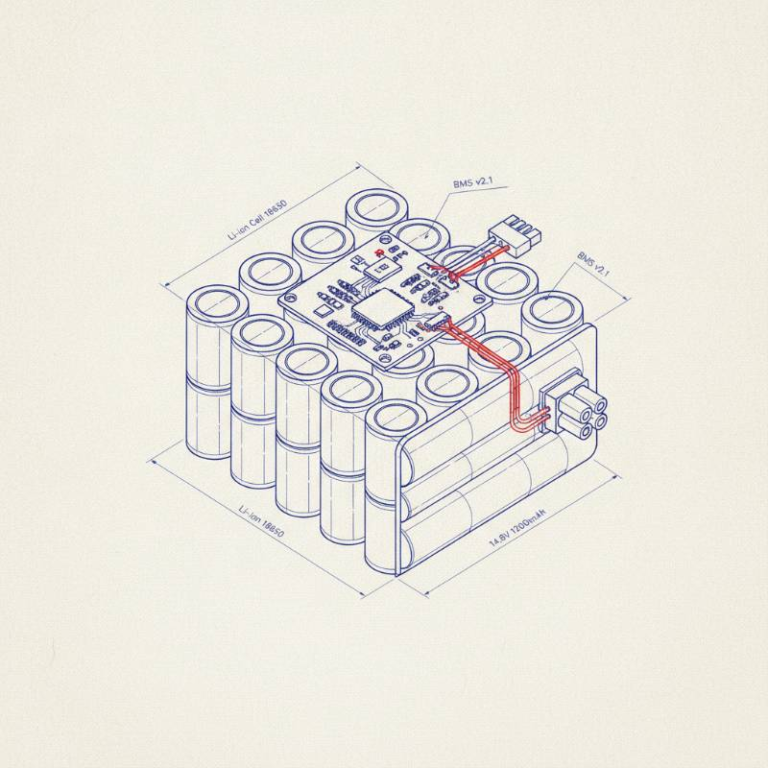
- Mechanical & Structural Customization: Form-factor optimization using prismatic, cylindrical, or pouch cells integrated into custom CNC-machined or die-cast aluminum enclosures.
- Proprietary Smart BMS Engineering: Custom firmware with precision SOC/SOH coulomb counting, CANbus/RS485/Modbus communication, and multi-tier thermal protection.
- International Compliance: Every pack is designed and built to meet ISO9001, CE, UN38.3, MSDS, UL1973, and UL9540A testing standards.
Need a Custom Battery Pack Engineered for Your Application?
Connect directly with JHY Battery’s senior electrochemical and mechanical engineers to build your custom, certified LFP or NCM pack solution.
Frequently Asked Questions (FAQ)
Can you charge an LFP battery to 100% regularly?
Yes. In fact, periodic 100% charging is recommended for LFP packs. Because the LFP voltage curve is extremely flat, charging to full voltage (3.65V/cell) allows the BMS to recalibrate its state-of-charge estimator and perform essential cell top-balancing without risking rapid cathode degradation.
Why does NCM perform better than LFP in cold weather?
NCM cathode materials feature lower internal impedance and faster lithium-ion diffusion rates at sub-zero temperatures. This allows NCM cells to retain more usable discharge capacity and sustain higher power output in sub-zero environments without severe voltage sag.
Is LFP completely fireproof?
While no high-energy battery is entirely fireproof, LFP is exceptionally stable. Its robust P-O covalent crystal bonds resist releasing oxygen during mechanical penetration or overcharging. This prevents self-sustaining combustion and makes thermal runaway far easier to isolate and extinguish than with NCM.
Which chemistry offers a lower Total Cost of Ownership (TCO)?
LFP consistently delivers a lower TCO in stationary and high-utilization commercial applications. Thanks to lower initial cell production costs and 2x to 4x longer cycle life, LFP provides a substantially lower levelized cost per kilowatt-hour cycled over the battery system’s lifespan.
About the Author & Technical Review Board
This technical guide was authored and reviewed by the JHY Battery Electrochemical Engineering and Technical Validation Board. With more than a decade of OEM/ODM lithium pack design experience, our team specializes in custom BMS integration, thermal simulation, and regulatory certification (UN38.3, UL9540A, IEC 62619) for industrial, commercial ESS, and medical applications worldwide.