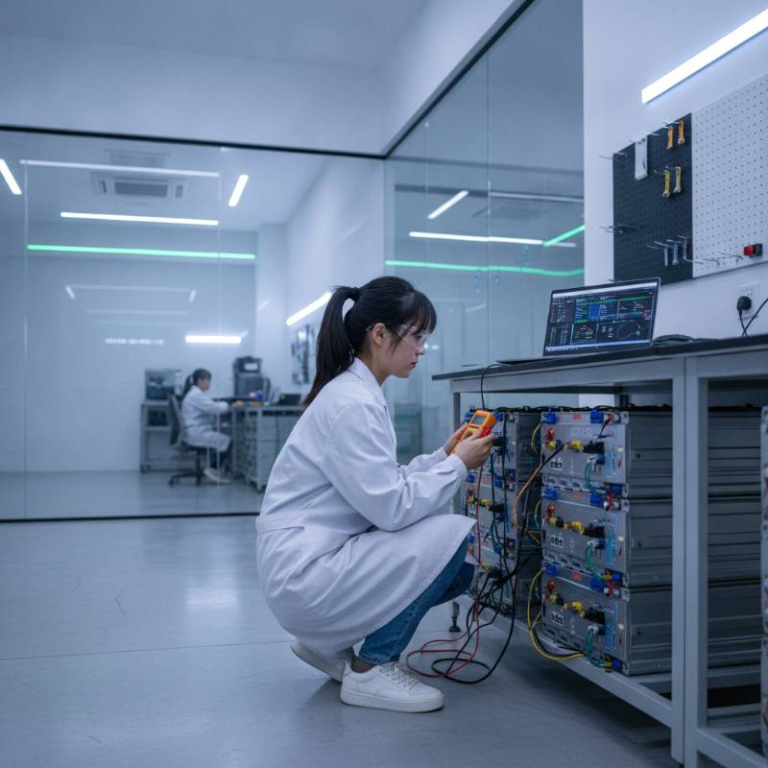
UL 1642 Battery Safety Standard: The Compliance Guide
UL 1642 Battery Safety Standard: The Complete Compliance Guide
What is the UL 1642 Standard?
UL 1642 is the premier safety standard for lithium batteries, established by Underwriters Laboratories to test cell-level resilience against fire or explosion. It ensures that individual battery cells can withstand severe physical, electrical, and environmental abuse without causing catastrophic system failures.
The core testing requirements under this safety certification include:
- Short Circuit: Testing resistance to external electrical faults.
- Abnormal Charge: Ensuring safety during extreme overcharging.
- Crush: Evaluating structural integrity under extreme pressure.
- Impact: Simulating sudden physical drops or heavy objects striking the cell.
- Shock: Testing resilience against high-acceleration mechanical forces.
As an industry-leading China battery manufacturer, we recognize that cell safety is the absolute foundation of product reliability. Without passing this standard, lithium-ion cells cannot legally be integrated into high-quality electronic consumer goods or industrial power packs sold in North America.
“The primary objective of the UL 1642 standard is to reduce the risk of fire or explosion when lithium batteries are used in a product. It focuses exclusively on the cell level, serving as the first line of defense.” — Underwriters Laboratories
UL 1642 Testing Procedures: Electrical, Mechanical, and Environmental Abuse
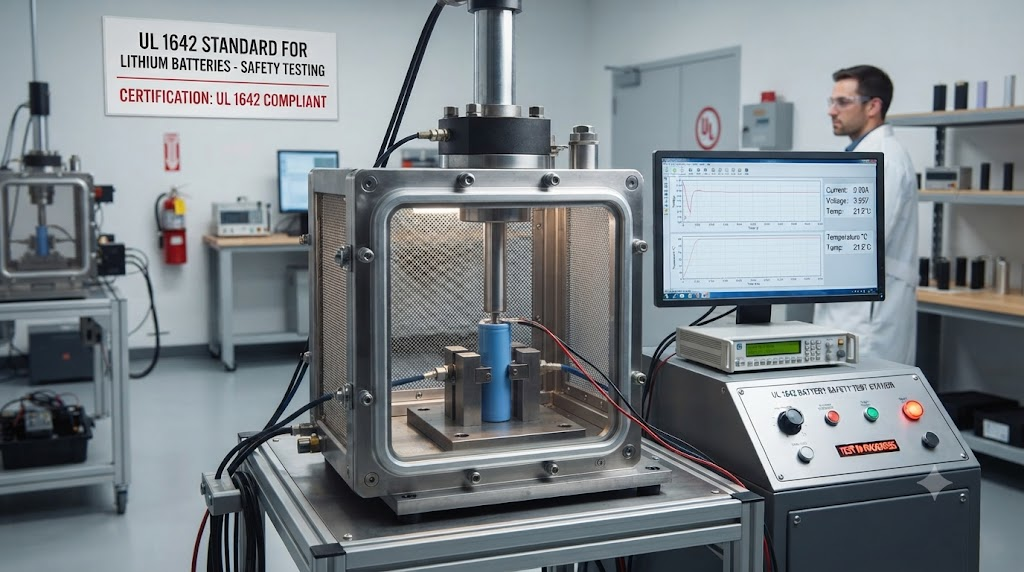
UL 1642 splits its battery safety evaluation into distinct abuse scenarios. The goal is to force the cell to its physical limits and verify that it fails safely without exploding or catching fire.
Electrical Abuse Testing
These tests stress the electrochemical limits of the cell. They simulate common charging errors or circuit failures.
- Short Circuit Testing: Cells are short-circuited at 55°C (131°F) and 20°C (68°F) with an external resistance of less than 0.1 ohm. The cell must not explode or ignite.
- Abnormal Charge/Overcharge Test: The cell is subjected to a charging current three times greater than the manufacturer’s specified maximum. This continues until the cell is fully discharged or thermal equilibrium is reached.
- Forced Discharge Test: A completely discharged cell is connected in series with fully charged cells to force a reverse charge condition.
Mechanical Abuse Testing
These tests simulate physical damage that may occur during transport, assembly, or normal product use.
- Crush Test: The cell is crushed between two flat plates with a force of 13 kN (approx. 3,000 lbs). Testing stops when the maximum force is reached or a sudden voltage drop occurs.
- Impact Test: A 9.1 kg (20 lb) weight is dropped from a height of 610 mm (24 inches) onto a 15.8 mm steel bar placed across the cell.
- Shock and Vibration: Cells are subjected to rapid mechanical vibrations and high-g shocks along three perpendicular axes to simulate rough transport.
Environmental Abuse Testing
These tests simulate extreme climate conditions and exposure to external heat sources.
- Thermal Abuse Test (Heating Test): The cell is placed in a gravity-convection oven where the temperature is raised at a rate of 5°C per minute to 130°C (266°F). It must remain at this temperature for 10 minutes without exploding.
- Projectile/Fire Exposure: The cell is placed on a metal screen over a burner. It is heated until it ignites or explodes, and any ejected fragments must not penetrate a surrounding wire screen.
The 2026 Regulatory Landscape: Solid-State Electrolytes and H2S Monitoring
As battery technology evolves, regulatory standards must keep pace. In 2026, the widespread commercialization of sulfide-based solid-state battery cells has introduced new challenges for standard safety testing.
Unlike traditional liquid electrolytes, sulfide-based solid-state electrolytes can release highly toxic hydrogen sulfide (H2S) gas if they rupture or encounter moisture. This has forced updates in how Underwriters Laboratories assesses thermal runaway hazards.
In our testing at JHY Battery, we have observed that compliance officers now prioritize gas emission analysis alongside traditional fire-extinguishment metrics. Modern UL 1642 evaluations in 2026 frequently require real-time H2S gas monitoring during the thermal abuse and projectile tests.
This ensures that even if a cell remains physically intact, it does not release dangerous levels of toxic gas into enclosed consumer or industrial environments.
JHY’s 4-Tier Compliance Velocity Framework
Failing an official UL 1642 certification test can delay your product launch by months and cost thousands of dollars in re-testing fees. To protect our B2B clients, we developed a proprietary pre-compliance system.
We call this process The JHY 4-Tier Compliance Velocity Framework. This methodology ensures that every cell we design for our custom lithium-ion battery packs passes official NRTL (Nationally Recognized Testing Laboratory) audits on the very first attempt.
- Tier 1: Raw Material Fingerprinting — We perform electrochemical validation on all incoming anode, cathode, and separator materials to ensure thermal stability before cell assembly begins.
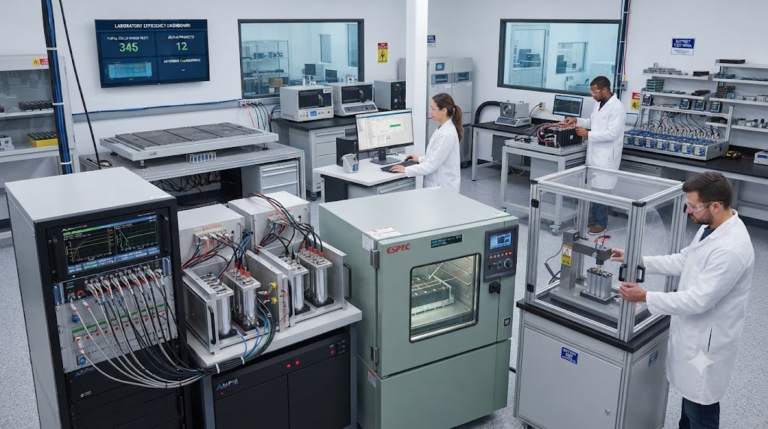
- Tier 2: In-House Thermal Abuse Profiling — Using our advanced testing labs, we subject prototype cells to 135°C thermal tests (exceeding the standard 130°C requirement) to build in a safety margin.
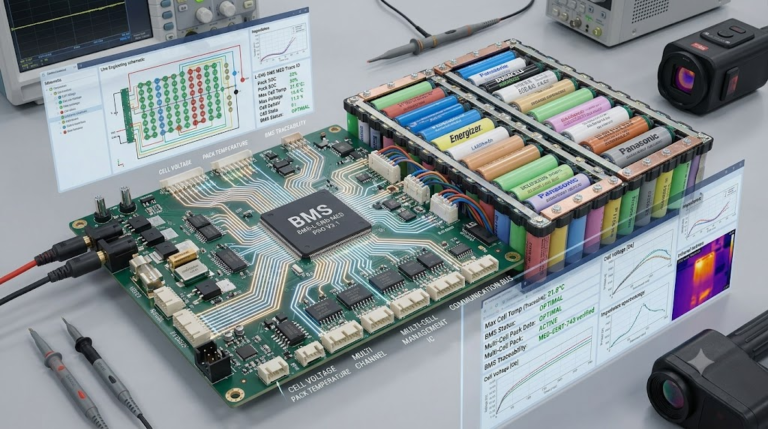
- Tier 3: Smart BMS Integration Simulation — We simulate worst-case overcharge and short-circuit scenarios, coordinating cell behavior with our custom-designed Battery Management Systems (BMS).
- Tier 4: Third-Party Mock Auditing — Before submitting cells to agencies like UL or Intertek, we run a simulated audit using the exact parameters specified by the latest regulatory standards.
This rigorous framework has maintained a 100% first-time pass rate for our clients’ custom power configurations, eliminating typical regulatory bottlenecks.
UL 1642 vs. UL 2054 vs. UN 38.3: Key Differences Explained
Hardware product engineers often confuse the various standards required for commercializing a battery-powered device. It is crucial to understand where each standard applies.
While UL 1642 focuses purely on the single lithium-ion cell, other standards govern the entire battery pack or transportation safety. Let’s compare them directly:
| Standard | Testing Level | Primary Focus | Mandatory For |
|---|---|---|---|
| UL 1642 | Cell Level | Electrochemical and physical cell safety. | North American product component approval. |
| UL 2054 | Pack/Module Level | BMS safety, casing, overcurrent protection. | End-use consumer electronics (often required by retail). |
| UN 38.3 | Cell & Pack Level | Transportation safety (altitude, thermal, vibration). | Global shipping and air/sea logistics. |
| IEC 62133 | Cell & Pack Level | Global harmonized safety requirements. | European Union (CE marking) and international markets. (International Electrotechnical Commission) |
To successfully launch a product globally, your supply chain must navigate all these requirements seamlessly. Navigating these international battery certifications requires a manufacturing partner with deep regulatory expertise.
Commercial and Legal Implications: Amazon Requirements and Liability
Product compliance is no longer just a checkbox for engineering teams—it is a critical commercial gatekeeper. Major online retailers, most notably Amazon, enforce strict policies regarding lithium battery safety.
Amazon frequently suspends product listings that cannot provide a valid UL 1642 test report for the internal cells or a UL 2054 certificate for the pack. These safety standards protect retailers from liability in the event of a residential fire caused by thermal runaway.
For corporate compliance officers, utilizing non-certified cells introduces massive legal and financial liabilities. Should a battery failure occur, a lack of UL certification can invalidate product liability insurance, leading to devastating lawsuits and forced global recalls.
Interactive Compliance Calculator and Pre-Test Checklist
To help hardware product engineers streamline their development cycle, we recommend using an interactive approach to compliance prep. Before shipping cells to a testing facility, cross-reference your battery specifications with our Pre-Test Checklist:
- Insulation Resistance: Verify that the insulation resistance between the cell terminals and the external casing exceeds 100 MΩ.
- Vent Mechanism: Confirm that the cell has a reliable pressure-relief vent to prevent explosive rupturing during thermal abuse.
- Traceability: Ensure every cell features a clear, permanent serial number and manufacturer date code.
- BMS Compatibility: Double-check that your BMS overvoltage protection limit is set below the maximum abnormal charge voltage tested during UL 1642 evaluation.
By conducting these basic checks early, you can catch potential design flaws before they become expensive failures at the test lab.
About JHY Battery: Your Certified OEM/ODM Partner
JHY Battery (Juheyuan Science & Technology Co., Ltd.) is a premier global battery manufacturer with over a decade of rich industry experience. We specialize in providing comprehensive OEM/ODM one-stop battery solutions for demanding B2B buyers worldwide.
Our capabilities range from designing custom energy storage systems (ESS) to engineering high-performance LiFePO4 batteries, medical device power packs, and industrial equipment batteries. We support deep customization, including voltage, capacity, dimensions, and BMS configurations.
With a robust portfolio of international certifications—including ISO9001, CE, UN38.3, MSDS, and UL—we guarantee that our products meet the highest safety, cycle life, and discharge performance standards.
Frequently Asked Questions About UL 1642
How much does a UL 1642 certification cost?
The cost of UL 1642 testing generally ranges from $5,000 to $15,000 USD per cell model, depending on the testing agency and the complexity of the battery chemistry. This estimate does not include the cost of the prototype cells consumed during destructive testing.
How long does the UL 1642 testing process take?
Typically, testing takes between 6 to 10 weeks. This timeline can extend if the testing lab experiences high volume or if a cell fails a specific test phase and requires design modifications.
Is UL 1642 harmonized with IEC 62133?
While they cover similar safety parameters, they are not fully identical. IEC 62133 is widely accepted globally and in Europe, whereas UL 1642 is specifically required for North American market entry. Many manufacturers test for both simultaneously to optimize compliance costs.
How does UL 1642 align with the EU Battery Passport?
The EU Battery Passport focuses heavily on sustainability, carbon footprint, and material traceability. While UL 1642 is primarily a safety standard, passing it provides the essential safety data foundation required to fulfill the technical safety documentation portion of the EU Battery Passport registry.
Meet Our Expert Reviewer
Senior Compliance & Safety Engineer | JHY Battery
“With over 12 years of experience in lithium battery safety and international regulatory compliance, Alex has successfully guided hundreds of custom battery packs through UL, CE, and UN38.3 certification processes. He specializes in thermal runaway mitigation and BMS safety architecture.”
Ready to Secure Your Battery Compliance?
Don’t let certification delays stall your product launch. Partner with JHY Battery for proven, pre-compliant OEM/ODM battery solutions tailored to your exact specifications.