Questions to Ask a China Battery Manufacturer Before Buying
Sourcing lithium power systems directly from overseas factories offers significant cost efficiencies, yet it presents severe technical risks if vetting protocols are incomplete. Over 75% of global lithium-ion cell production and custom pack assembly operations are concentrated within Chinese manufacturing hubs. Navigating this vast industrial ecosystem requires technical precision to separate actual Tier-1 manufacturers from intermediaries who repackage degraded or salvaged cells.
A single overlooked detail in cell grouping or protection circuitry can lead to premature capacity loss, thermal runaway, or severe import delays. Knowing the exact technical and operational questions to ask ensures your energy storage or industrial equipment operates reliably, meets all international safety mandates, and arrives on schedule.

Supplier Due Diligence Summary: Core Questions at a Glance
- What is the origin, grade, and internal resistance matching tolerance of your raw cells? Verifies whether the pack uses pristine Grade A chemistry or re-wrapped Grade B/recycled stock, ensuring balanced cycle life and thermal stability.
- What specific Battery Management System (BMS) hardware and safety architecture do you integrate? Confirms dual-layer overvoltage, overcurrent, short-circuit, and thermal cutoff thresholds, alongside necessary digital communication protocols like CANbus or RS485.
- Can you provide genuine, pack-level UN 38.3 test summaries and compliance certificates? Guarantees the finished assembly passes mandatory transit shock, altitude, and vibration tests without relying on incomplete cell-only documentation.
- What are your verified production lead times, sample turnaround, and scalable MOQ tiers? Establishes realistic manufacturing timelines, prototyping cycles, and volume-pricing thresholds to avoid sudden supply bottlenecks.
- What specific warranty parameters, AQL defect thresholds, and RMA procedures are legally guaranteed? Defines clear return-to-factory or component replacement mechanisms, acceptable failure rates, and long-term cycle life commitments in writing.
The TRACE Framework: A Standardized Protocol for Battery Supplier Audits
To eliminate ambiguity when vetting potential production partners, our engineering team developed The TRACE Framework. This standardized vetting methodology establishes objective benchmarks across five critical operational pillars.
The TRACE Framework Definition: A 5-stage qualification protocol comprising Traceability (raw material provenance), Regulation (full-pack certification validity), Archetype (BMS and thermal architecture), Contract (enforceable legal frameworks), and Execution (Class 9 logistics and AQL quality controls).
Applying this structured assessment ensures that procurement teams do not focus solely on unit pricing. It forces vendors to demonstrate operational transparency, engineering expertise, and compliance discipline before any financial commitments are made.
1. Cell Provenance and Quality Assurance Inquiries
The foundation of any high-performance battery pack is the intrinsic quality of its individual cells. Unscrupulous suppliers frequently lower unit prices by utilizing Grade B cells—units with minor cosmetic defects, uneven capacity distributions, or higher self-discharge rates—or reconditioned cells from decommissioned electric vehicle packs.
When interviewing a prospective LiFePO4 battery manufacturer, ask these exact questions regarding cell provenance:
- Are the cells utilized in this build certified Grade A, sourced directly from Tier-1 manufacturers (such as CATL, EVE, BYD, or your own certified automated line)?
- What are your cell-matching tolerances for voltage (ΔV), capacity (ΔAh), and internal resistance (ΔACIR/DCIR) before pack assembly?
- Can you supply factory grading logs and barcode traceability reports for the specific batch assigned to our production run?
In high-discharge and deep-cycle applications, internal resistance matching is paramount. If cells within a series string vary by more than 5% in internal resistance, the pack will suffer from severe cell drift. This causes early cutoffs, localized overheating, and a drastically reduced operating lifespan.
Verifying In-House Factory Quality Control (IQC, IPQC, OQC)
A reliable factory must demonstrate rigorous, multi-stage quality control throughout production. Implementing structured 4-stage IQC, IPQC, and OQC vendor verification reduces mass-production lithium cell defect rates from an industry average of 1.5% to under 0.05%.
Require the supplier to outline their standard operating procedures for:
- Incoming Quality Control (IQC): Automated incoming cell inspection, OCV/IR testing after a minimum 14-day resting period, and physical casing dimension checks.
- In-Process Quality Control (IPQC): Nickel strip welding pull-force tests, automated optical inspection (AOI) for spot-welding integrity, and mid-assembly insulation resistance checks.
- Outgoing Quality Control (OQC): 100% complete charge-discharge aging cycles at rated C-rates to verify nameplate capacity and thermal stability prior to packaging.
2. Custom Engineering and BMS Architecture Questions
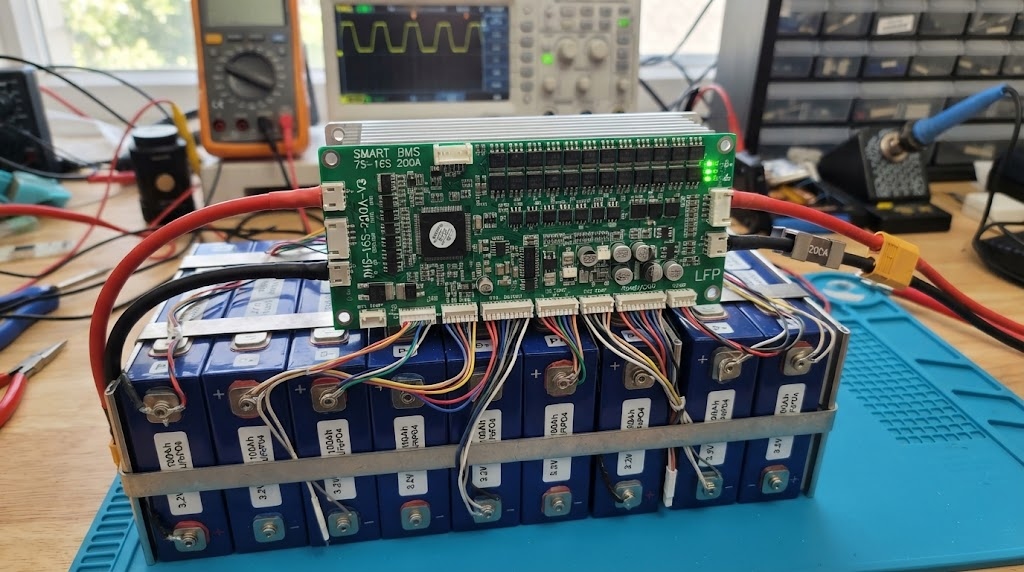
The Battery Management System (BMS) acts as the central brain and protective barrier of the entire battery pack. Off-the-shelf, low-cost protection boards typically utilize generic hardware that lacks precise calibration, active balancing, or communication capabilities.
When procuring a specialized custom lithium battery pack design, drill down into the BMS hardware specifications:
- Does your BMS design utilize hardware-only protection, or a programmable microcontroller (MCU) with redundant secondary protection?
- What digital communication protocols are supported (CANopen, CANbus 2.0B, RS485, Modbus, SMBus, UART, or Bluetooth BLE)?
- What is the passive or active balancing current (mA), and at what specific cell voltage threshold does balancing initiate?
- Are the temperature sensors (NTC thermistors) strategically placed on both the cell terminals and the MOSFET heat sinks?
Thermal Runaway Prevention, Enclosure Ratings, and NRE Tooling Costs
Mechanical construction dictates how well a pack survives mechanical shock, vibration, and thermal anomalies. Ask the supplier about their mechanical safeguards and structural design capabilities:
Inquire whether the battery housing features flame-retardant structural plastics (UL 94 V-0 rated) or custom sheet metal/aluminum enclosures. For wet or demanding industrial environments, confirm the enclosure ingress protection rating (such as IP65, IP67, or fully potted silicone encapsulation).
Additionally, clarify all Non-Recurring Engineering (NRE) charges. Ask if the quoted tooling fees include custom Injection molding molds, stamping dies, dedicated BMS firmware development, and rapid 3D prototyping prior to full tooling sign-off.
3. Regulatory Compliance and Safety Certification Questions
Battery compliance is non-negotiable. Importing non-compliant energy storage systems can lead to border confiscation, severe regulatory fines, or invalidated commercial liability insurance. Up to 22% of unverified international lithium battery shipments face customs delays or Hazmat rejections due to outdated UN 38.3 test summaries or invalid MSDS documentation.
Review our detailed battery safety certifications guide to cross-examine supplier documentation against the following standards:
- UN 38.3 Test Summary Report: Mandatory for all global air and sea transport, covering altitude simulation, thermal cycling, vibration, shock, external short circuit, impact, overcharge, and forced discharge. Consult the UNECE Dangerous Goods Regulations for current transport manual criteria.
- IEC 62133: The global benchmark for secondary cells and batteries containing alkaline or other non-acid electrolytes in portable applications, overseen by the International Electrotechnical Commission.
- UL 1642 vs. UL 2054: Safety standards managed by Underwriters Laboratories.
- Safety Data Sheet (SDS / MSDS): Must adhere to the latest 16-section GHS standard and be renewed annually.
Cell-Level vs. Pack-Level Certification: Preventing Costly Audit Failures
A frequent pitfall in international procurement is the “certification substitution” tactic. When asked for UL or CE certificates, a supplier may provide a valid certificate that applies solely to the bare internal cell, not the finished battery pack assembly.
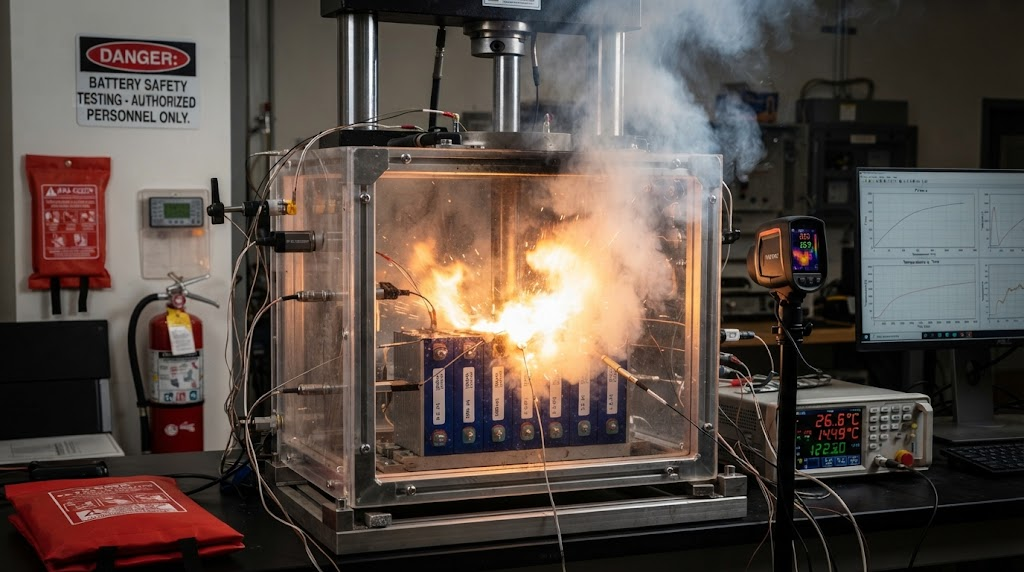
Critical Engineering Distinction: UL 1642 certifies the safety of the individual lithium cell against fire or explosion risks. UL 2054 and IEC 62133 (Pack Level) evaluate the complete system, including BMS overcurrent protection, internal wiring gauge, enclosure flame rating, and insulation breakdown under fault conditions.
Always ask: “Is this certification issued for our exact pack model configuration, or does it only apply to the raw incoming cell?” If custom packaging is required, confirm who bears the financial cost and testing timeline for third-party laboratory verification (such as TÜV Rheinland, SGS, or Intertek).
4. Legal Protection and IP Security: Enforceable Contracts in China
Protecting proprietary product casing designs, custom PCB layouts, and private-label firmware requires a practical legal approach. Standard Western Non-Disclosure Agreements (NDAs) hold virtually no legal standing in Chinese civil courts.
To establish real legal accountability, confirm whether the supplier will sign an enforceable NNN Agreement:
- Non-Disclosure: Prevents the factory from publicly showing your CAD drawings, internal schematics, or branded packaging on trade portals.
- Non-Use: Legally forbids the supplier from utilizing your tooling, molds, or software architecture for their own products or other clients.
- Non-Circumvention: Prohibits the factory from bypassing you to sell your customized pack directly to your clients or competitors.
Ensure the NNN agreement is written bilingually (English and Chinese), governed exclusively by Chinese law, and designated for dispute resolution in a Chinese court or a regional arbitration body like CIETAC. Suppliers unwilling to sign a China-enforceable NNN should be disqualified immediately.
5. Dangerous Goods Logistics, Hazmat Packaging, and Incoterms
Lithium-ion and LiFePO4 batteries are categorized as Class 9 Miscellaneous Dangerous Goods (UN 3480 for standalone batteries, UN 3481 for batteries packed with or contained in equipment). Shipping them requires strict compliance with international maritime (IMDG Code) and aviation (IATA DGR) standards.
Clarify logistics handling by asking the following:
- Does your factory possess a valid Dangerous Goods Packaging Certificate (危包证, Weibaozheng) for the final shipment?
- Are the outer export cartons certified UN Specification 4G fiberboard boxes with appropriate Class 9 Hazmat diamond labels and CAO (Cargo Aircraft Only) markings?
- What Incoterms do you support (FOB Shenzhen, CIF, or DDP with customs clearance and hazardous port delivery included)?
- Who assumes financial liability if a shipment is impounded due to flawed documentation or unapproved forwarder booking?
6. Commercial Scalability, Defect Thresholds, and Warranty Terms
High-reliability applications demand clear, written commercial safeguards. When scoping large-scale supply contracts for OEM ODM battery solutions, establish clear operational rules for scaling, defect tracking, and warranty claims.
Verify the following commercial variables:
- Acceptable Quality Limit (AQL): What are your standard AQL limits for major and minor defects (e.g., AQL 0.4 Major / 1.0 Minor under ISO 2859-1 standards)?
- RMA & Failure Settlement: If a field failure occurs, what is the procedure for Root Cause Analysis (8D Report), and will replacement packs/credits be issued without demanding return of hazardous damaged batteries across international borders?
- Cycle Life Guarantee: What is the guaranteed remaining capacity percentage (e.g., ≥80% capacity) after a defined cycle count (e.g., 2,000 to 6,000 cycles at 0.5C/0.5C, 25°C, 80% DOD)?
- Production Scaling and Buffer Stock: What is the lead time for standard repeat orders versus custom prototype iterations? Can the factory maintain a rolling buffer of raw cells to protect against raw material price spikes?
Good vs. Bad Supplier Response Evaluation Matrix
Evaluating vendor replies requires looking past sales rhetoric. Use this comparison matrix to separate evasive suppliers from verified engineering manufacturers:
| Evaluation Dimension | Red Flag / Evasive Response | Green Flag / Verified Engineering Response |
|---|---|---|
| Cell Provenance | “Our cells are high quality domestic Grade A, don’t worry about the brand.” | “We source directly from Tier-1 lines with traceable QR codes. Factory matching limits: ΔIR ≤ 1.5mΩ, ΔV ≤ 3mV.” |
| BMS Architecture | “Standard BMS is already installed inside with auto-protection.” | “Custom programmable BMS with TI/ST microcontrollers, dual thermal sensors, low-temp charge cutoff, and CAN/RS485 registers.” |
| Safety Certifications | Sends a 4-year-old UN 38.3 test report belonging to a different cell manufacturer. | Provides current UN 38.3 test summaries, UL 2054 pack reports, and current SDS with matching factory and model numbers. |
| IP Protection | Refuses to sign China-governed NNN or insists on non-binding general agreements. | Readily signs bilingual NNN agreements subject to Chinese jurisdiction with explicit liquidated damage clauses. |
| Logistics & Hazmat | “We ship via normal express; customs clearance is your responsibility.” | “Full Class 9 DGR export compliant: UN-rated packaging, Weibaozheng certification, and licensed dangerous goods forwarders.” |
Frequently Asked Questions About Sourcing Batteries from China
How can I verify if a Chinese battery supplier is a real manufacturer or just a trading company?
Request a live video audit showing the automated cell grading, laser welding, and high-temperature aging chambers. Ask for their business license (营业执照) to verify their approved business scope (经营范围) includes “manufacturing” (生产/制造) rather than just “wholesale/distribution” (批发/销售). You can also request their ISO9001 audit certificate and verify the registered factory address.
What is the standard payment term for custom battery manufacturing in China?
Standard terms for custom OEM/ODM production are 30% deposit upon purchase order placement and drawing sign-off, with the remaining 70% balance paid after pre-shipment inspection (OQC) and testing sign-off, prior to dispatch. For tooling and NRE costs, 100% upfront is typical, though tooling release terms should be tied to prototype sample approval.
How many sample cycles should I test before approving mass production?
You should run a minimum of 50 to 100 continuous charge-discharge cycles at the system’s maximum operational C-rate and elevated temperature (40°C–45°C) to measure capacity retention, thermal dissipation, and cell balance stability. Ensure your engineering team confirms the BMS low-temperature charge cutoff operates correctly at 0°C.
What are the current EU Battery Regulation and Battery Passport requirements?
Recent international updates require industrial and ESS batteries entering the European market to track their carbon footprint declaration, recycled cobalt/lithium/nickel content percentages, and supply chain due diligence. Always ask whether your manufacturing partner maintains digital data logging systems that comply with ongoing traceability regulations.
Engineering Methodology and Author Review
This qualification framework was authored and reviewed by Senior Battery Pack Design Engineers at JHY Battery (Juheyuan Science & Technology Co., Ltd.). With over a decade of dedicated engineering and manufacturing experience in custom lithium-ion and LiFePO4 battery pack assembly, our engineering team manages end-to-end design, BMS firmware customization, and international compliance testing.
Our manufacturing facilities operate under strict ISO9001 quality management systems, deploying automated cell sorting, precision multi-axis laser welding, and automated charge-discharge lifecycle testing. We deliver safe power solutions for industrial vehicles, medical electronics, recreational mobility, and commercial energy storage systems worldwide.
Partner with a Certified Battery Engineering Manufacturer
Eliminate technical risks with fully certified, custom-engineered LiFePO4 and Lithium-ion power solutions built to your exact specifications.