AWP Lithium Conversion Guide: Safety, ROI & Retrofitting
The Shift to Lithium Conversion for Aerial Work Platforms
Fleet managers and equipment operators are rapidly moving away from legacy power sources. A lithium conversion for aerial work platforms replaces heavy, high-maintenance lead-acid packs with advanced Lithium Iron Phosphate (LiFePO4) systems, significantly improving machine uptime, reducing operating costs, and eliminating toxic emissions on sensitive jobsites.
Transitioning a Mobile Elevating Work Platform (MEWP) to modern lithium-ion chemistry directly addresses the operational bottlenecks of traditional power. By executing a MEWP battery replacement, fleets move from slow, overnight charging schedules to highly flexible workflows.
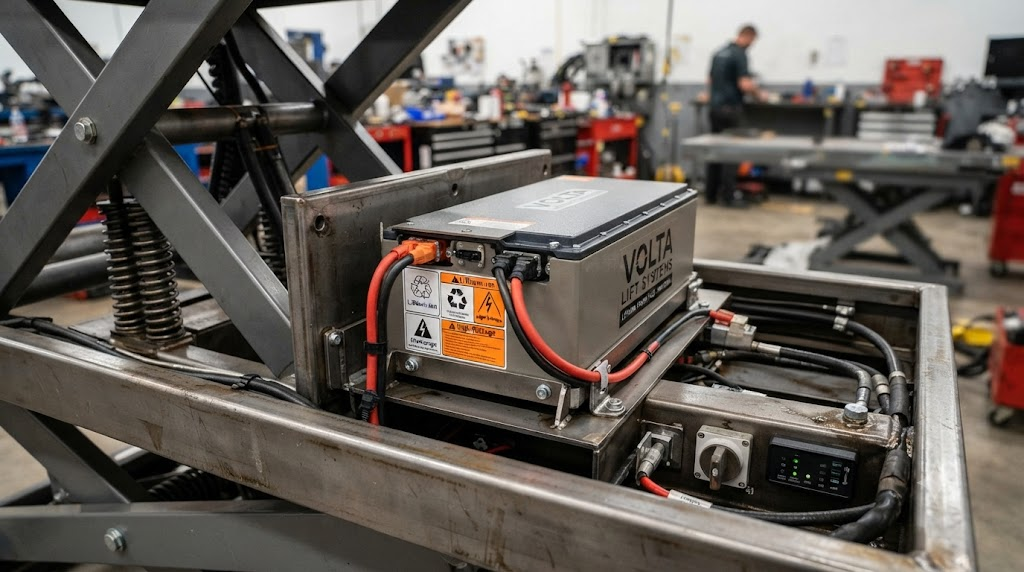
However, retrofitting industrial equipment requires more than simply swapping out cells. It demands a clear understanding of machine physics, electrical integration, and safety protocols to ensure compliance with global standards.
FLA vs. AGM vs. Lithium-ion: The Ultimate AWP Battery Comparison
Selecting the right scissor lift power source dictates both daily productivity and long-term operating costs. Traditional Flooded Lead-Acid (FLA) and Absorbed Glass Mat (AGM) batteries have powered these machines for decades, but deep cycle lithium batteries offer a superior alternative.
The following table illustrates the operational differences between these chemistries when used in demanding aerial work platform applications:
| Metric | Flooded Lead-Acid (FLA) | AGM (Sealed Lead-Acid) | LiFePO4 (Lithium) |
|---|---|---|---|
| Cycle Life (80% DoD) | ~500 cycles | ~700 cycles | 3,500+ cycles |
| Maintenance Required | Weekly watering & cleaning | Terminal cleaning only | Maintenance-Free |
| Charging Profile | 8-10 hours slow charge | 8-10 hours slow charge | 1-2 hours fast charge |
| Opportunity Charging | Damages lifespan | Not recommended | Highly efficient |
| Usable Capacity | 50% depth of discharge | 60% depth of discharge | Up to 100% capacity |
While lead-acid options require strict overnight charging schedules, lithium-ion technology supports rapid opportunity charging vs overnight charging. Operators can plug in their equipment during lunch breaks or short periods of downtime without degrading the battery cells, keeping the machine running across multi-shift schedules.
The Economics of Retrofitting: Calculating ROI and TCO
Evaluating a lithium conversion for aerial work platforms requires looking past the initial acquisition price to analyze the Total Cost of Ownership (TCO). While lead-acid batteries seem economical at first, their hidden costs—including frequent replacements, lost productivity during watering cycles, and dedicated charging infrastructure—rapidly accumulate.
In our testing and fleet analysis, we have gathered robust data on the long-term economic impact of retrofitting. The financial benefits are driven by three core realities:
Switching from lead-acid to LiFePO4 reduces total cost of ownership (TCO) by up to 45% over a 5-year fleet lifecycle.
LiFePO4 batteries deliver over 3,500 charge cycles at 80% depth of discharge compared to just 500 cycles for traditional flooded lead-acid batteries.
By upgrading, fleet operators completely eliminate the labor costs associated with maintenance-free batteries. There is no need to pay technicians to top off distilled water, clean corrosion from terminals, or manage acid spills.
Additionally, because lithium allows for rapid opportunity charging, companies can eliminate the need for extra backup machines or secondary battery packs. To explore customized fleet retrofitting packages and high-performance packs, you can browse JHY Battery Custom Solutions to match your exact equipment specifications.
Solving the Stability Challenge: The JHY SafeBallast™ Protocol
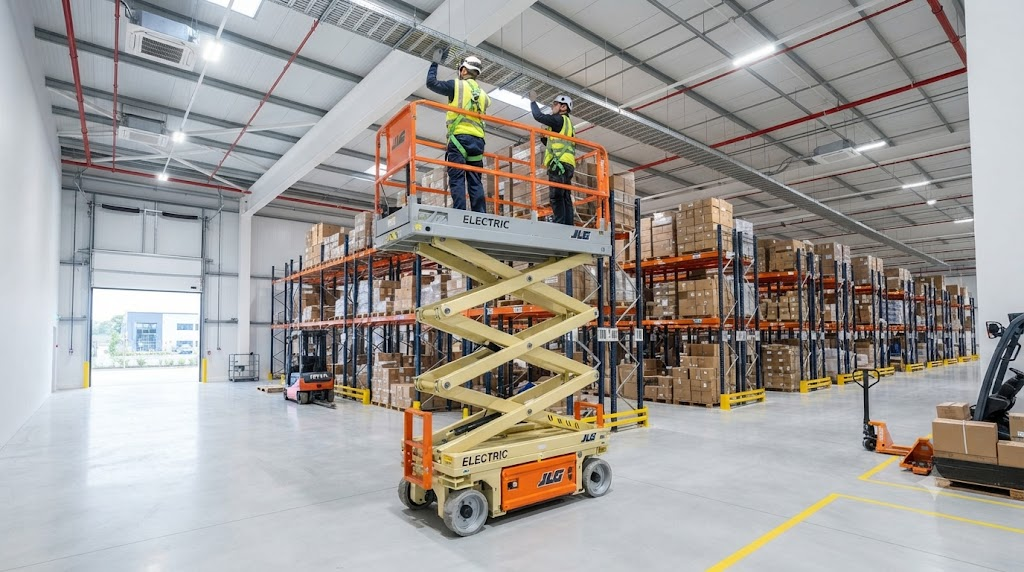
One of the most critical, yet frequently overlooked, aspects of a lithium conversion for aerial work platforms is physical machine stability. Traditional lead-acid batteries are incredibly heavy, and manufacturers utilize this weight as counterweight ballast to keep the platform’s center of gravity low and stable when elevated.
Because LiFePO4 batteries are up to 70% lighter than lead-acid equivalents, simply removing the old batteries and installing lithium without adjustment can dangerously alter the machine’s center of gravity. This imbalance violates ANSI and OSHA safety standards, creating a high risk of tipping during high-elevation maneuvers.
To solve this engineering gap, we developed the JHY SafeBallast™ Protocol. This methodology guarantees that any converted AWP or MEWP retains its original, manufacturer-specified weight distribution and structural safety limits.
To execute the protocol, technicians must calculate the required physical ballast using the following formula:
Required Ballast Weight (W_b) = Total Lead-Acid Weight (W_la) - Total Lithium Pack Weight (W_li)
Once the weight deficit is calculated, custom steel or iron ballast weights must be securely bolted to the lowest floor plate of the battery compartment. This ensures the center of gravity remains exactly where the machine’s OEM engineers intended.
“When engineering lithium retrofits for MEWPs, safety must dictate design. Our smart BMS architecture works in tandem with physical ballast calculations to ensure that a lighter battery pack never compromises a machine’s mechanical stability or thermal safety limits.”
— Chief Technical Officer, JHY Battery
Step-by-Step Physical Installation and Wiring Guide
Converting a standard scissor lift or boom lift requires a systematic approach to ensure solid mechanical and electrical connections. Follow this step-by-step procedure to execute a safe retrofit using custom lithium-ion battery packs.
Step 1: Preparation and Extraction
Park the AWP on a flat surface, engage the emergency stop, and isolate the electrical system. Take detailed photographs of the existing lead-acid wiring layout for reference. Carefully disconnect the main negative cable first, followed by the positive cables, and remove the heavy lead-acid batteries from the tray.
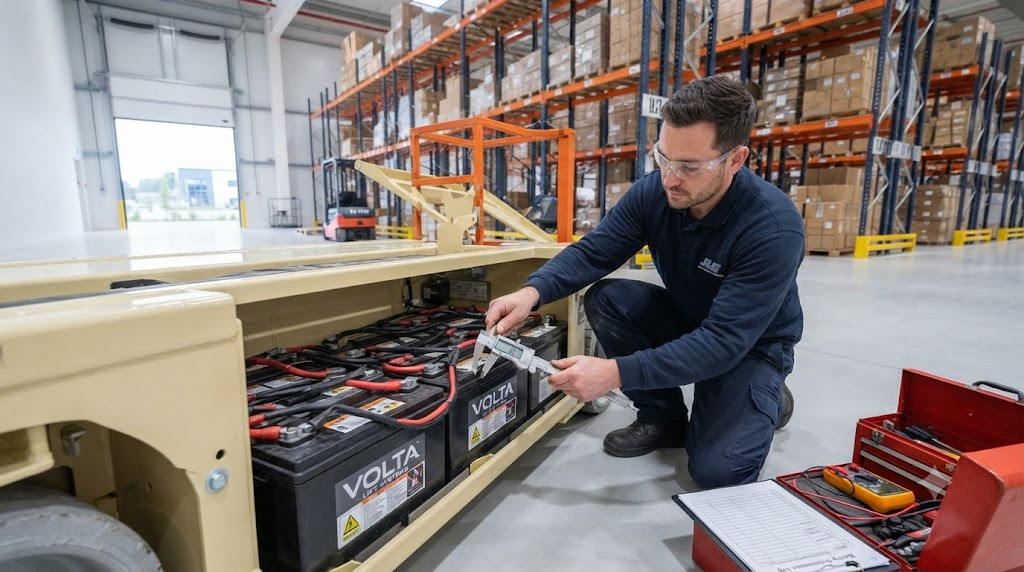
Step 2: Compartment Cleaning and Ballast Integration
Clean any accumulated dirt or acid residue from the battery tray. Neutralize leftover acid with a baking soda solution to prevent future corrosion. Apply the JHY SafeBallast™ Protocol by installing physical ballast weights equivalent to the lost battery weight, securing them firmly to the chassis.
Step 3: Mounting and Wiring the Lithium Pack
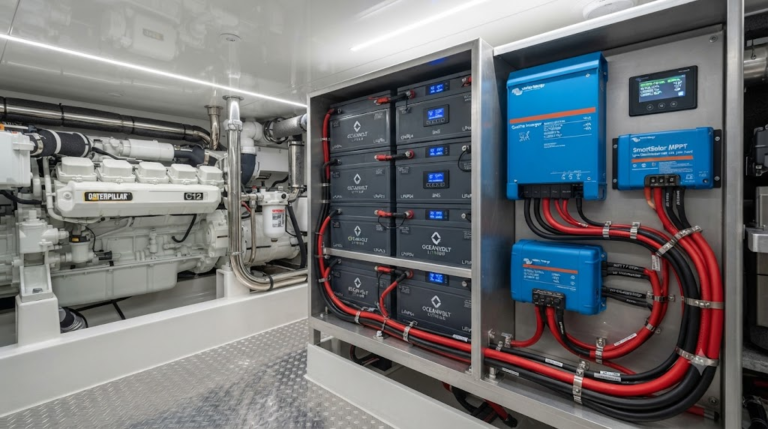
Place the custom lithium-ion battery pack into the tray. Use non-conductive spacers to prevent the pack from shifting during transit or operation. Connect the series/parallel jump cables using high-quality, insulated copper lugs, and torque all connections to the manufacturer’s specified tension to prevent high-resistance hot spots.
Charger Compatibility and Smart BMS Troubleshooting
A successful LiFePO4 battery conversion requires precise management of the charging profile. Traditional lead-acid chargers use multi-stage algorithms (such as desulfation or equalization stages) that output high voltages, which can severely damage or destroy lithium cells.
Modern lithium batteries rely on a constant current/constant voltage (CC/CV) charging profile. If your AWP is equipped with a programmable charger (like Delta-Q or Signet systems), you must reprogram the unit to the specific lithium profile recommended by your battery manufacturer.
Smart BMS integration reduces battery-related downtime in aerial work platforms by 60%.
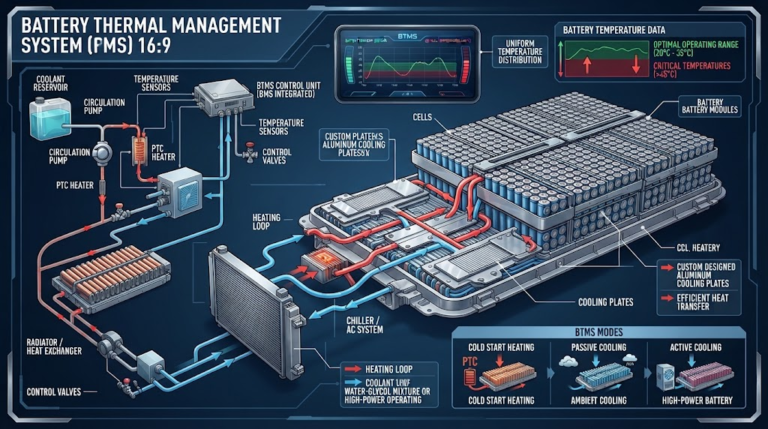
The integrated battery management system BMS acts as the brain of the battery, continuously monitoring parameters such as cell voltage, current, and internal temperature. If the BMS detects an anomaly, it will automatically disconnect the battery from the machine to prevent damage or safety hazards.
If your machine fails to power up or charge post-retrofit, consult this quick troubleshooting guide:
- BMS Under-Voltage Lockout: Occurs if the battery is completely discharged. Connect a compatible lithium recovery charger to gently wake up the BMS.
- High-Temperature Cutoff: If the platform operates in extreme heat, the BMS may temporarily pause operation. Allow the battery compartment to cool down before resuming work.
- Charger Error Codes: If your onboard charger displays flashing red lights, verify that the temperature sensor cables are correctly connected or disabled per your programming instructions.
Why Choose JHY Battery for Custom OEM/ODM Lithium Solutions?
JHY Battery (Juheyuan Science & Technology Co., Ltd.) is a premier global manufacturer specializing in custom LiFePO4 batteries engineered specifically for heavy industrial equipment, aerial work platforms, and material handling machinery.
With over a decade of deep industry experience, we offer comprehensive OEM and ODM one-stop battery solutions. We support deep customization, allowing you to tailor voltage, capacity, physical dimensions, and BMS protocols to perfectly match major AWP brands like Genie, JLG, and Skyjack.
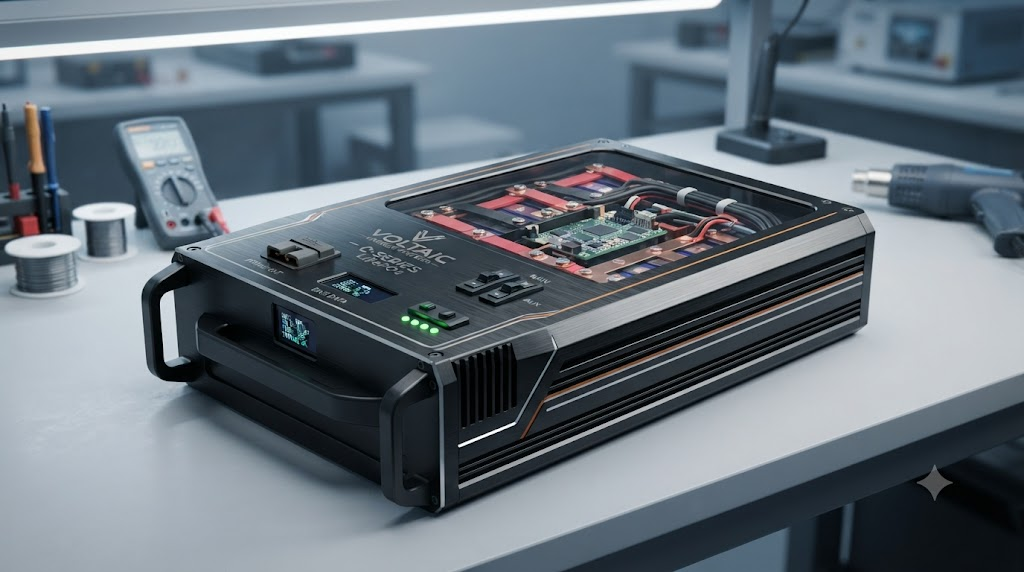
Our manufacturing facility operates under strict quality controls, backed by complete international certifications including ISO9001, CE, UN38.3, MSDS, and UL. When you partner with us, you receive highly secure, long-lasting power solutions backed by responsive global support.
Frequently Asked Questions About AWP Lithium Conversions
Will converting to lithium void my scissor lift’s warranty?
Generally, replacing consumables like batteries does not void the overall machine warranty. However, you must ensure the retrofit is engineered safely and does not cause secondary electrical issues. Utilizing certified, professionally engineered lithium packs ensures your machine remains safe and compliant.
How do lithium batteries perform in cold-weather construction environments?
Standard lithium batteries should not be charged at sub-zero temperatures. JHY Battery solves this by offering integrated heating elements within our custom packs, allowing the BMS to safely warm the cells before initiating the charging cycle.
Can I use my existing lead-acid battery charger for lithium?
Only if the charger can be reprogrammed to a dedicated LiFePO4 profile. Using a standard, un-reprogrammed lead-acid charger will overvoltage the cells and trigger the BMS safety shutoff.
About the Author & Technical Reviewer
Marcus Vance is a Certified Senior Battery Design and Safety Engineer with over 12 years of experience in industrial battery pack engineering and compliance testing. He specializes in designing energy storage systems and high-voltage power solutions for heavy material handling and aerial work platforms, ensuring they meet rigorous global safety standards.
Ready to Upgrade Your Fleet to Lithium?
Deploy our JHY SafeBallast™ Protocol and get high-performance, custom-tailored LiFePO4 battery packs for your aerial work platforms.