Battery Environmental Impact: A Complete Lifecycle Guide
Battery Environmental Impact: Balancing Mining Realities with Decarbonization
The battery environmental impact spans raw material extraction to end-of-life disposal, presenting significant ecological challenges. While batteries are vital for the clean energy transition, their manufacturing consumes intensive energy, while improper disposal risks releasing hazardous chemicals into ecosystems, demanding robust circular lifecycle solutions.
- Carbon Footprint: Energy-intensive manufacturing and raw material processing release greenhouse gas emissions.
- Resource Depletion: Intensive mining of lithium, cobalt, and nickel depletes local water and land resources.
- Toxic Waste: Landfill disposal leads to heavy metals soil contamination and water pollution risks.
- Circular Economy: Designing batteries for second-life applications extends operational lifespans significantly.
- Recycling Technologies: Advanced processing recovers valuable metals, reducing the need for virgin mining.
To understand the environmental footprint of modern energy storage, we must analyze the tension between upfront ecological costs and long-term climate benefits. Mining, refining, and manufacturing carbon-heavy cells require massive energy. Yet, over their operating lives, these batteries displace fossil fuels, yielding a net positive climate impact.
The Battery Lifecycle: Resource Extraction to Carbon Footprint
Every electrochemical cell undergoes a multi-stage journey. This journey begins deep in the earth and ends either in a recycling facility or, unfortunately, a landfill. We define the overall environmental footprint using a comprehensive battery life cycle assessment (LCA).
“A rigorous Life Cycle Assessment (LCA) measures every greenhouse gas emission, liter of water consumed, and square meter of land disrupted from raw mineral extraction to final material recovery.”
Upstream Mining and Resource Strain
The mining of lithium and cobalt remains the most ecologically challenging phase of battery production. Lithium extraction in South America’s “Lithium Triangle” relies on brine evaporation. This water usage in extraction consumes millions of gallons of water per ton of lithium, depleting vital local water tables in arid regions.
Meanwhile, cobalt mining ethics present severe social and environmental concerns, particularly in the Democratic Republic of the Congo. Runoff from these open-pit mines frequently leads to heavy metals soil contamination. This directly harms surrounding agricultural lands and local communities.
The Carbon Footprint of Manufacturing
Refining raw ores into battery-grade precursors is highly energy-intensive. According to the Argonne National Laboratory’s GREET Model, the processing of raw materials like nickel, cobalt, and synthetic graphite accounts for a massive portion of a cell’s total greenhouse gas emissions.
When manufacturing plants run on fossil-fuel-heavy grids, the carbon footprint of manufacturing rises. This makes the transition to renewable-powered battery factories a critical priority for global sustainability.
Chemistry Comparison: LFP vs. NMC vs. Emerging Alternatives
Not all batteries impact the planet equally. Comparing the environmental profile of a traditional Lead-acid battery with a modern Lithium-ion battery reveals stark differences. Lead-acid options are highly recyclable but carry extreme chemical toxicity risks. Within lithium-ion technologies, the specific cathode chemistry alters the environmental footprint dramatically.
For example, LFP battery production generates up to 20% fewer greenhouse gas emissions than traditional high-nickel NMC chemistries. This reduction occurs because LFP chemistry eliminates cobalt and nickel, bypassing the most destructive mining supply chains.
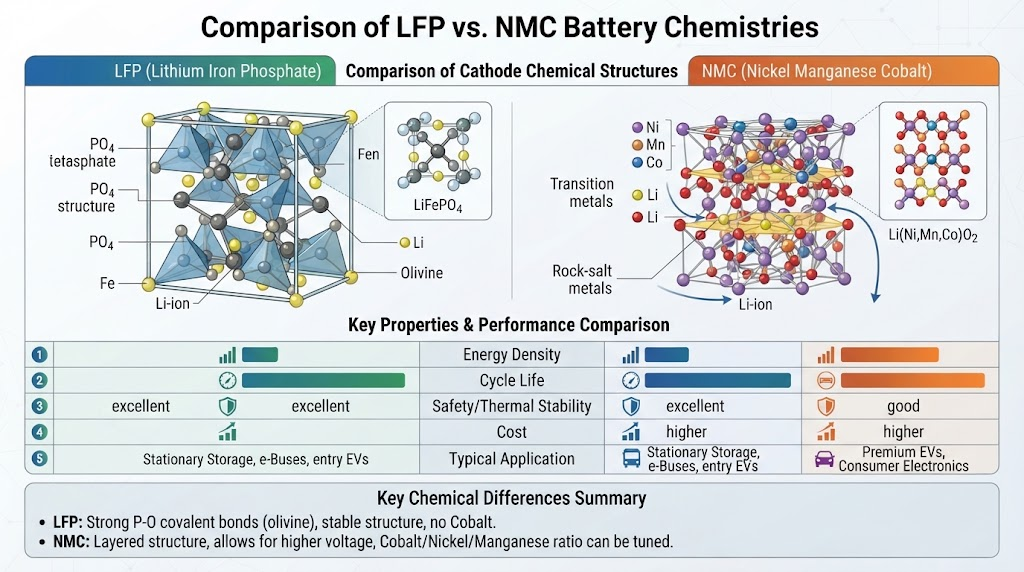
For industrial applications, choosing the right chemistry is a powerful lever for reducing environmental impact. Our partners frequently select LFP-based JHY Battery Custom Solutions to meet strict corporate ESG standards without sacrificing cycle life.
| Battery Chemistry | Cobalt Dependency | Toxicity Risk | Relative Carbon Footprint | Recyclability Potential |
|---|---|---|---|---|
| Lead-Acid | None | Very High (Lead) | Low | High (>98%) |
| NMC (Lithium) | High | Moderate | High | High (Hydrometallurgy) |
| LFP (Lithium) | None | Low | Moderate-Low | High (Direct Recovery) |
| Sodium-ion | None | Very Low | Very Low | Developing |
The JHY 4-Phase Circular Battery Protocol
To address these lifecycle challenges systematically, JHY Battery employs a specialized design and management methodology. We call this The JHY 4-Phase Circular Battery Protocol. This framework guides our engineering decisions from initial CAD drawing to final metal reclamation.
Phase 1: Dematerialized Custom Design
We build our custom lithium-ion battery packs using minimal structural resins and adhesives. This design choice makes the packs easier to disassemble at the end of their useful lives. This simplifies the mechanical separation process during recycling.
Phase 2: Intelligent BMS Optimization
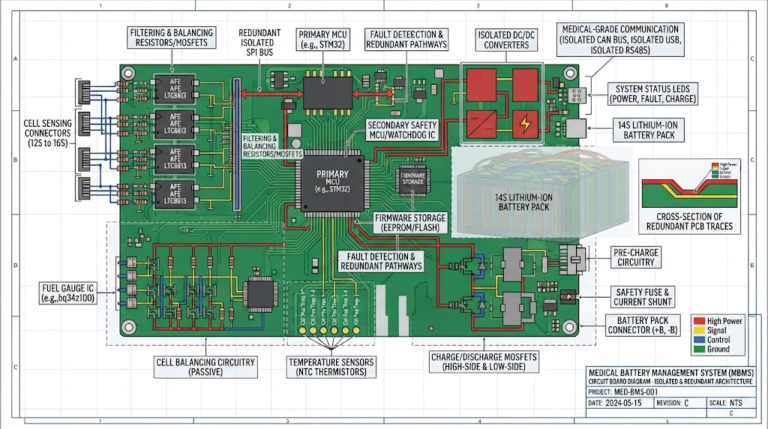
Extended battery life is the most direct path to environmental conservation. By programming custom Battery Management Systems (BMS) with precise cell-balancing algorithms, we prevent early degradation. This design choice maximizes cycle life, effectively delaying the need for replacement.
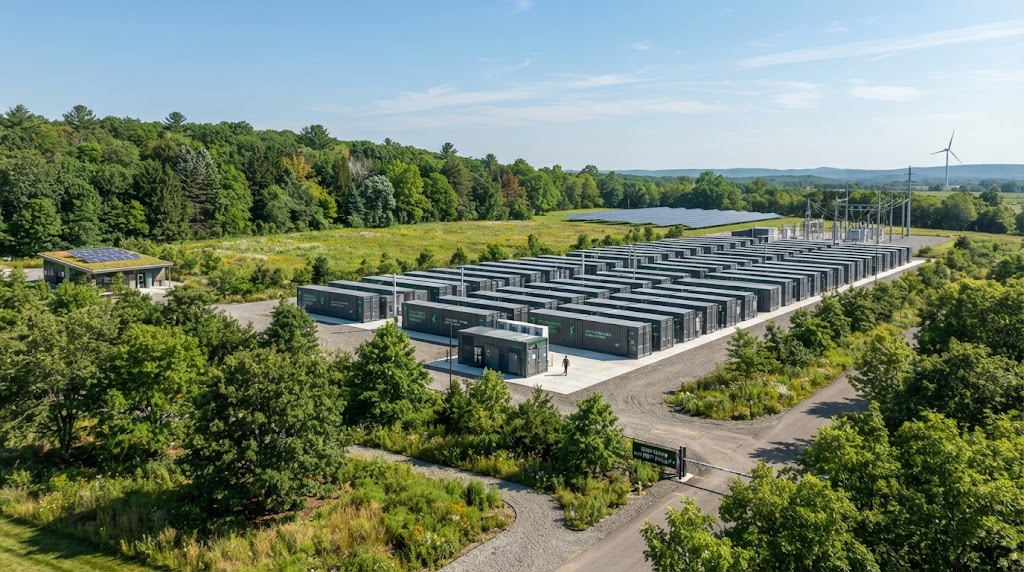
Phase 3: Second-Life Repurposing
When a battery’s capacity drops below 80%, it is no longer ideal for high-drain electric vehicles or demanding industrial equipment. However, it remains highly capable of supporting stationary energy storage systems (ESS).
Repurposing EV batteries for second-life ESS applications can extend their functional lifespan by 5 to 10 years. This phase delays energy-intensive recycling processes and maximizes the value of the mined materials.
Phase 4: Closed-Loop Recycling Partnerships
Once a cell is completely exhausted, we work with localized recycling networks. This ensures that spent batteries enter modern recovery facilities rather than municipal waste streams, supporting a true circular economy.
End-of-Life: Disposal Hazards and E-Waste Regulations
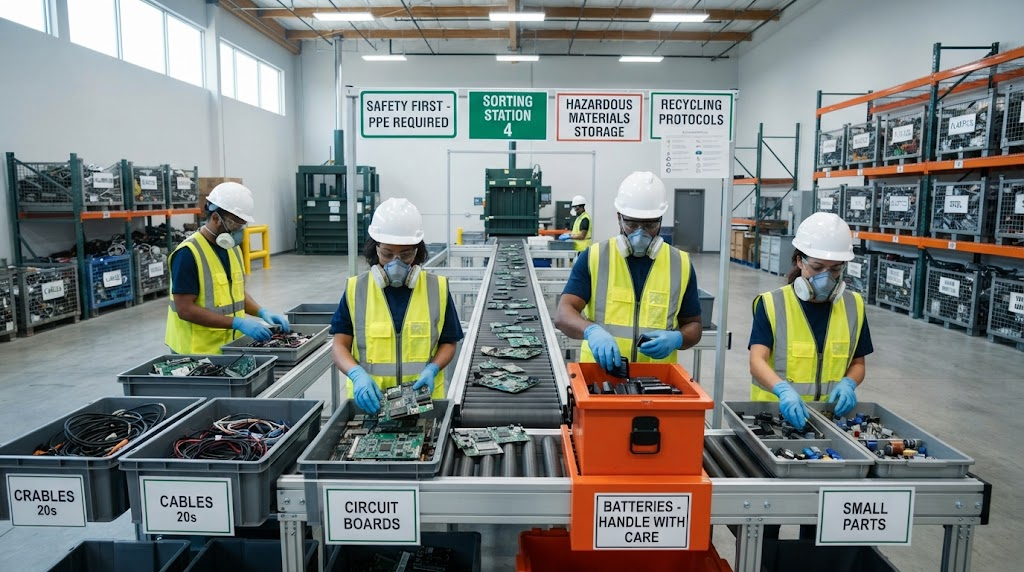
When batteries escape the circular loop and end up in municipal landfills, the environmental consequences are severe. This issue is particularly critical as global e-waste volumes continue to rise.
Landfill Contamination and Chemical Leaching
Standard municipal landfills are not built to handle chemical battery waste. Over time, physical casings corrode, causing electrolyte chemicals to leak. This leads to heavy metals soil contamination and threatens to pollute local water tables.
In addition, damaged lithium-ion batteries pose serious safety hazards in landfills. They can easily short-circuit under pressure, triggering landfill fires that release highly toxic gases into the atmosphere.
E-Waste Regulations
To combat these environmental threats, governments are establishing strict legal frameworks. The European Union’s Battery Regulation, for example, mandates strict collection targets and requires “Battery Passports” to trace a cell’s origin. In the United States, state-level extended producer responsibility (EPR) laws require manufacturers to fund and manage recycling programs.
Recycling Technologies: Hydrometallurgical vs. Pyrometallurgical Processing
To recover valuable materials from spent batteries, industrial recyclers rely on two main processing methods. The choice of recycling technology has a major impact on both material recovery rates and the overall carbon footprint.
Pyrometallurgical Processing
Pyrometallurgy relies on high-temperature smelting furnaces to melt down batteries. While this method can process unsorted, whole battery packs, it is highly energy-intensive. It also burns off valuable lithium and plastics into slag, recovering only heavier metals like cobalt and nickel.
Hydrometallurgical Recycling Processes
Hydrometallurgy uses chemical solvents to dissolve and separate metals from shredded battery materials (often called “black mass”). This process runs at much lower temperatures than smelting, which significantly reduces greenhouse gas emissions.
Importantly, hydrometallurgical recycling methods can recover up to 95% of lithium, cobalt, and nickel from spent cells. This high recovery rate makes it the preferred technology for modern, closed-loop lithium-ion battery recycling systems.
Designing for Sustainability: JHY Battery’s Custom Green Solutions
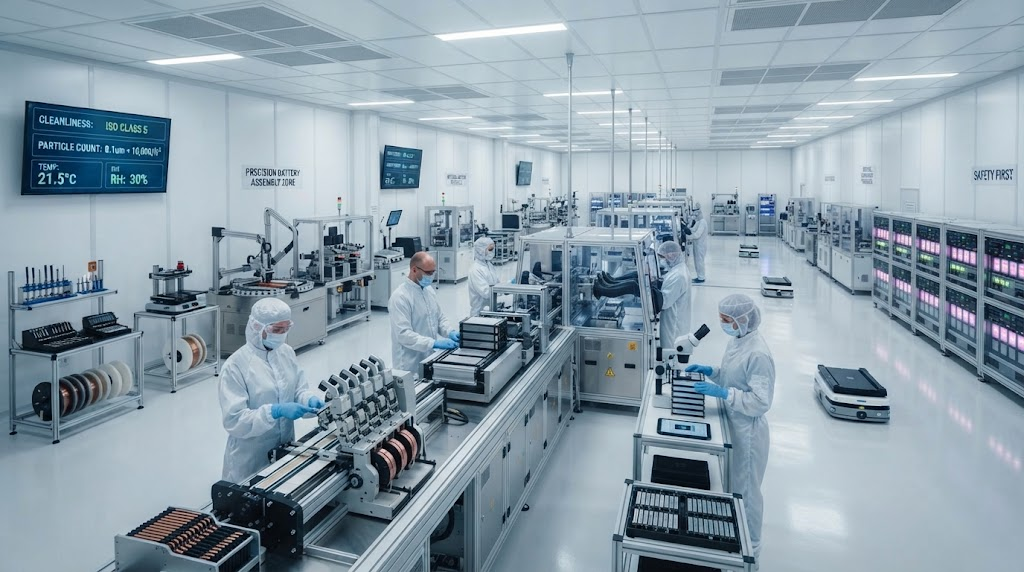
For B2B buyers, reducing environmental impact requires choosing the right manufacturing partner. JHY Battery (Juheyuan Science & Technology Co., Ltd.) delivers high-performance, custom lithium-ion battery packs that align with modern environmental standards.
With over a decade of manufacturing experience, we design and build custom LFP and lithium-ion solutions for energy storage systems (ESS), industrial machinery, and medical devices. Our facilities maintain strict quality and safety certifications, including ISO9001, CE, UN38.3, and UL.
How We Minimize Environmental Impact:
- OEM/ODM Customization: We optimize pack dimensions, voltage, and capacities to prevent over-specifying, reducing unnecessary raw material use.
- Long-Life Chemistries: We prioritize high-grade LFP cells that offer excellent thermal stability and long operational lifespans.
- Global Compliance: We build all battery packs to meet international transport and recycling standards, simplifying your end-of-life logistics.
Frequently Asked Questions About Battery Environmental Impact
Are LFP batteries better for the environment than NMC batteries?
Yes. LFP (Lithium Iron Phosphate) batteries do not contain cobalt or nickel, which avoids the most severe mining-related environmental and ethical issues. They also generate up to 20% fewer greenhouse gas emissions during production compared to NMC chemistries.
How are EV batteries recycled?
EV batteries are first discharged and disassembled. The cells are then shredded to produce “black mass.” This material is treated using hydrometallurgical processes, which use chemical solvents to recover up to 95% of the lithium, cobalt, and nickel for use in new batteries.
What is a second-life battery application?
A second-life application involves taking a battery that has degraded below automotive standards (typically 70-80% capacity) and repurposing it for less demanding stationary energy storage systems (ESS). This extends the battery’s useful life by 5 to 10 years.
Can battery manufacturing ever be truly carbon-neutral?
Yes, through clean energy sourcing. As more battery manufacturers power their factories with renewable energy (such as solar and wind) and source materials from highly efficient recycling facilities, the manufacturing carbon footprint will drop toward zero.
About the Author & Expert Review Board
Author: Elena Rostova, Senior Sustainability Analyst
Elena has over eight years of experience researching industrial supply chains, specializing in battery life cycle assessments (LCA) and circular economy frameworks. Her work helps multinational companies optimize their energy storage procurement for minimal environmental impact.
Technical Reviewer: Dr. Jiang Wei, Chief Technical Officer at JHY Battery
With over 15 years of experience in electrochemical engineering, Dr. Wei oversees JHY Battery’s custom BMS development and eco-conscious design processes, ensuring all battery systems meet strict international safety and environmental standards.
Ready to Build a Sustainable Power Solution?
Work with JHY Battery to design custom, long-lasting lithium-ion and LFP packs that meet your performance needs and environmental goals.