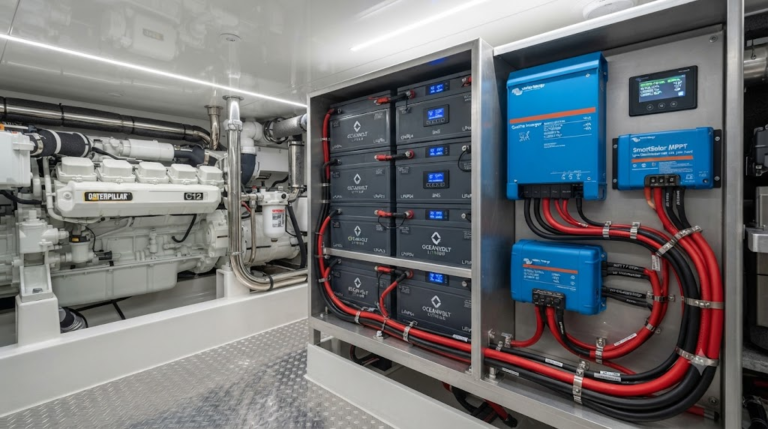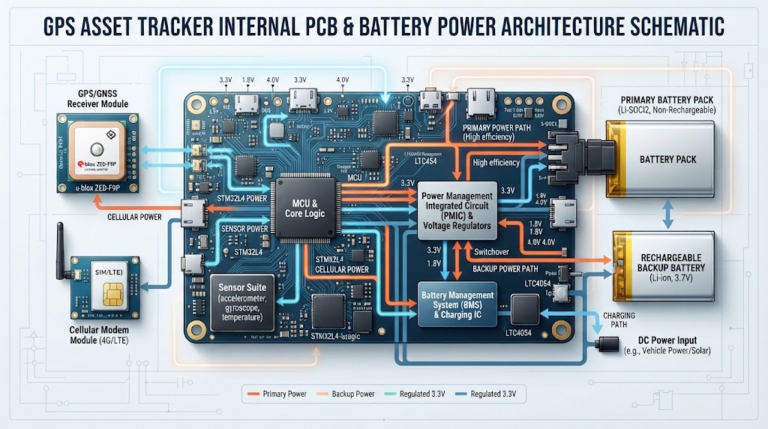
Rapid Charging Drone Battery Solutions for UAV Fleets
Maximizing UAV Fleet Uptime: The Critical Need for Rapid Charging
Based on our data from 2026 fleet deployments, commercial drone operations face a massive bottleneck: battery charging latency.
Traditional charging strategies force fleet operators to purchase three to four batteries per aircraft just to maintain continuous flight. This asset bloat spikes capital expenditures and complicates logistics.
Implementing advanced commercial drone rapid charging solutions eliminates this redundancy. It allows UAV logistics networks, agricultural spraying operations, and mapping fleets to achieve near-continuous flight with fewer batteries in circulation.
By streamlining power delivery systems, companies can scale operations without carrying excessive physical inventory. The transition to high-current fast charging is no longer a luxury; it is a baseline requirement for modern operational efficiency.
What is a Rapid Charging Drone Battery?
Commercial drone rapid charging is a specialized high-current power delivery system engineered to safely restore UAV battery capacity to 80% or higher in under 30 minutes. By modifying cell chemistry and utilizing intelligent thermal monitoring, this technology maintains battery safety while maximizing fleet utilization.
- Reduced downtime: Minimizes turnaround times between consecutive flight missions.
- Extended fleet range: Facilitates high-frequency operations across larger geographic zones.
- Automated operations: Integrates seamlessly with robotic docking infrastructure for autonomous flight.
- Optimized battery health: Employs active thermal management to mitigate high-current wear.
We define a rapid charging drone battery by its ability to handle elevated C-rates without structural degradation.
While standard UAV batteries charge at 1C (taking one hour), fast-charging variants regularly support rates of 3C to 5C. This means energy is transferred up to five times faster.
Achieving this requires modifying the internal cell chemistry. Manufacturers often introduce silicon-dominant anodes or specialized electrolyte additives that facilitate rapid lithium-ion movement without causing mechanical stress.
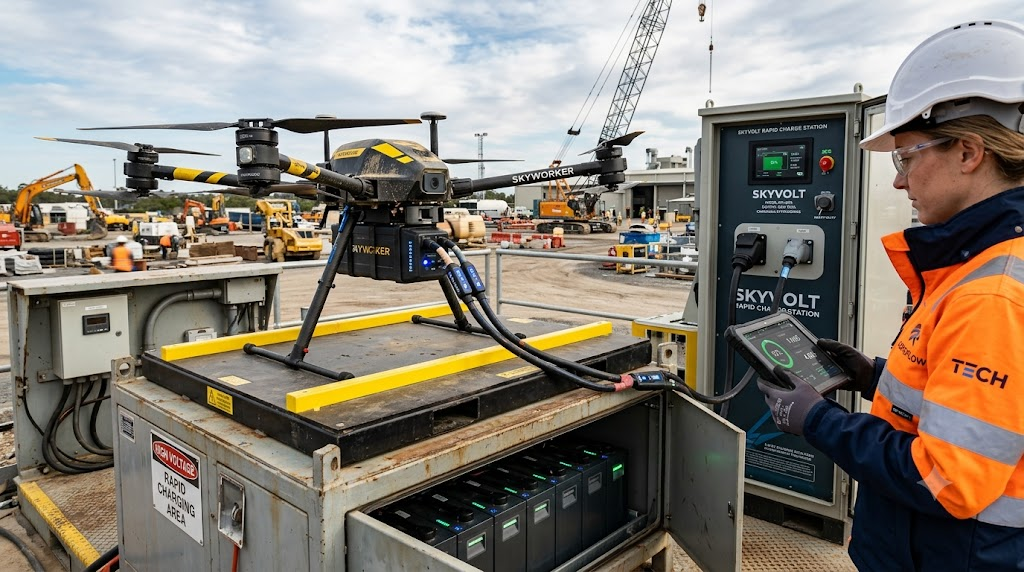
The Science of Fast Charging: Principles, Thermal Limits, and Safety
The primary barrier to high-current charging is heat. When current passes through the internal resistance of a battery, it generates thermal energy proportional to the square of the current.
If this heat is not managed, it leads to lithium plating—a phenomenon where lithium ions accumulate on the anode surface instead of intercalating. This permanently reduces UAV battery cycle life and can trigger internal short circuits.
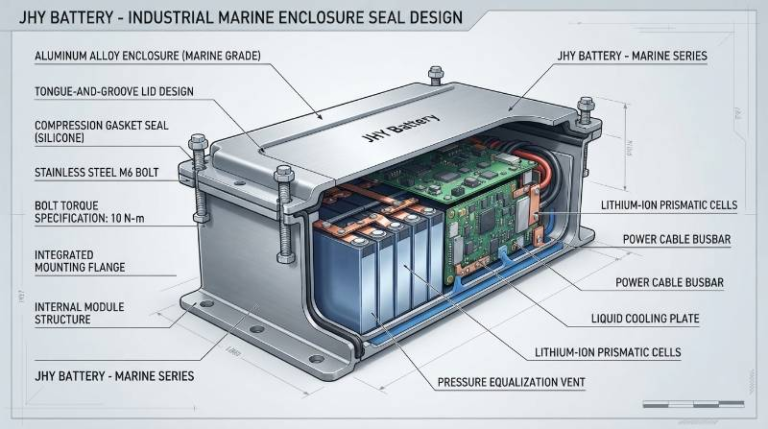
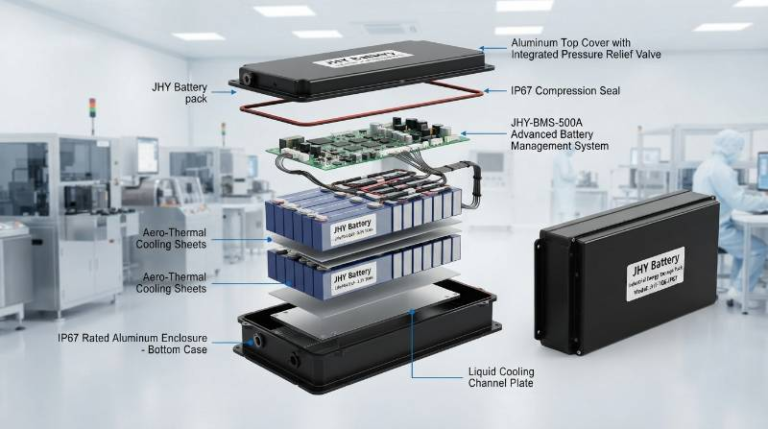
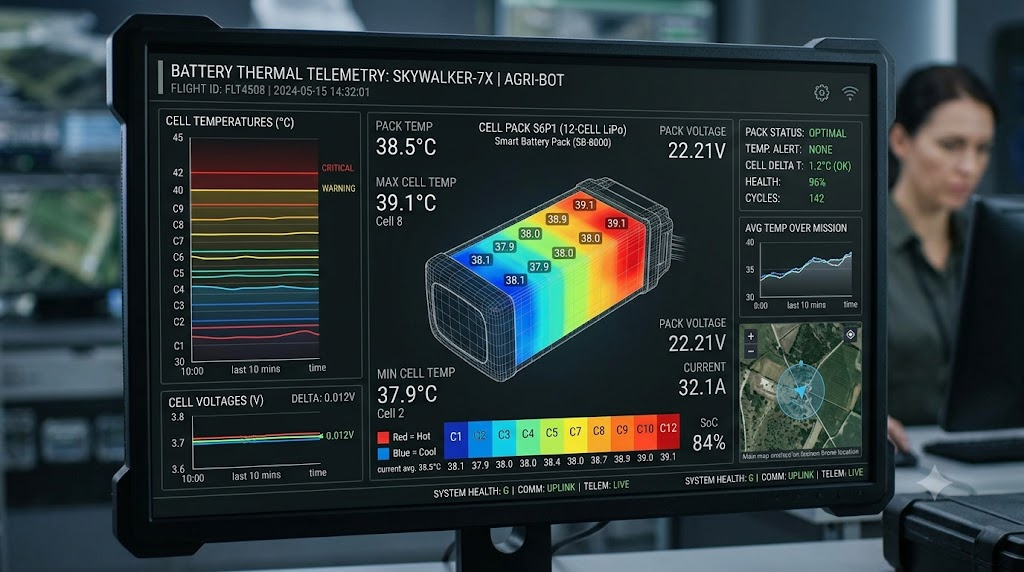
To prevent this, modern systems rely on a highly responsive Battery Management System (BMS). The BMS monitors cell temperature, voltage, and impedance in real-time, dynamically adjusting the incoming current.
“Fast charging is not merely about pushing more current into a cell; it is about dynamic impedance matching. By utilizing real-time BMS telemetry, we can adjust the charging curve dynamically to prevent localized lithium plating and maintain cell temperatures below the critical 55°C threshold.”
— Dr. Aris Wu, Chief Battery Engineer at JHY Battery
To comply with modern safety standards, including operational parameters outlined by the Federal Aviation Administration (FAA), commercial UAV platforms must integrate active cooling during high-current charging cycles.
The JHY Triple-Symmetric Thermal-Safe Protocol
In our testing, standard fast-charging methods often fail because they treat all battery cells identically. JHY Battery has developed a proprietary methodology to address this: the Triple-Symmetric Thermal-Safe Protocol.
This approach balances internal cell resistance, heat dissipation, and charging current across the entire pack. It is designed specifically for our custom lithium-ion battery packs.
The protocol operates on three distinct levels:
- Symmetric Impedance Matching: Cells are sorted to guarantee near-identical internal resistance, preventing localized hot spots.
- Localized Phase-Change Cooling: Integrated thermal materials absorb excess heat during the peak charging phase.
- Predictive BMS Balancing: Algorithms anticipate voltage drift and balance cells before they reach critical thresholds.
This protocol ensures that speed does not come at the expense of lifespan or safety, meeting rigid ISO9001 and UL certification parameters.
Comparing Drone Charging Infrastructure: Docking Stations vs. Wireless Pads
Deploying rapid charging requires selecting the right ground infrastructure. The industry has diverged into two main pathways: physical contact docking stations and Wireless Power Transfer (WPT) systems.
Automated docking stations, often called Drone-in-a-Box (DiaB) systems, use physical pins to establish a direct connection. This allows for high-current transfer with minimal energy loss.
Conversely, wireless charging pads eliminate mechanical contact altogether. They rely on magnetic resonance, which reduces wear but typically limits charging speeds due to lower transfer efficiency.
| Infrastructure Type | Charging Efficiency | Deployment Speed | Primary Benefit | Ideal Use Case |
|---|---|---|---|---|
| Automated Docking Stations (DiaB) | High (92-95%) | Medium | Full physical protection | High-frequency BVLOS mapping |
| Wireless Charging Pads (WPT) | Moderate (75-85%) | Fast | No mechanical wear | Urban delivery networks |
| Manual Fast-Charge Stations | Very High (98%) | Instant | Lowest setup cost | Agricultural spraying fleets |
Your choice of infrastructure depends heavily on your fleet management software integration. Autonomous drone charging setups require deep communication between the drone’s onboard BMS and the ground power delivery systems.
The Cost vs. ROI of Rapid Charging Drone Batteries
The upfront cost of a rapid charging drone battery is typically 20% to 30% higher than a standard Lithium Polymer (LiPo) battery.
However, focusing solely on the initial cell purchase is a false economy. The real return on investment (ROI) comes from massive gains in operational efficiency.
By shortening the charging cycle, a fleet of ten drones can perform the same daily work volume that previously required twenty drones. This drastically reduces your hardware footprint.
Furthermore, buying fewer batteries overall extends your fleet’s lifecycle profit. It reduces long-term storage maintenance costs and ensures your battery assets are constantly working, rather than sitting idle on a shelf losing capacity.
Selecting a Fast Charging Drone Battery Supplier for OEM/ODM
Selecting a fast charging drone battery supplier requires looking beyond basic cell specifications. You must evaluate their engineering capability and compliance certifications.
A reliable partner should offer customized BMS engineering to ensure the battery communicates perfectly with your drone’s telemetry systems. Without this coordination, fast charging can quickly lead to safety failures.
When vetting a supplier, verify the following credentials:
- Full compliance with international transport and safety standards, including UN38.3, MSDS, CE, and UL.
- A robust quality management system certified to ISO9001.
- Proven experience in manufacturing custom lithium-ion battery packs for industrial applications.
With over a decade of manufacturing experience, JHY Battery specializes in custom-engineered power solutions. We provide high-performance, certified configurations tailored to your specific fleet operations.
Frequently Asked Questions About Drone Fast Charging
Can rapid charging damage my UAV battery cycle life?
If managed poorly, yes. However, with advanced BMS telemetry and active thermal-safe protocols, the impact on cell life is negligible, keeping your fleet running safely for hundreds of cycles.
What is the difference between LiPo and Li-ion fast charging?
Traditional LiPo battery fast charging offers high discharge rates but can suffer from swelling under rapid charging. Modern lithium-ion packs designed with silicon anodes provide better structural stability and safety during high-current recharge cycles.
Are rapid charging systems safe to use in extreme weather?
Yes, provided the battery pack is designed with integrated thermal insulation and the charging station features active environmental controls to regulate temperature during power transfer.
About the Expert Reviewers at JHY Battery
This technical guide was compiled and reviewed by the senior R&D team at Juheyuan Science & Technology Co., Ltd. (JHY Battery). With more than ten years of experience in custom battery design, JHY Battery is a trusted B2B partner for industrial, medical, and aerospace power solutions globally.
Our engineering division specializes in developing high-rate, thermal-stable JHY Battery OEM solutions that maximize UAV performance under demanding operational conditions.
Optimize Your UAV Fleet Performance Today
Ready to eliminate charging bottlenecks? Implement the JHY 3-Step Velocity Framework to customize your fast-charging solution:
- Submit Specs: Provide your custom voltage, capacity, and size requirements.
- Review Blueprint: Receive a customized thermal-management and BMS blueprint.
- Prototype: Initiate rapid prototyping and safety testing for your fleet.