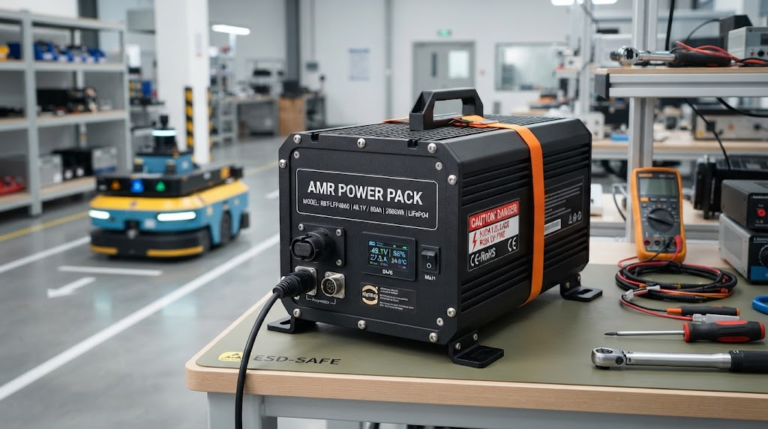
Custom 18650 Battery Pack Manufacturing & OEM Solutions
Custom 18650 Battery Pack Manufacturing: Engineering Excellence
In 2026, the demand for high-density power solutions has moved beyond simple off-the-shelf components. High-performance applications in medical IoT, robotics, and industrial automation require a specialized approach to custom 18650 battery pack manufacturing.
JHY Battery (Juheyuan Science & Technology) stands at the forefront of this evolution. As a leading global Custom Lithium-ion Battery Packs manufacturer, we focus on engineering safety and efficiency into every cell interconnect.
Our facility operates under strict ISO9001 quality management systems. Every OEM 18650 assembly we produce undergoes rigorous UN38.3 certification to ensure it withstands the physical stresses of global transport and heavy-duty industrial use.
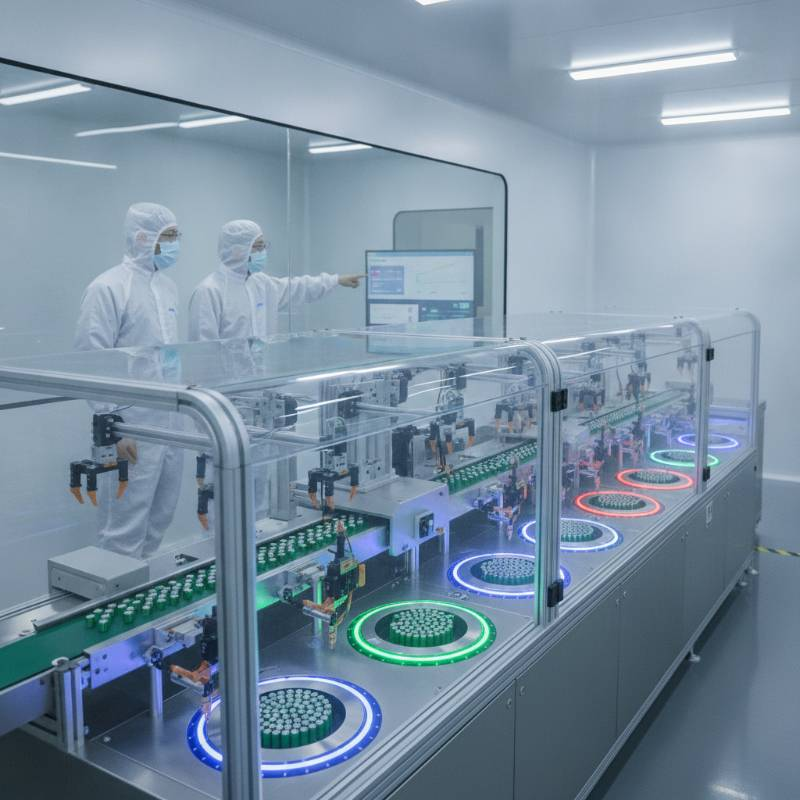
The JHY Precision-Cell™ Manufacturing Process
Reliable battery performance is achieved by eliminating the “weakest link” in a series or parallel string. Our proprietary Precision-Cell™ Manufacturing Process ensures that every 18650 pack functions as a unified, balanced energy system rather than a collection of individual cells.
“True reliability in lithium-ion assembly isn’t just about the cells you choose; it’s about the precision of the matching. A single cell with a 5% deviation in internal resistance can reduce the entire pack’s cycle life by 30%.” — Chief Battery Engineer, JHY Battery
Step 1: Automated OCV and IR Cell Sorting
We begin by using high-speed automated sorting machines to categorize cells. This step is critical for internal resistance matching and voltage stability.
- Voltage Difference (ΔV): Maintained at ≤ 5mV.
- Internal Resistance (ΔR): Maintained at ≤ 2mΩ.
- Capacity Variance (ΔC): Maintained at ≤ 20mAh.
By strictly adhering to these tolerances, we prevent premature cell aging caused by uneven discharge rates across the pack.
Step 2: Precision Spot Welding and Nickel Interconnects
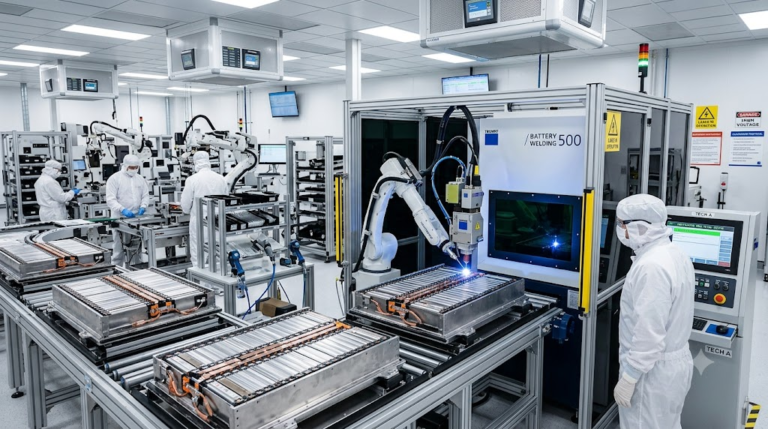
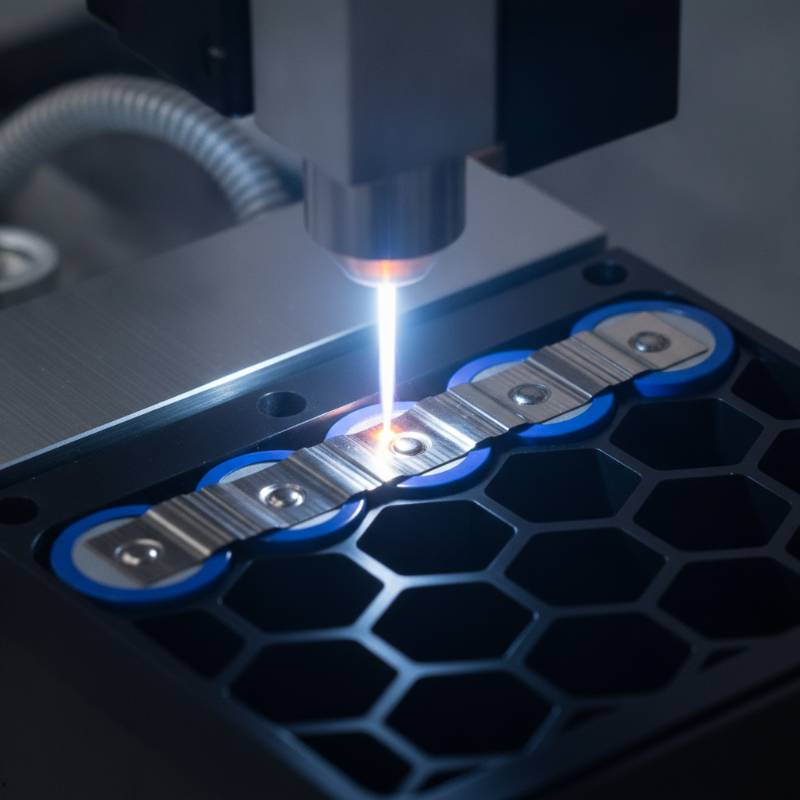
The physical connection between cells determines the pack’s thermal efficiency. We utilize precision spot welding with pure nickel strips, which offer lower resistance compared to nickel-plated steel.
Our automated laser and pulse welding systems control the heat signature precisely. This prevents damage to the cell’s internal separator, a common failure point in manual spot welding battery packs.
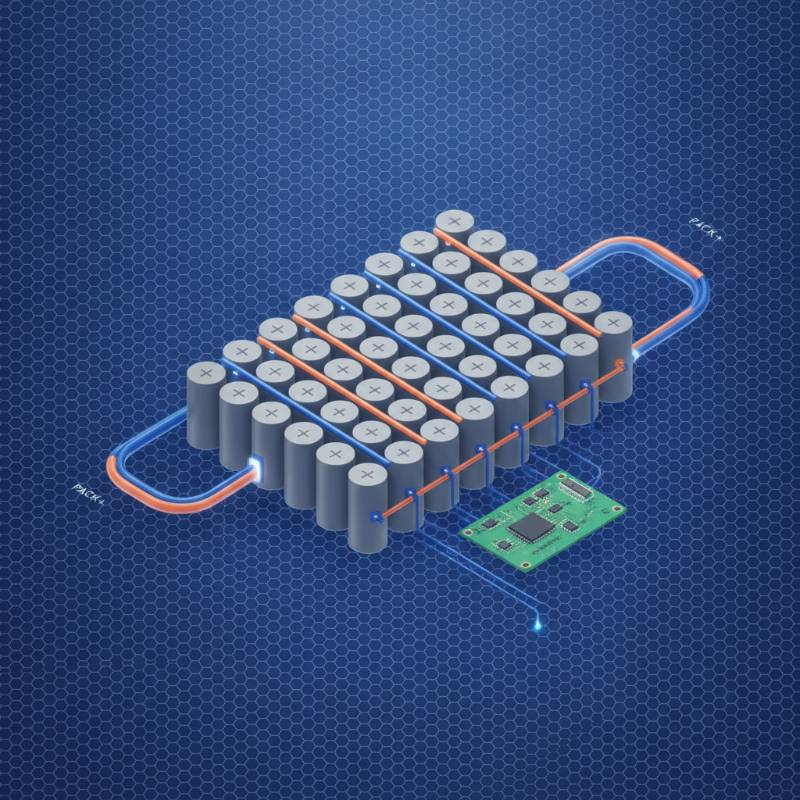
Step 3: Smart BMS Integration and Communication Protocols
A smart BMS for 18650 packs acts as the brain of the system. We integrate advanced Battery Management Systems that support various communication protocols, including CANbus, SMBus, and RS485.
These systems monitor the State of Charge (SoC) and State of Health (SoH) in real-time. This is vital for Industrial Battery Engineering, where downtime is not an option.
Step 4: Mechanical Enclosure and Epoxy Potting
For applications in harsh environments, we provide epoxy resin potting. This creates a waterproof (IP67+) and vibration-resistant barrier around the cells.
Our mechanical engineers use 3D CAD modeling to design enclosures that optimize thermal management. This ensures that heat generated during high-discharge cycles is dissipated effectively, maintaining safe operating temperatures.
Step 5: End-of-Line (EOL) Functional and Aging Tests
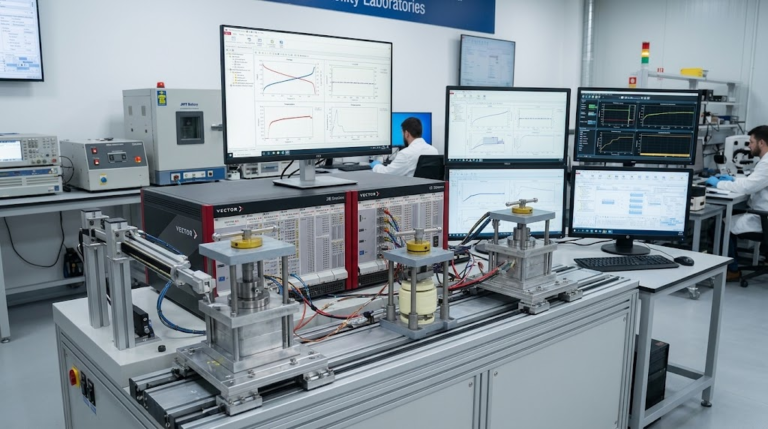
Before any pack leaves our facility, it undergoes a full aging test. This involves at least one complete charge/discharge cycle to verify that the BMS and cell chemistry are performing to specification.
Verification against UN38.3 standards ensures the pack can handle extreme altitude, thermal shocks, and mechanical impact during its operational life.
Predictive Design: 10S4P Configuration Formula and Specs
When designing a 36V 18650 pack, engineers must calculate both the electrical capacity and the physical footprint. Below is a standard reference for a 10S4P configuration using 3500mAh cells.
| Parameter | Value (Typical) |
|---|---|
| Nominal Voltage | 36V (42V Peak) |
| Total Capacity | 14Ah (504Wh) |
| Estimated Weight | ~2.0kg (4.4 lbs) |
| Dimensions (Approx) | 200 x 80 x 70 mm |
To estimate the weight of your custom pack, use the formula: (Cell Weight × Number of Cells) + BMS & Housing (approx. 15% of total). For a typical 18650, the cell weight is roughly 48 grams.
The Future of Energy: Transitioning to Solid-State and Sodium-Ion
While the 18650 remains the industry workhorse, 2026 marks a pivotal shift toward next-gen chemistries. We are actively helping clients transition to LiFePO4 Battery Solutions for enhanced safety in stationary storage.
Furthermore, our R&D team is currently prototyping sodium-ion packs for cost-sensitive applications and solid-state 18650 form factors for high-energy-density aerospace needs. JHY Battery remains your partner in navigating these technological transitions.
Frequently Asked Questions about 18650 Manufacturing
What is the MOQ for a custom 18650 battery pack?
Typically, our Minimum Order Quantity (MOQ) starts at 100 units for custom builds. However, for specialized industrial projects requiring extensive R&D, we offer lower volume prototyping services.
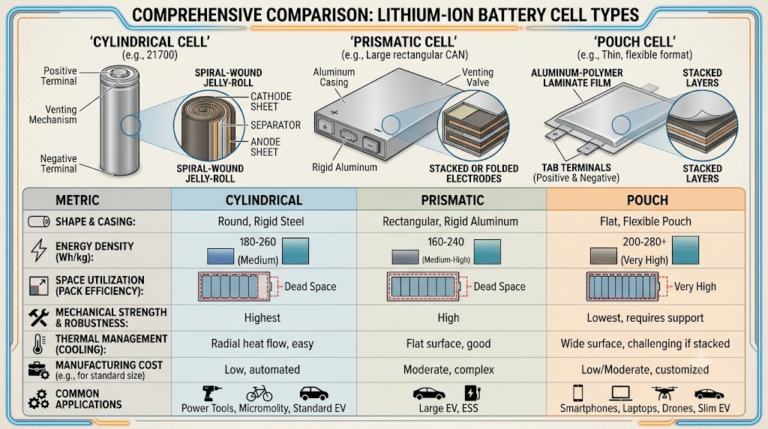
18650 vs 21700: Which should I choose?
The 18650 is ideal for compact devices where space is at a premium. The 21700 offers higher energy density and better thermal performance for high-drain applications like electric vehicles or power tools. We assemble both formats based on your specific weight and volume constraints.
How long is the manufacturing lead time?
Standard lead times for 18650 pack manufacturer services range from 4 to 6 weeks, depending on the complexity of the BMS and enclosure requirements. We provide a full technical quote and BMS schematic within 24 hours of receiving your parameters.
Get Your Technical Battery Quote Today
Need a precision-engineered 18650 solution? Our engineers are ready to review your specifications.
Request 24-Hour Engineering Review
Compliant with UL 2271, IEC 62133, and UN38.3 standards.