EV Battery Systems: Custom OEM Engineering Guide 2026
Introduction to Next-Generation Electric Vehicle Battery Systems
Designing a modern Electric Vehicle (EV) requires balancing range, charging speed, weight, safety, and system cost. The heart of this challenge lies in the engineering of the battery pack.
B2B buyers and automotive OEMs face a shifting landscape. Standard off-the-shelf components rarely meet the unique volumetric and thermodynamic constraints of specialized commercial, industrial, or high-performance electric vehicles.
JHY Battery addresses this gap by offering engineered, certified, and scalable power systems. As a leading global battery manufacturer with over a decade of industry expertise, we specialize in transforming raw electrochemical potential into reliable traction power.
The 2026 EV Battery Landscape: 800V vs 400V Architectures
An electric vehicle battery system is an integrated electrochemical energy storage unit that scales power from individual lithium-ion cells to a complete high-voltage pack. It relies on structural, thermal, and electronic management components to deliver safe, high-density electricity to an electric vehicle drivetrain.
- Cell Selection: Determining chemistry, energy density, and physical form factor.
- Module Integration: Grouping cells mechanically and electrically for structural stability.
- BMS Configuration: Programming intelligence for safety, voltage balancing, and state monitoring.
- Thermal Management: Implementing cooling pathways to prevent thermal runaway.
- Pack Enclosure Assembly: Enclosing components in crash-resistant, fire-retardant housings.
The transition toward high-voltage EV battery platforms is the defining engineering shift of 2026. Traditional 400V systems are giving way to 800V architectures in commercial trucks, high-performance machinery, and transit fleets.
An 800V configuration halves the electrical current needed to deliver equivalent power. This allows for significantly thinner internal copper wiring, reducing weight and improving overall vehicle packaging.
Furthermore, lower current drastically reduces thermal losses (I²R heating) during high-current fast charging. This results in superior overall charging efficiency and less strain on the cooling loops.
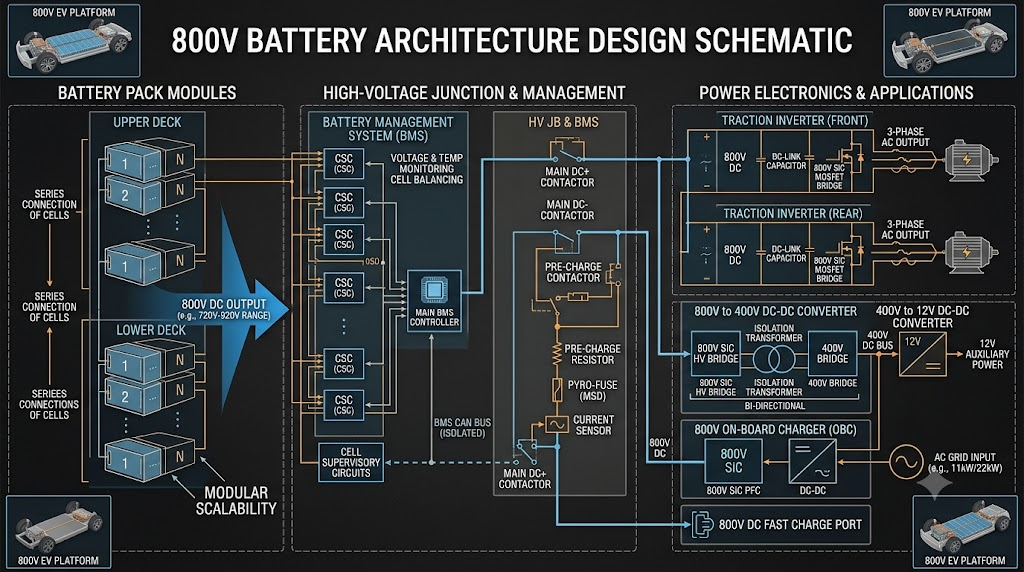
However, 800V engineering demands strict isolation resistance, highly precise semiconductor components, and specialized safety measures. OEMs must secure customized OEM/ODM battery solutions that handle these extreme voltage thresholds without sacrificing system reliability.
Battery Cell Technology: Chemistry & Form Factor Comparison
Selecting the optimal cell is the foundation of any high-performance battery pack assembly. Designers must balance physical packaging constraints against chemical energy density, degradation rates, and safety limits.
Form Factors: Cylindrical vs Prismatic vs Pouch Cells
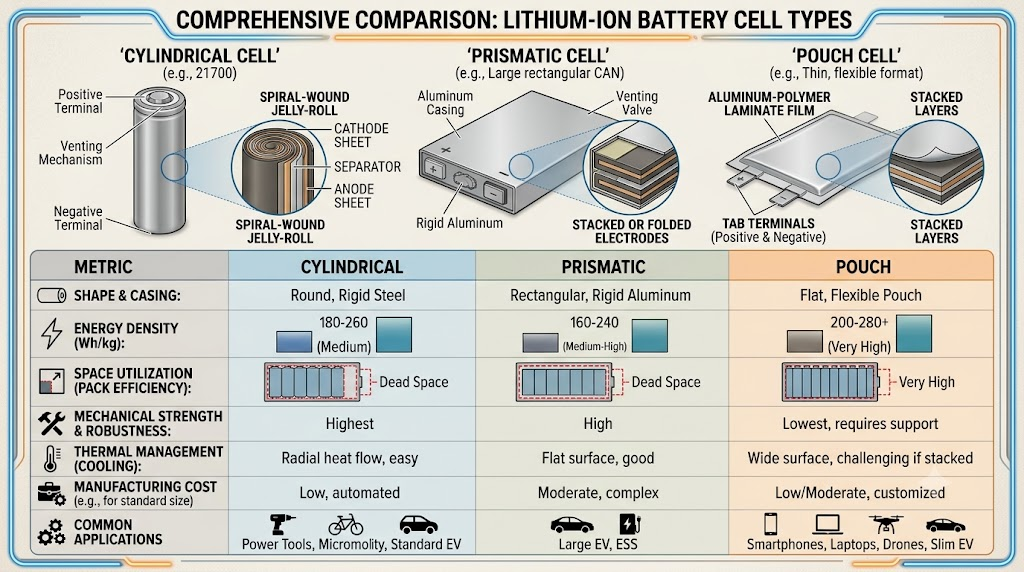
Each cell form factor introduces distinct structural and thermal trade-offs:
- Cylindrical cells offer excellent structural integrity and mechanical resistance to internal pressure buildup. Their spacing naturally leaves air gaps, which can aid cooling but reduces volumetric efficiency.
- Prismatic cells maximize space utilization within the pack due to their rigid, rectangular shape. They are highly favored for heavy-duty industrial vehicles and high-capacity storage.
- Pouch cells use conductive polymer bags, offering the highest packaging efficiency and lowest weight. However, they require external structural support to prevent swelling over successive charge-discharge cycles.
Chemical Profiles: LFP, NMC, Solid-State, and LMR
The choice of cell chemistry dictates the functional boundaries of the vehicle’s range and operational lifespan.
For applications prioritizing extreme lifespan, safety, and lower costs, LiFePO4 batteries (LFP) remain the industry standard. They offer excellent thermal stability and minimal cell degradation over thousands of cycles.
For passenger cars and space-constrained applications, Nickel Manganese Cobalt (NMC) chemistries deliver higher gravimetric energy density. Emerging Lithium Manganese-Rich (LMR) and Solid-state battery designs are starting to enter pilot production in 2026, promising higher limits of safety and range.
| Chemistry / Form | Energy Density (Wh/kg) | Cycle Life (to 80% SoH) | Thermal Runaway Temp | Primary Use Case |
|---|---|---|---|---|
| LFP (Prismatic) | 160 – 200 | 3,500 – 6,000+ | ~270°C | Commercial Fleets, ESS, RVs |
| NMC (Cylindrical) | 240 – 300 | 1,500 – 2,500 | ~210°C | High-Performance Passenger EVs |
| Solid-State (Pouch) | 350 – 450+ | 1,000 – 2,000 | >350°C (Inherent) | Premium EVs, Aerospace (Emerging) |
Selecting and matching these technologies requires deep expertise in developing custom lithium-ion battery packs. JHY Battery analyzes your vehicle’s torque demands, duty cycles, and environmental parameters to specify the correct cell configuration from day one.
Battery Management Systems (BMS) & Functional Safety (ISO 26262)
A high-voltage pack is only as safe as its controlling electronics. The Battery Management System (BMS) serves as the primary safety barrier and operational brain of the entire platform.
The BMS monitors critical parameters of every parallel cell group in real-time. It continuously calculates State of Charge (SoC) and State of Health (SoH) using advanced state estimation filters.
Active and Passive Cell Balancing
Over time, manufacturing variances and localized thermal gradients lead to cell voltage imbalances. The BMS uses cell balancing algorithms to correct these variances:
- Passive balancing dissipates excess energy from higher-voltage cells as heat through a resistor network. This is simple, reliable, and cost-effective.
- Active balancing transfers energy from stronger cells to weaker ones. This improves overall energy efficiency and usable pack capacity, especially in heavy-duty commercial applications.
ISO 26262 Standards Compliance
For on-road electric vehicles, the BMS architecture must align with ISO 26262 functional safety standards. This framework classifies potential hazards into Automotive Safety Integrity Levels (ASIL), with traction battery systems typically requiring ASIL-C or ASIL-D certification.
“Achieving ASIL-D compliance in modern high-voltage BMS design demands dual-core redundant processors, hardware-level overvoltage disconnects, and continuous isolation monitoring to detect high-voltage leaks before they pose a risk to passengers or technicians.”
— Senior BMS Systems Engineer, JHY Battery
Thermal Management & Thermal Runaway Prevention
Uncontrolled heat is the primary catalyst for cell degradation and catastrophic system failure. Maintaining an optimal operating range of 15°C to 35°C is critical for both service life and safety.
Liquid Cooling vs. Air Cooling
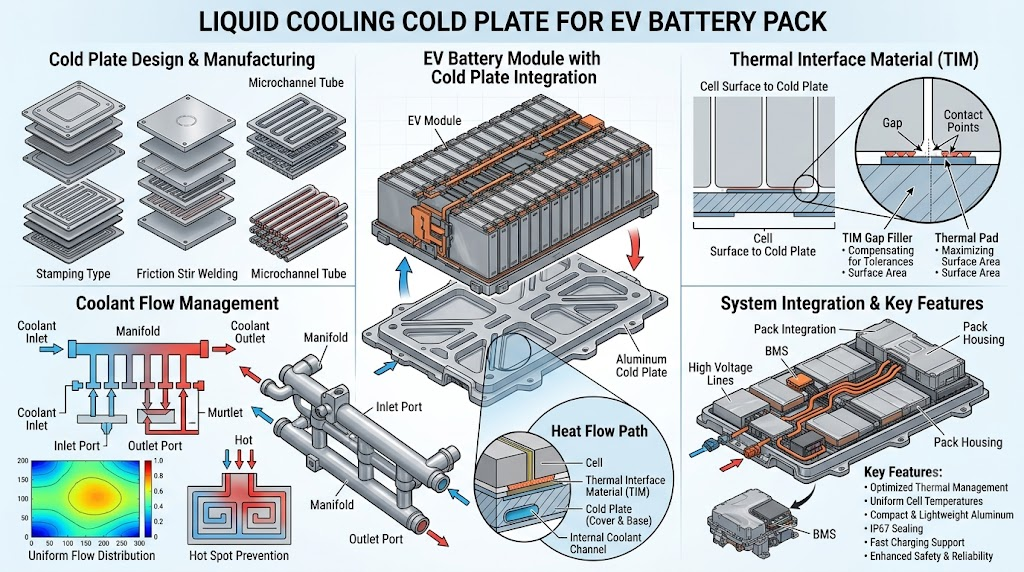
While passive or active air cooling is lightweight and cost-effective for low-drain systems, high-density vehicle packs require advanced liquid cooling loops. Liquid cooling systems utilize dedicated cold plates lined with dielectric thermal interface materials (TIM) directly contacting the cells. This setup provides rapid heat extraction during ultra-fast charging phases.
Thermal Runaway Prevention
In the rare event of internal cell short-circuits or physical impacts, thermal runaway prevention is the final line of defense. The goal is to prevent a single cell failure from propagating to adjacent cells.
Engineers achieve this by integrating advanced fire-retardant materials, such as aerogel insulation sheets, ceramic paper, and phase-change materials, between cell groupings. These barriers slow down or halt heat transfer, giving occupants ample time to exit and safety systems to respond.
Research published by the National Renewable Energy Laboratory (NREL) confirms that localized thermal shielding coupled with directional pressure relief valves can contain thermal propagation to a single module level, preventing full pack combustion.
Advanced Pack Assembly: Cell-to-Pack (CTP) vs Cell-to-Chassis (CTC)
The traditional design of grouping cells into modules, and modules into packs, is evolving. In 2026, vehicle manufacturers are increasingly prioritizing volumetric space optimization.
Cell-to-Pack (CTP) vs. Cell-to-Chassis (CTC)
- Cell-to-Pack (CTP): This method bypasses the individual module housings entirely. Cells are arranged directly into a singular, large pack frame, increasing active energy-producing volume by up to 20% while eliminating unnecessary wiring and structural fasteners.
- Cell-to-Chassis (CTC): This approach integrates the battery cells directly into the vehicle’s structural frame. The battery enclosure serves as the cabin floor, maximizing structural rigidity and saving weight, though it makes post-accident repairs highly complex.
Precision Joining and End-of-Line (EOL) Testing
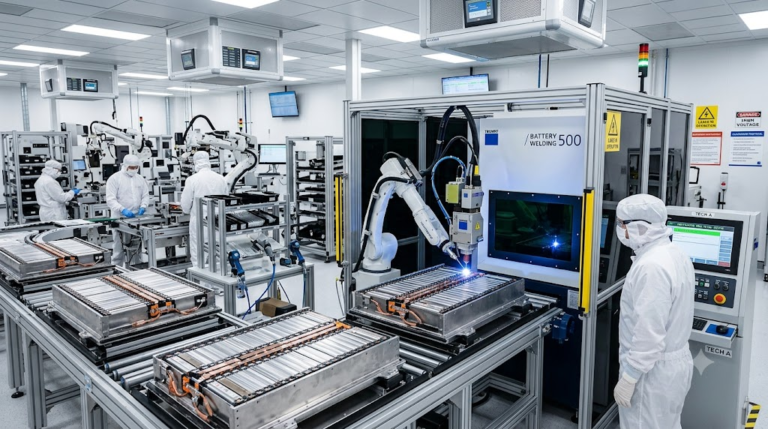
Eliminating module-level hardware increases the demand for precise assembly. High-precision laser welding is used to attach copper and aluminum busbars to cell terminals, minimizing joint resistance.
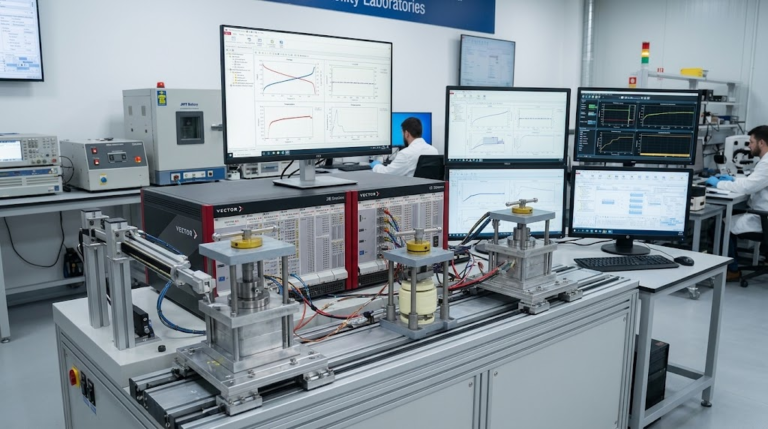
Every completed battery system must undergo rigorous end-of-line testing. This includes high-pot (high-potential) isolation tests, helium leak detection for the cooling loops, and charge-discharge profiling to verify capacity and transient response.
JHY’s 3-Phase SafeCell™ Integration Protocol
To help B2B buyers navigate these engineering challenges, JHY Battery developed the SafeCell™ Integration Protocol. This proprietary methodology guarantees that every custom battery system meets global industrial and automotive standards.

- Deep Customization & BMS Configuration:
We define your voltage, capacity, and geometry constraints. Our engineers configure custom BMS parameters, ensuring seamless integration with your vehicle’s CAN bus or other communication networks. - Thermal & Structural Simulation:
Using advanced finite element analysis (FEA) and computational fluid dynamics (CFD), we simulate extreme vibrational stress, crash impacts, and thermal loads. This step ensures optimal cooling-plate design and structural durability. - Global Certification Compliance:
We guide the pack design through extensive international testing. JHY Battery holds full certifications including ISO9001, CE, UN38.3, MSDS, and UL, ensuring smooth customs clearance and regulatory approval in global markets.
Interactive Tool: EV Battery Degradation & Range Calculator
Estimate how operating conditions and chemistry selections affect your custom battery pack’s long-term health and range retention over time using our interactive tool.
EV Battery Degradation Estimator
Frequently Asked Questions (FAQs)
What is the typical manufacturing lead time for custom EV battery packs?
For custom prototype development, engineering validation, and initial testing, lead times generally range between 8 to 12 weeks. Mass production schedules scale based on component sourcing and certification requirements.
How does JHY Battery guarantee functional safety under extreme vibration?
All of our structural pack configurations undergo finite element analysis (FEA) modeling to meet standard vibration profiles. We validate our pack assemblies physically using multi-axis vibration tables to meet UN38.3 and automotive-grade standards.
Can we integrate a custom BMS with our existing vehicle CAN bus?
Yes. Our engineering team configures the communication layers of the BMS—supporting CAN bus, Modbus, or custom protocols—to align with your system controllers and telemetry requirements.
About the Author & JHY Battery Engineering Team
The JHY Battery Engineering division consists of electrochemical specialists, thermal engineers, and certified BMS programmers with over a decade of combined B2B battery pack manufacturing experience.
Operating from our state-of-the-art production facilities, we focus on delivering safe, high-voltage battery systems to global clients. Our design philosophy centers on rigorous testing, compliance with international standards, and clear B2B engineering transparency.
Ready to Engineer Your Custom High-Voltage Battery Pack?
Partner with JHY Battery to design, simulate, and manufacture certified EV battery systems tailored to your technical specifications.