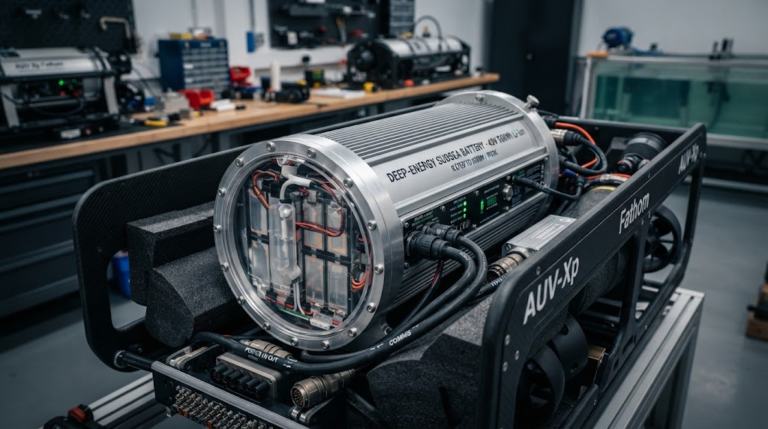
18650 Battery Wholesale Guide: Sourcing Genuine Cells
18650 Battery Wholesale: The Professional B2B Procurement Guide
The global 18650 market in 2026 faces a massive “Cell Integrity Gap.” While demand for lithium-ion cells in EV, medical, and industrial sectors is at an all-time high, the market is flooded with rewrapped, substandard, or outright dangerous counterfeits.
For procurement managers and electronics manufacturers, securing a reliable 18650 wholesale bulk supply is no longer just about the lowest price. It is about mitigating catastrophic failure risks through rigorous OEM battery supply chain vetting.
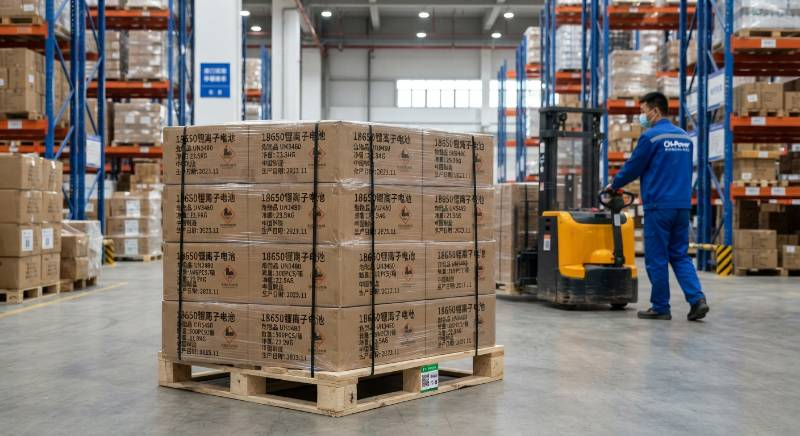
Verified Supply Chain: Why Transparency is Our Standard
A successful 18650 wholesale strategy requires working with a genuine 18650 supplier who provides more than just a quote. You need document-level proof of origin.
At China Battery Manufacturer, we utilize The Cell-Shield Sourcing Framework. This proprietary methodology ensures every cell is tracked from the Tier-1 factory floor to your assembly line.
“In our testing labs, we find that 15% of ‘Grade A’ market samples are actually Grade B cells with re-printed sleeves. True B2B security comes from demanding the OQC (Outgoing Quality Control) report for the specific batch you are buying.”
— Marcus Vance, Quality Control Director
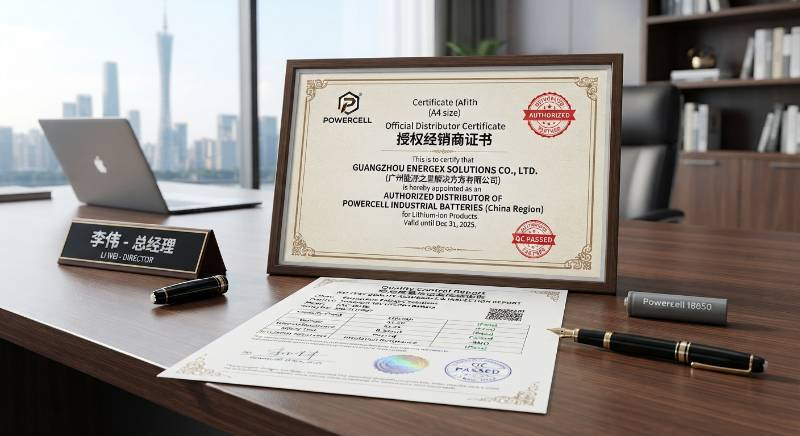
We provide sanitized Bill of Lading (BOL) documentation and Authorized Distributor certificates upon request. This level of transparency is essential for custom battery pack assembly where cell consistency is the primary factor in pack longevity.
The Physics of Power: Debunking the 9900mAh 18650 Myth
One of the easiest ways to spot a fraudulent supplier is through their technical specifications. In the current 2026 landscape, the physical energy density limits of the 18650 form factor are well-defined.
The 3600mAh Hard Ceiling: As of today, the maximum capacity for a high-quality 18650 cell (like the Panasonic/Sanyo NCR18650GA) is approximately 3450mAh to 3600mAh.
If a supplier offers cells labeled 5000mAh, 9900mAh, or even 12000mAh, they are mathematically impossible. These are “trash cells”—often recycled units filled with sand to mimic weight—and represent a severe fire hazard. Check our Wholesale Pricing Tiers for realistic, performance-graded cells.
The Triple-Verify Cell Integrity Protocol
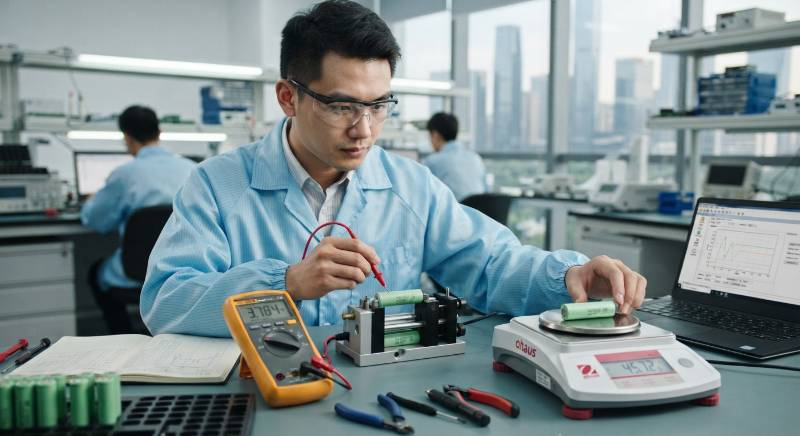
To ensure fake 18650 detection, we implement three mandatory hardware checks on every incoming wholesale batch.
1. Weight Verification
Genuine 18650 cells have a specific mass. A high-capacity cell (3000mAh+) should weigh between 45g and 48g. Counterfeiters often use smaller, lower-capacity internal cores, resulting in weights below 42g.
2. Internal Resistance (IR) Testing
Using professional AC IR meters (1kHz), we measure the internal resistance. For an original Samsung 18650 bulk cell like the 25R, the IR should be consistently below 15mΩ. High IR indicates a used or Grade B cell.
3. Date Code & QR Decoding
Tier-1 manufacturers (Samsung SDI, LG Chem, Panasonic) use proprietary inkjet coding. We decode these “Date Codes” to ensure the cells are fresh (manufactured within the last 6 months) and not old stock being dumped on the market.
Sourcing Original Samsung 18650 Bulk and Tier-1 Brands
For high-drain applications, Tier-1 cells are non-negotiable. Below is a comparison of the most requested cells in our 2026 inventory for custom battery pack assembly.
| Cell Model | 容量 | Max Discharge | Best Use Case |
|---|---|---|---|
| Samsung 25R | 2500mAh | 20A | Power Tools |
| LG HG2 (“Brownie”) | 3000mAh | 20A | High-Drain Electronics |
| Molicel P28A | 2800mAh | 35A | EV & Aerospace |
| Sanyo NCR18650GA | 3500mAh | 10A | Long-Range E-Bikes |
Choosing between Samsung and LG often comes down to current availability and wholesale pricing tiers. For mission-critical hardware, we recommend Molicel due to their superior safety profile and consistent discharge rates under thermal stress.
Global Logistics: Navigating UN38.3 and Shipping Compliance
Wholesale 18650 cells are classified as Class 9 Hazardous Materials. International shipping requires more than just a cardboard box. In 2026, customs regulations have tightened significantly.
Every shipment must be accompanied by a UN38.3 Test Summary and a current MSDS (Material Safety Data Sheet). Failure to provide these results in seized shipments or massive fines. We handle all compliance documentation to ensure your OEM battery supply chain remains uninterrupted.
According to the International Air Transport Association (IATA), lithium cells must be shipped at a State of Charge (SoC) not exceeding 30% for air freight.
Frequently Asked Questions About 18650 Wholesale
What is the minimum order quantity (MOQ) for bulk orders?
For Grade A Tier-1 cells, MOQs typically start at 1 full factory carton (usually 200–500 cells). For oem-services involving custom pack assembly, MOQs may vary based on design complexity.
How do I know if the cells are fresh or old stock?
Freshness is verified through the Date Code analysis. Cells stored for more than 12 months without proper voltage maintenance may suffer from permanent capacity loss. We guarantee all wholesale batches are less than 6 months from the production date.
Can I request an OQC report before I pay?
Yes. We provide an Outgoing Quality Control report for the current batch, which includes IR testing, voltage consistency, and capacity sampling results. This is a standard part of our Custom Battery Pack Assembly workflow.
Secure Your 2026 Battery Supply Today
Stop gambling with unverified suppliers. Get the documentation and performance your project demands.