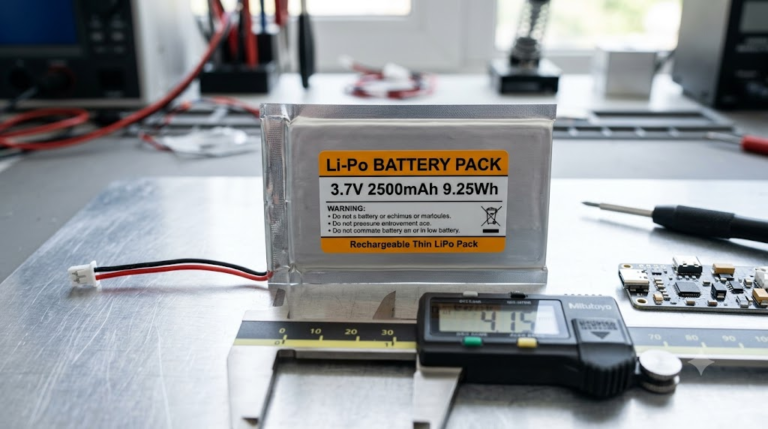
ISO 13485 Li-polymer Battery Manufacturing for Medical
The ‘Safe-Cell’ Protocol: Our Proprietary Quality Framework
A specialized ISO 13485 certified Li-polymer battery manufacturer provides power solutions that exceed standard consumer electronics specifications. These cells prioritize chemical stability, 100% lot traceability, and strict adherence to FDA Class II and III safety requirements for life-critical devices.

At JHY BATTERY, we utilize what we call the Safe-Cell Protocol. This 3-step velocity framework eliminates the risks associated with standard mass-market batteries by integrating clinical-grade oversight into the very first stage of chemical mixing.
The Safe-Cell 3-Step Velocity Framework:
- Phase 1: Zero-Contamination Sourcing: Every gram of lithium cobalt oxide is tested for purity before entering the production line.
- Phase 2: Stress-Synchronized Charging: Cells are cycled under simulated medical use-case temperatures to identify early-life failures.
- Phase 3: Digital Twin Traceability: Every battery is assigned a unique digital ID, linking it to the specific raw material batch and operator who oversaw its assembly.
Why ISO 13485 Certification is Non-Negotiable for MedTech
While ISO 9001 focuses on general customer satisfaction, ISO 13485 is the gold standard for medical device safety. It aligns a manufacturer’s Quality Management System (QMS) with global regulatory requirements like the EU Medical Device Regulation (MDR) and FDA 21 CFR Part 820.
“In medical applications, the battery isn’t just a component; it is a life-sustaining system. Our ISO 13485 certification means we treat every cell as if a life depends on it, documenting every variable from humidity to millivolt fluctuations.”
— Director of Quality Assurance, chinabatterymanufacturer.com
Choosing an uncertified supplier for medical wearables is a significant risk. Without the rigorous documentation required by ISO 13485, obtaining CE Marking or FDA approval for your final device becomes nearly impossible during the audit phase.
Achieving a 0.03% Defect Rate: Precision for Implants and Monitors
For a continuous glucose monitor (CGM) or an implantable sensor, a battery failure isn’t just an inconvenience—it’s a clinical emergency. We maintain a 0.03% defect rate, a benchmark that is significantly lower than the 1-2% industry average for consumer-grade electronics.
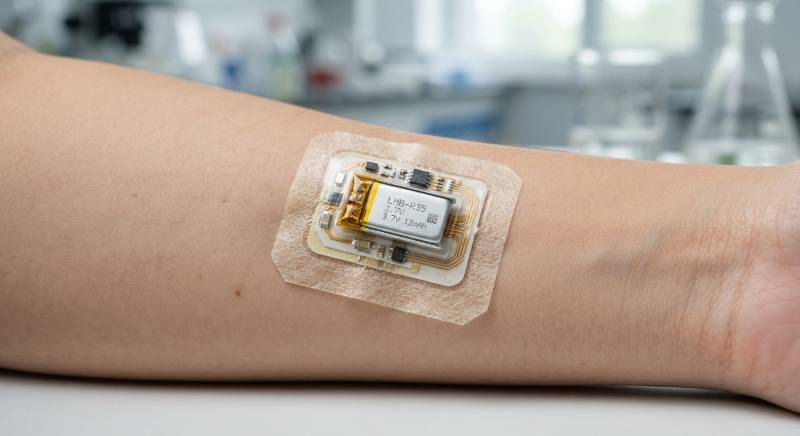
Our Precision Control Methodology:
- Automated X-Ray Inspection: Every single cell undergoes X-ray scanning to detect internal electrode misalignment that could cause a short circuit.
- OCV/IR Sorting: We use high-precision testing to group cells with identical Open Circuit Voltage and Internal Resistance, ensuring stability in multi-cell packs.
- Pressure-Sensing Formation: During the first charge, we monitor gas evolution to ensure the pouch remains perfectly sealed under 2026-standard pressure sensors.
Biocompatibility and Safety Testing: Beyond the Data Sheet
Medical wearables are often in direct contact with skin for 24 hours a day. Therefore, Biocompatibility is a critical safety pillar. Even if the battery is encased in plastic, the manufacturer must ensure that the battery’s chemistry and housing materials do not leach toxins.
We test our batteries against ISO 10993 standards, which include:
- Cytotoxicity: Ensuring materials do not kill healthy cells.
- Sensitization: Confirming the battery casing materials won’t cause allergic reactions.
- Irritation: Testing for localized skin inflammation.
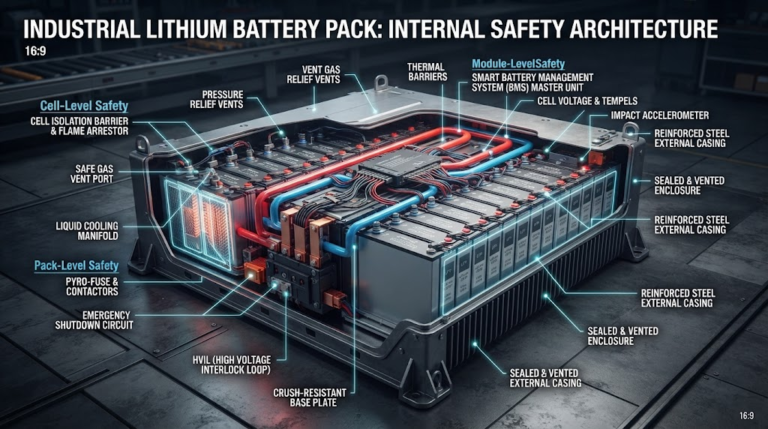
Furthermore, our medical device power supply solutions undergo rigorous thermal management testing. We ensure that even under a worst-case “short circuit” scenario, the battery surface temperature never exceeds 43°C (109.4°F), the threshold for skin burns in prolonged contact.
Li-polymer vs. Li-ion: Selecting the Right Chemistry for Wearables
When developing Medical Battery Solutions, engineers must choose between traditional Lithium-ion and Lithium-polymer (Li-poly).
| Feature | Li-ion (Standard) | Li-polymer (Medical Grade) |
|---|---|---|
| フォームファクター | Rigid, mostly cylindrical | Ultra-thin, flexible, customizable |
| Safety Profile | Higher risk of leakage | Solid/Gel electrolyte, lower leak risk |
| エネルギー密度 | High | Very High (optimized for thinness) |
| Cycle Life | 300-500 cycles | 500-1000+ (Customized formulations) |
For modern wearables like smart hearing aids or cardiac patches, Li-polymer is almost always the preferred choice due to its ability to be manufactured in “curved” or “ultra-thin” profiles (under 1mm) via Custom Battery Design.
Clean-Room Manufacturing and Full Lot Traceability
Particles as small as 5 microns can bridge the separator in a lithium battery, leading to internal shorts. This is why we manufacture our medical-grade cells in Class 10,000 clean rooms.
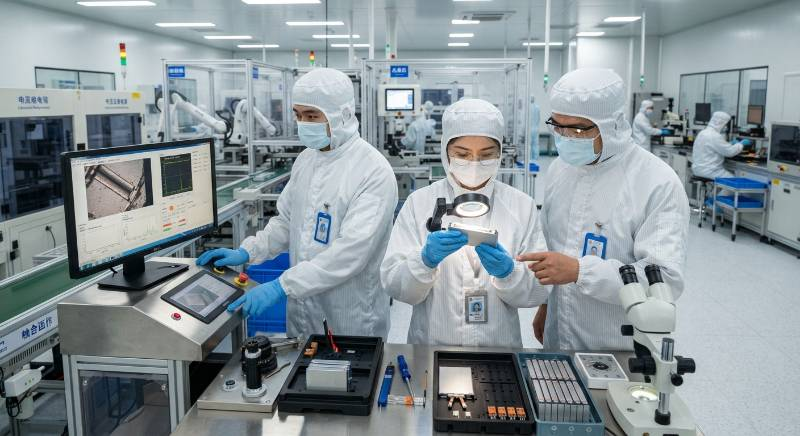
Traceability is the backbone of ISO 13485:
- Raw Material Logs: We track the cathode chemistry back to the specific mine and batch.
- Process Monitoring: We record the temperature and humidity of the clean room every 10 minutes during the coating process.
- Post-Market Surveillance: If a single cell in the field reports an issue, our digital lot system allows us to identify and isolate every other cell produced in that same hour.
Medical Battery FAQ: Compliance, Longevity, and Safety
Are your batteries compatible with sterilization processes?
Most Li-polymer batteries cannot withstand the high heat of an autoclave. However, we offer specialized cells designed for ETO (Ethylene Oxide) or Gamma radiation sterilization, commonly used for single-use medical devices.
Do you provide UN38.3 transport testing?
Yes. All our medical batteries pass UN38.3 transport testing そして IEC 62133 certification. This ensures they can be safely shipped globally and integrated into devices meant for home healthcare.
What is the typical shelf life for a medical wearable battery?
Medical-grade Li-poly cells are formulated for low self-discharge. When stored at 25°C, they typically retain 80% of their charge for over 12 months, which is vital for devices that may sit in hospital inventory.
Ready to Power Your Next Medical Innovation?
Don’t compromise on patient safety. Consult with our medical battery engineers today to receive a custom quote and technical review of your device’s power requirements.
Consult a Medical Battery Engineer
Guaranteed technical response within 24 hours.