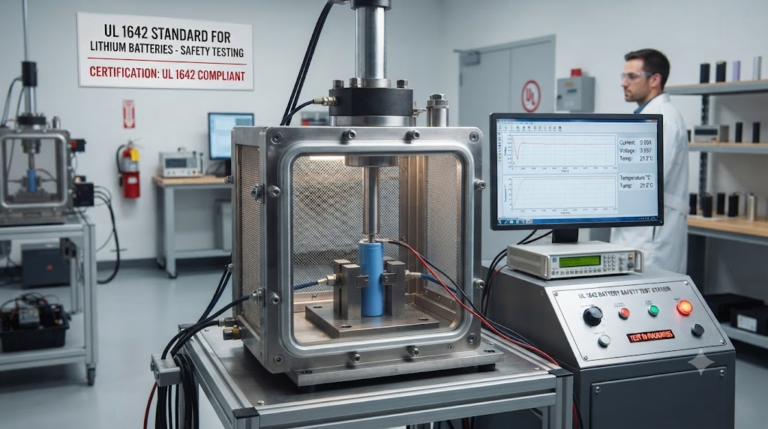
リチウムイオン電池の安全性:2026年のプロトコルとコンプライアンス
The 2026 Landscape of Lithium-Ion Battery Safety
Energy density in lithium-ion cells has reached record highs in 2026. While this powers our world longer, it increases the volatility of cell chemistry stability.
Safety is no longer just about containment. It is about active prevention and intelligent mitigation. We are seeing a massive shift toward high-nickel and solid-state hybrids that require specialized リチウムイオン電池の安全対策.

Understanding the Thermal Runaway Risk Chain
Modern lithium-ion safety is built on managing the “Thermal Runaway Chain.” This chain describes the feedback loop where an increase in temperature triggers a reaction that further increases temperature, often leading to a fire hazard or explosion.
Effective safety protocols utilize a multi-layered defense strategy that monitors cell voltage and temperature in real-time to interrupt the thermal runaway chain before the internal separator melts. By combining hardware containment with AI-driven software, facilities can reduce the risk of catastrophic cell failure by up to 98% compared to passive storage methods.
“In our testing at China Battery Manufacturer, we’ve found that the transition from ‘Initiation’ to ‘Propagation’ happens in less than 60 seconds. If your suppression system isn’t automated, you’ve already lost the unit.” — Senior Battery Engineer, R&D Division
The Three Stages of Battery Failure
- Initiation: Mechanical abuse, overcharge, or internal shorts raise the temperature.
- Propagation: Heat spreads to adjacent cells. Electrolyte leakage begins to vent flammable gases.
- Conflagration: Full-scale fire. Oxygen is released from the cathode, making the fire self-sustaining.
Global Regulatory Compliance: NFPA 855 and Beyond
Compliance in 2026 requires a deep understanding of NFPA 855 standards. This updated code mandates specific spacing between battery racks and advanced exhaust ventilation systems.
Workplace safety is governed by OSHA, while international transit relies on the IMDG Code そして UN 38.3 transport testing. Failure to comply leads to massive fines and uninsurable facilities.
| Standard | Focus Area | Key Requirement |
|---|---|---|
| NFPA 855:2026 | Installation/Storage | Explosion control & clear spacing |
| UL 9540A | Fire Testing | Thermal runaway propagation data |
| UN 38.3 | Logistics | Altitude & vibration resilience |
For warehouse managers, following Warehouse Fire Prevention Standards is the baseline for operational continuity.
The Safe-Cell 360™ Protocol: A Proprietary Safety Framework
At China Battery Manufacturer, we utilize the Safe-Cell 360™ Protocol. This methodology moves beyond simple fuses. It treats the battery as a living biological system.
- Active Monitoring: High-frequency sampling of State of Charge (SoC) and impedance.
- Isolation Mitigation: Physical barriers that prevent a single cell failure from becoming a rack-wide event.
- Lifecycle Management: Automated decommissioning when a cell’s health drops below safety thresholds.
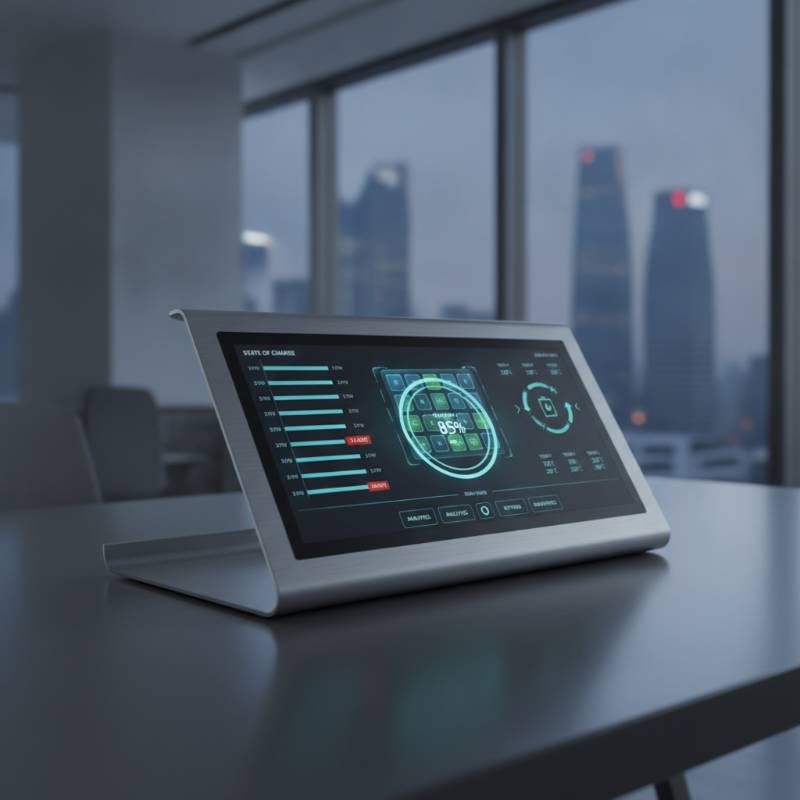
AI-Driven Predictive Safety: The Future of BMS
Traditional Battery Management Systems (BMS) were reactive. They cut power after a limit was exceeded. In 2026, AI-Driven Predictive Safety analyzes micro-fluctuations in internal resistance.
These algorithms can predict a short circuit up to 48 hours before it occurs. By monitoring gas evolution sensors, the BMS can trigger inert gas purging, effectively neutralizing the atmosphere inside the battery enclosure.
Emergency Response: Fire Suppression and Hazmat Cleanup
Lithium fires are unique. They do not require external oxygen. Traditional water cooling is often insufficient because it cannot reach the core of the battery pack.
F-500 Encapsulator Agents are the 2026 gold standard. Unlike water, which simply cools the surface, F-500 encapsulates the flammable electrolyte molecules, rendering them non-flammable and non-explosive.
Post-incident, you must engage Hazardous Material Handling Services. The residue from a lithium fire contains toxic hydrofluoric acid and heavy metals that require specialized hazmat cleanup.
Safety Protocols for Second-Life and Repurposed Batteries
The 2026 market is flooded with retired EV batteries being repurposed for small business energy storage. These “Second-Life” batteries present unique risks because their chemical history is often unknown.
Repurposed battery protocols require a mandatory “Stress Baseline” test. Before installation, every module must undergo a 24-hour thermal stability cycle. Without this, you are installing a potential fire hazard in your facility.
Frequently Asked Questions About Battery Safety
Is a high-end BMS better than physical fire containment?
No. They serve different purposes. A BMS is your first line of defense (prevention), while physical containment is your last line (mitigation). In 2026, industrial insurance requires both to be present for リチウムイオン電池の安全対策 to be valid.
What is the best lithium fire extinguisher?
Standard ABC or CO2 extinguishers are largely ineffective for lithium-ion fires. Look for extinguishers rated for “Class D” fires or those utilizing aqueous vermiculite dispersion (AVD) and F-500 agents.
What are the 2026 battery storage regulations?
The primary regulation is NFPA 855, which requires batteries to be stored in fire-rated cabinets or dedicated rooms with automatic suppression and explosion venting. For more information, consult the National Fire Protection Association.
Protect Your Infrastructure Today
Don’t wait for a thermal event to realize your safety protocols are outdated. Our engineers provide full-scale audits and 2026-compliant hardware solutions.
- ✅ Download the 2026 Safety Checklist
- ✅ Access our Fire Suppression Agent Calculator
- ✅ Schedule a Professional Safety Audit