eVTOL Battery Packs: High Energy Density Solutions (2026)
High Energy Density Battery Packs for eVTOL & Fixed-Wing UAVs
What defines a high-performance eVTOL battery in 2026?
In 2026, high energy density battery requirements for electric aviation demand a minimum specific energy of 260Wh/kg coupled with extreme thermal stability. Unlike consumer electronics, these systems must sustain high-power vertical takeoff while maintaining enough capacity for extended cruise and emergency reserves.
- Specific Energy: Target >260Wh/kg at the pack level.
- Safety Certification: Mandatory RTCA DO-311A compliance.
- Discharge Rates: 10C pulse for eVTOL vs. 1C-2C continuous for fixed-wing.
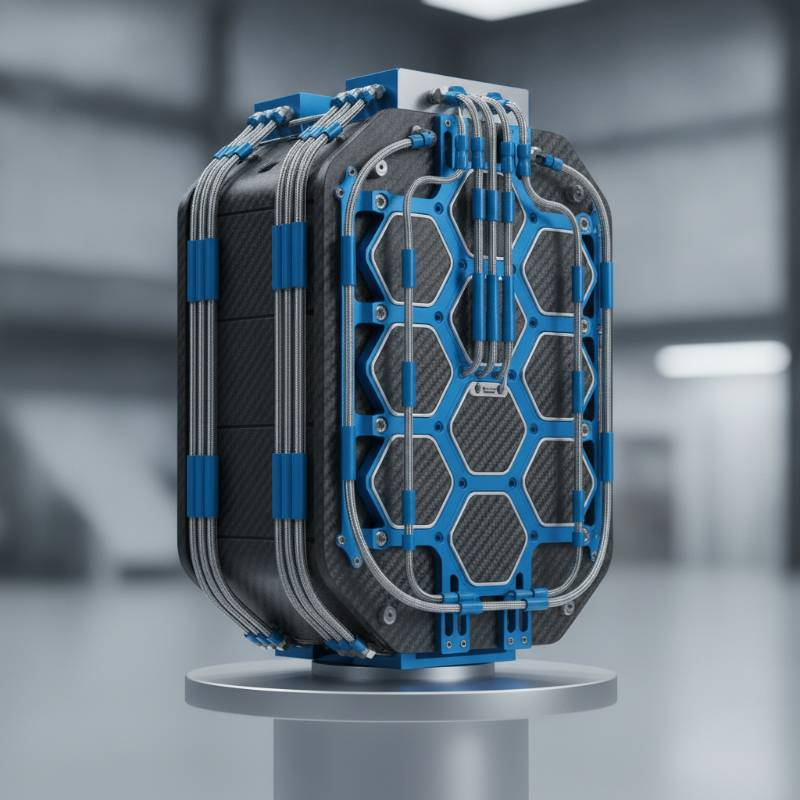
- Thermal Management: Active liquid cooling or advanced Phase Change Materials (PCM).
- Cycle Reliability: 1,000+ mission-specific cycles with minimal capacity fade.
The Aerospace Velocity Framework: Solving the Power Gap
Based on our data at JHY Battery, we have moved beyond simple capacity metrics. We utilize the Aerospace Velocity Framework to map battery performance against a 3-phase load model. This ensures the hybrid discharge drone battery doesn’t just fly—it thrives under stress.
The 3-Phase Mission Load Model
- Takeoff & Hover (The Pulse): Requires massive energy release. Our packs support 10C pulse discharge for up to 10 seconds to handle the immense gravitational pull during vertical lift.
- Cruise (Steady State): Once at altitude, the load drops to 1C-2C. This is where high energy density (Wh/kg) extends the Urban Air Mobility (UAM) range.
- Landing (Safety Reserve): A secondary pulse phase that demands high voltage stability even at low State of Charge (SoC).
By integrating Custom Lithium-ion Battery Packs specifically engineered for these phases, we eliminate the “power sag” common in standard drone cells.
Technical Specifications: 10C Pulse Power & 260Wh/kg Density
Modern eVTOL and fixed-wing UAVs require a delicate balance of chemistry. We utilize silicon-anode and high-nickel cathode structures to push the boundaries of specific energy (Wh/kg) そして energy density (Wh/L).
| Metric | Target Specification |
|---|---|
| Specific Energy | ≥ 260 Wh/kg |
| Pulse Discharge (10s) | 10C Rate |
| Continuous Discharge | 1C – 3C Rate |
| Operating Temp | -20°C ~ 60°C |
Aviation Safety Standards: RTCA DO-311A & Thermal Mitigation
Safety in electric aviation is non-negotiable. Our VTOL UAV power packs are designed to meet the rigorous RTCA DO-311A standard, which governs the safety and performance of rechargeable lithium battery systems in aircraft.
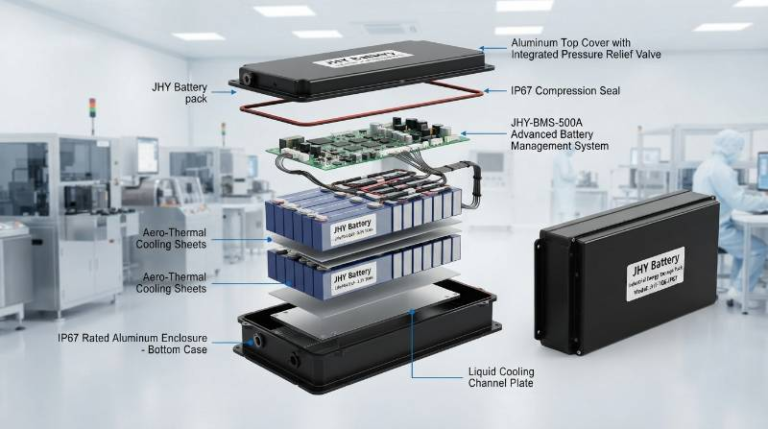
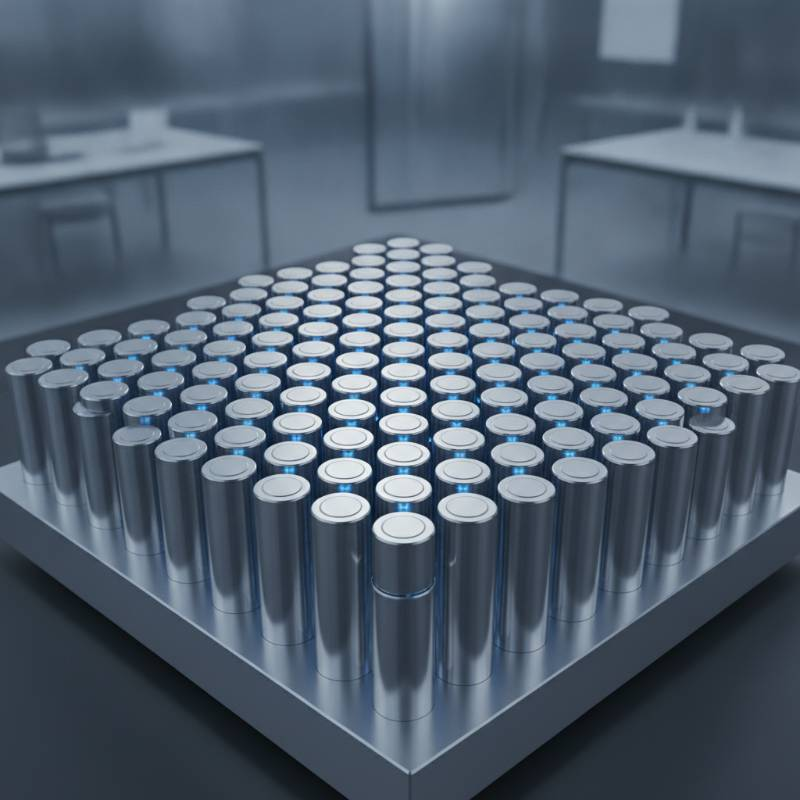
Thermal runaway protection is achieved through a multi-layered approach. We incorporate ceramic-coated separators and a Advanced BMS Technology that provides cell-level monitoring and redundant fail-safes.
“The transition from 200Wh/kg to 260Wh/kg was not just a chemistry shift; it was a thermal engineering triumph. Managing the heat during a 10C pulse in a high-density pack is what separates experimental drones from certified aircraft.”
— Senior Technical Director, JHY Battery
Customization for UAV Fleet Operators & Aerospace OEMs
Standardized batteries rarely fit the aerodynamic constraints of a custom airframe. As a leading OEM battery manufacturer, JHY Battery provides bespoke solutions for voltage, capacity, and physical form factors.
Whether you are powering heavy-lift cargo drones or long-endurance surveillance UAVs, our experience with Industrial Equipment Batteries allows us to adapt ruggedized enclosures that withstand high-vibration aerospace environments.
Interactive: Submit Your Flight Profile
Optimize your aircraft’s performance by utilizing our Discharge Simulation Model. Submit your mission parameters—including payload, expected duration, and ambient temperature—to receive a customized power analysis and BMS configuration within 48 hours.
手順 1: Upload your CSV flight profile data.
ステップ 2: Receive a thermal and voltage stability simulation.
ステップ3: Get a prototype quote for a certified battery pack.
Frequently Asked Questions about eVTOL Batteries
How does high-power discharge affect battery cycle life?
While 10C pulses are demanding, JHY’s proprietary electrolyte additives stabilize the SEI layer, allowing our packs to maintain over 80% capacity after 1,000 mission cycles when combined with our liquid cooling systems.
Can these batteries support fast charging at vertiports?
Yes. Our 2026 cell architecture supports 4C fast charging, enabling a 10% to 80% charge in under 15 minutes, which is critical for high-utilization air taxi fleets.
What is the end-of-life process for these large-scale arrays?
We partner with global recycling leaders to ensure that high-nickel and silicon components are recovered, supporting a circular economy for the aerospace industry.
Expert Review: Engineering the Future of Flight
This technical guide was reviewed by the Senior Technical Director at JHY Battery. With over 12 years of experience in high-discharge lithium systems and aerospace-grade manufacturing, our team ensures every pack meets the safety and performance benchmarks required for the 2026 aviation landscape.
JHY Battery (Juheyuan Science & Technology Co., Ltd.) is an ISO9001-certified leader in custom lithium solutions, serving global B2B markets with UL, CE, and UN38.3 certified technology.
Ready to Power Your Next Flight?
Contact JHY Battery today for a technical consultation on your eVTOL or UAV project.