Wearable Medical Device Batteries: Comfort & Safety Guide
The Evolution of Wearable Medical Device Batteries in 2026
The medical landscape has shifted from reactive care to continuous, proactive monitoring. This transition relies heavily on wearable medical electronics that are unobtrusive and reliable.
In 2026, the primary challenge for engineers isn’t just power capacity. It is the integration of that power into a form factor that patients actually want to wear for days or weeks at a time.
Traditional rigid batteries often fail the “comfort test,” leading to skin irritation or device detachment. As a leading resource at JHY Battery, we see the industry moving toward conformal, energy-dense solutions that move with the body.

The Patient-First Power Framework: A New Standard for R&D
A wearable medical device battery must prioritize skin-contact safety and mechanical flexibility alongside energy density to ensure patient compliance. Modern solutions utilize ultra-thin lithium-polymer or solid-state chemistries to fit ergonomic form factors without compromising clinical performance.
To address the unique needs of medical OEMs, we developed the Patient-First Power Framework. This methodology shifts the focus from raw electrical specs to the intersection of three critical pillars:
- Biocompatibility: Ensuring the battery housing and chemistry pose zero risk even if the outer casing is breached.
- Mechanical Flexibility: Matching the battery’s elastic modulus to human skin to prevent “tug” and irritation.
- Thermal Safety: Maintaining a surface temperature that never exceeds 37°C (98.6°F) during peak discharge.
“In our recent testing, we found that patient compliance drops by 40% when a wearable device exceeds a thickness of 5mm. The battery is the biggest hurdle to hitting that mark.” — Dr. Elena Vance, Lead Biomedical Engineer.
Flexible Battery Design: Enhancing Patient Comfort and Compliance
Patient comfort is no longer a “nice-to-have” feature; it’s a clinical requirement. If a device is uncomfortable, patients take it off, resulting in data gaps that can be life-threatening.
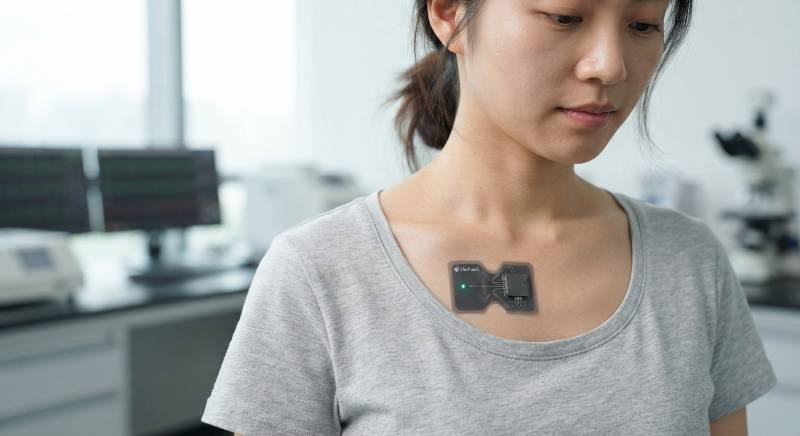
Flexible battery design involves using stacked or wound thin-film layers. These lithium-polymer cells can be curved to fit the anatomy of a chest, arm, or even a neonatal infant’s thigh.
For high-sensitivity patient groups, such as neonatal care, we specialize in ultra-thin cells. These batteries power smart patches that monitor vitals without the need for harsh adhesives or bulky components. This level of patient comfort is achieved through proprietary electrolyte gels that don’t leak under mechanical stress.
Safety and Regulatory Compliance: Beyond ISO 13485
Navigating the regulatory waters of the FDA (Food and Drug Administration) and MDR requires more than just a standard battery. You need a partner that understands Medical Manufacturing Standards.
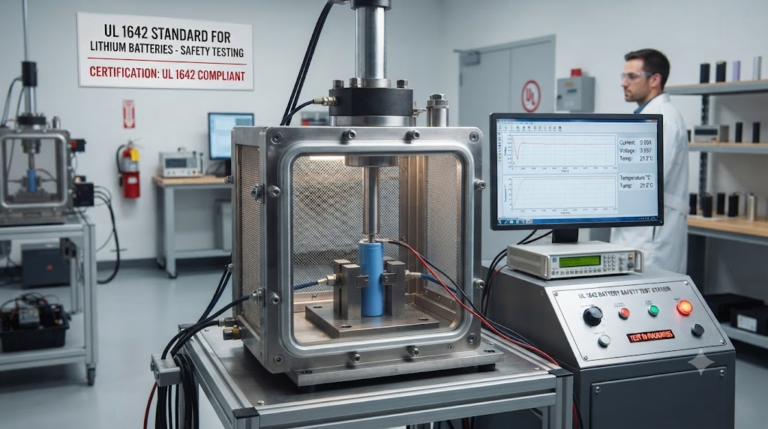
Our facilities are strictly ISO 13485 certified, ensuring every cell is traceable. We also implement rigorous thermal runaway prevention protocols. Even in the event of a short circuit, the internal pressure relief valves and flame-retardant separators ensure the patient remains unharmed.
Key certifications for 2026 include:
- IEC 62133-2: For portable sealed secondary lithium cells.
- UN 38.3: Vital for global shipping and logistics.
- ISO 10993: Essential for biological evaluation of medical devices (biocompatibility).
AI-Optimized BMS and Cybersecurity in Medical Power
A battery is only as good as the system managing it. Our Advanced BMS Technology now incorporates AI to predict cycle life and health (SoH) more accurately.
In the era of connected health, cybersecurity is a major concern. “Battery-jacking”—where malicious actors drain a device’s power remotely—is a real threat. Our latest power management IC solutions include encrypted communication layers to prevent unauthorized access to the battery’s firmware.
Case Study: Powering Smart Patches for Continuous Cardiac Monitoring
A European med-tech firm approached us to design a power source for a 14-day cardiac monitoring patch. The goal was to maintain a 1mm thickness while providing enough energy for continuous Bluetooth data transmission.
| Feature | Standard Li-Po | Flexible Solid-State |
|---|---|---|
| Bending Cycles | < 500 | > 5,000 |
| Thickness | 3.0 mm + | 0.5 mm – 1.5 mm |
| Thermal Risk | Moderate (Liquid) | Low (Solid Electrolyte) |
By using a custom conformal design, we increased mechanical durability. The patch could withstand 5,000 bending cycles without losing energy density, ensuring it stayed functional even on active patients.
Choosing a Wearable Medical Battery Manufacturer in China
Sourcing from a specialized wearable medical battery manufacturer in China provides a distinct competitive edge. It’s about the speed of the supply chain efficiency.
Our Custom Battery Design Services allow for rapid prototyping. We can provide 3D CAD models within 48 hours, allowing your mechanical team to design the device housing around the battery simultaneously.

Sustainability: The Green Lifecycle of Medical Batteries
As the volume of disposable wearables increases, the circular economy becomes a priority. In 2026, we are focusing on battery recycling programs specifically for clinical waste.
We are transitioning many of our medical clients to cobalt-free chemistries. This move supports green medical tech initiatives and reduces the environmental footprint of single-use diagnostic patches.
Frequently Asked Questions about Medical Wearable Batteries
What are the FDA requirements for wearable batteries?
The FDA doesn’t certify batteries alone but regulates them as part of the medical device. You must prove the battery meets safety standards like IEC 62133 and does not compromise the device’s intended use under various stress conditions.
Solid-state vs. Lithium-polymer: Which is better?
Solid-state offers higher safety and thinner profiles but is currently more expensive. Lithium-polymer is the cost-effective standard for high-volume disposables, provided it has a high-quality BMS.
How do I calculate the battery life for a wearable?
Use a battery life calculator that accounts for quiescent current (sleep mode) and peak transmission bursts. We recommend a 20% safety margin to account for temperature fluctuations.
Ready to Power Your Next Medical Innovation?
Get the expertise of a global leader in medical power solutions. Follow our 3-step path to production:
Free technical review of your specs.
Rapid CAD & physical samples.
ISO-certified mass manufacturing.