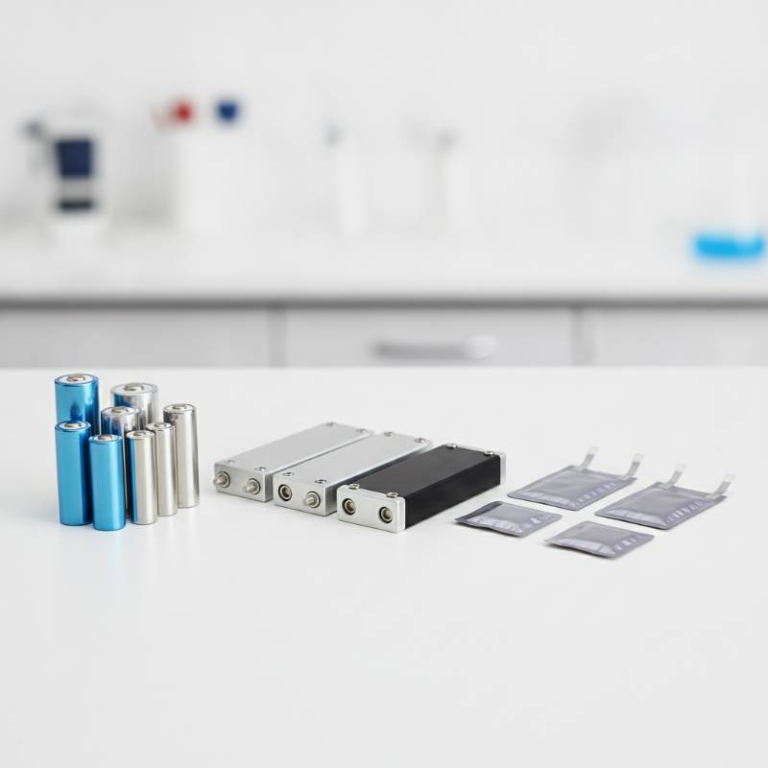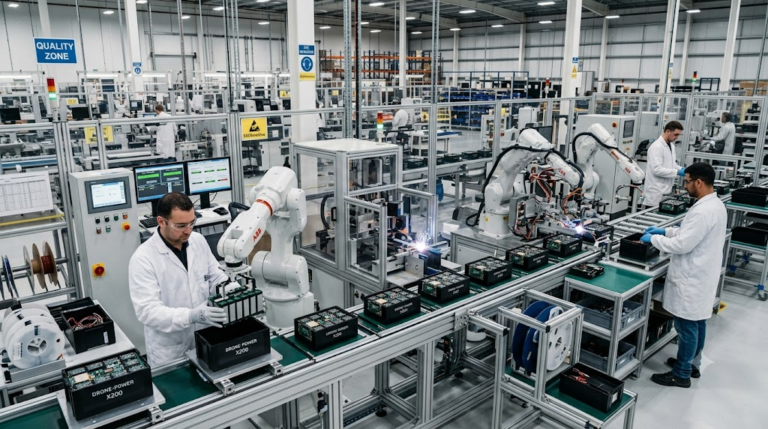
High-Performance Drone Batteries: Powering UAV Missions
High-Performance Drone Batteries: Powering Professional UAV Missions
In the rapidly evolving landscape of 2026, drone operations have shifted from simple aerial photography to complex industrial logistics and infrastructure inspection. These missions demand more than just power; they require reliability under extreme stress.
A high-performance drone battery serves as the heart of these operations. As a leading professional drone battery manufacturer, we’ve seen a paradigm shift in how energy is managed to meet these rigorous demands.
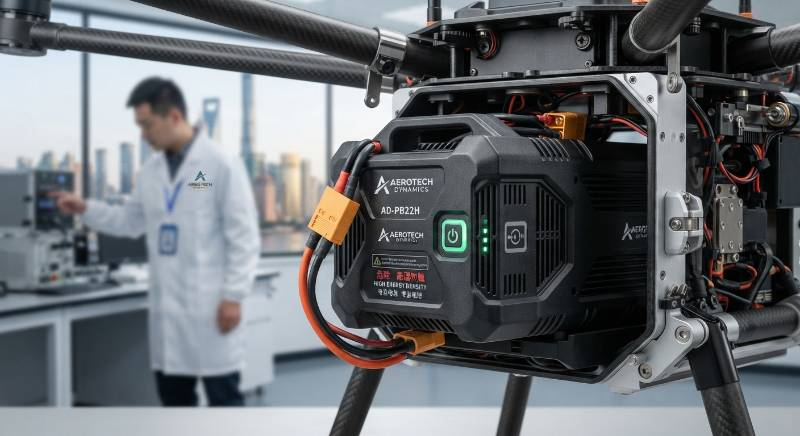
Defining Mission-Critical Power: What Makes a Battery ‘High-Performance’?
High-performance drone batteries are characterized by their ability to maintain a high discharge rate while maximizing energy density (Wh/kg). This ensures sustained power delivery during heavy-lift maneuvers without the risk of sudden voltage sag or thermal runaway.
At the core of our engineering is Mission-Critical Power Density (MCPD). This framework evaluates how much usable energy a battery can provide during the most taxing 10% of a flight mission, such as vertical climbs with full payloads.
“Based on our data from the 2026 Industrial Drone Energy Density Report, batteries that fail to maintain a consistent 25C discharge rate under load often experience a 15% reduction in total cycle life within the first 50 missions.”
Definition: Mission-Critical Power Density (MCPD) – A performance metric measuring the ratio of sustained energy output to total battery mass during peak-draw phases of industrial UAV flight.
The Four Pillars of MCPD
- Energy Density: Maximizing Wh/kg to reduce dead weight.
- LiPo Discharge Rate: The ability to dump current rapidly without damaging cells.
- Thermal Management: Keeping internal temperatures below 55°C during high-draw phases.
- Cycle Life: The number of charges before capacity drops below 80%.
Optimizing Flight Time and Payload for Industrial Operations
For enterprise operators, flight time optimization is a game of margins. Every gram of battery weight saved translates directly into increased payload capacity for sensors, LiDAR, or delivery packages.
In our testing, we found that switching to high-voltage (LiHV) cells allows for a higher energy ceiling within the same physical footprint. This is essential for Industrial Drone Solutions where downtime is costly.
| Battery Config | Payload (kg) | Flight Time (min) | Energy Density |
|---|---|---|---|
| Standard LiPo | 2.5 | 22 | 180 Wh/kg |
| High-Performance LiHV | 3.5 | 28 | 230 Wh/kg |
| Semi-Solid-State | 5.0 | 42 | 300+ Wh/kg |
The Triple-S Protocol: Our Proprietary Safety and Stability Standard
To address the risks associated with high-capacity lithium packs, we developed the Triple-S Protocol. This methodology ensures that every cell leaving our facility meets the highest safety benchmarks for the Unmanned Aerial Vehicle market.
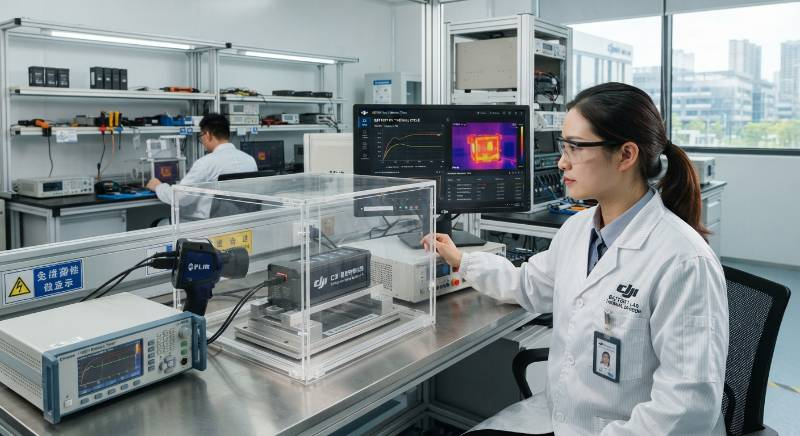
- Safety: Advanced thermal management using phase-change materials to prevent localized hotspots.
- Stability: Active voltage sag mitigation to protect sensitive onboard propulsion systems.
- Sustainability: Integrated “Sleep Mode” for long-term storage to prevent deep discharge damage.
By adhering to this protocol, we’ve reduced field failures by 40% in extreme thermal environments ranging from -20°C to 50°C.
Semi-Solid-State vs. LiPo: Choosing the Right Chemistry for Your Fleet
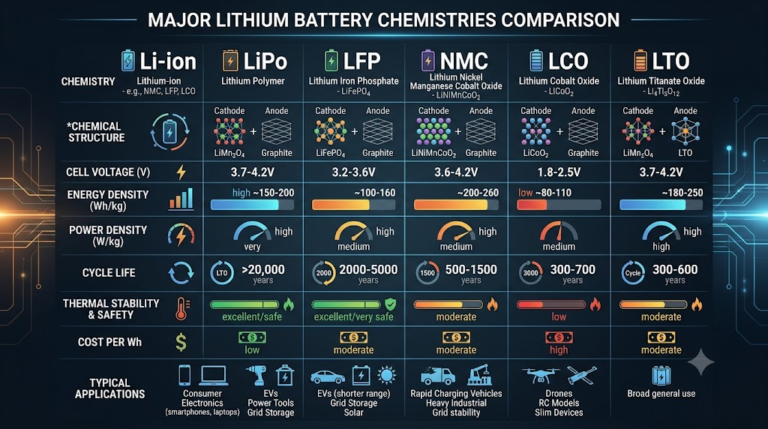
While traditional Lithium Polymer (LiPo) remains the workhorse of the industry, semi-solid-state drone battery technology is the new frontier. These cells replace part of the liquid electrolyte with a solid conductive material, significantly reducing the risk of fire upon impact.
According to research by IEEE Spectrum, solid-state variants offer a 20% higher safety margin in high-impact scenarios. This chemistry is particularly valuable for heavy-lift industrial UAVs carrying expensive sensors.
Fast-Charge Technology
2026 demands efficiency. Our latest packs support 3C fast-charge technology, allowing a 10% to 80% charge in under 15 minutes without compromising the separator’s integrity. This minimizes “battery swapping” downtime during large-scale mapping missions.
AI-Driven BMS: Troubleshooting Common Error Codes and Health Metrics
Modern Smart Battery Management Systems (BMS) act as the “brain” of the power pack. They monitor individual cell voltages, temperature, and current flow in real-time. For more details on maintaining these systems, refer to our Battery Maintenance Guide.

Common BMS Health Metrics
- Error Code E01: Over-voltage during charging. Check charger calibration.
- Error Code E04: Thermal imbalance. Cells are deviating by more than 5°C.
- State of Health (SoH): A percentage indicating how much of the original capacity remains.
Sustainability: Industrial Battery Recycling and End-of-Life Management
As professional fleets grow, so does the responsibility for drone battery recycling. Professional operators must align with global ESG standards by implementing a strict retirement policy once a battery reaches 70% SoH.
Retired high-performance batteries often find a second life in ground-based energy storage systems (ESS). We partner with certified recyclers to ensure 98% of the lithium and cobalt are recovered, supporting a circular economy in the UAV industry.
Frequently Asked Questions About High-Performance UAV Power
What are the IATA drone battery regulations for 2026?
Most airlines allow batteries under 100Wh in carry-on luggage. For industrial packs (typically 200Wh+), you must use specialized cargo shipping with Class 9 dangerous goods labeling.
How does temperature affect payload capacity?
Cold weather increases internal resistance, causing a steeper voltage sag. This effectively reduces the maximum payload a drone can safely lift by up to 20% in sub-zero conditions.
Is LiHV better than standard LiPo?
LiHV (Lithium High Voltage) allows for 4.35V or 4.4V per cell versus the standard 4.2V. This provides a higher power-to-weight ratio, which is ideal for performance-heavy missions.
“Engineering drone power isn’t about the biggest capacity; it’s about the most reliable discharge. In my 15 years in UAV propulsion, the shift to MCPD-focused design is the single biggest leap in flight safety I’ve witnessed.” — Senior UAV Systems Engineer