Battery Cell Types: Comparing Cylindrical, Prismatic & Pouch
The JHY Triple-A Selection Framework for Engineering Success
Choosing between battery cell types is no longer just about chemistry. In 2026, the physical architecture of a cell dictates its thermal management, cycle life, and how it survives mechanical stress.
Battery cell types are categorized by their physical form factor—cylindrical, prismatic, and polymer—each offering distinct trade-offs in energy density, mechanical durability, and cooling efficiency. Selecting the right type depends on whether your priority is volumetric efficiency (prismatic), mechanical reliability (cylindrical), or design flexibility (polymer).
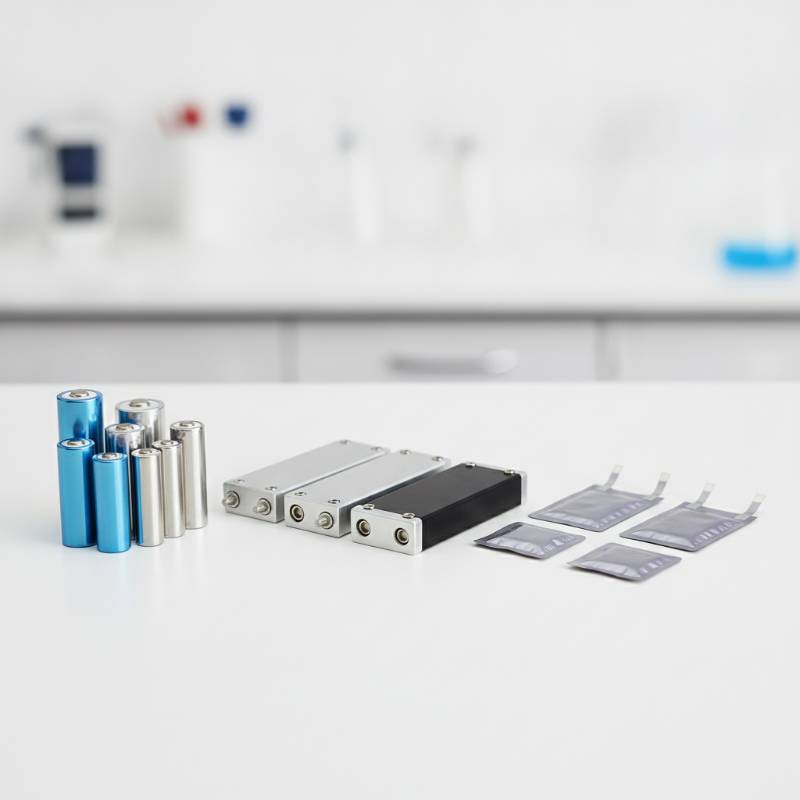
At JHY Battery, we utilize the Triple-A Selection Framework to help engineers navigate these choices:
- Application: Does the device require high discharge rates (Power) or long-duration usage (Energy)?
- Architecture: What are the volumetric constraints? Can the casing support internal pressure?
- Ambient: Will the battery operate in extreme temperatures where thermal runaway risk is higher?
“The shift we’ve seen in 2026 is a move toward ‘Application-Specific Architecture.’ We don’t just fit a battery into a box; we select the cell geometry that optimizes the thermal path and structural integrity of the entire pack.”
— Senior Battery Engineer, JHY Battery
Cylindrical Cells: The Standard for High-Power Industrial Applications
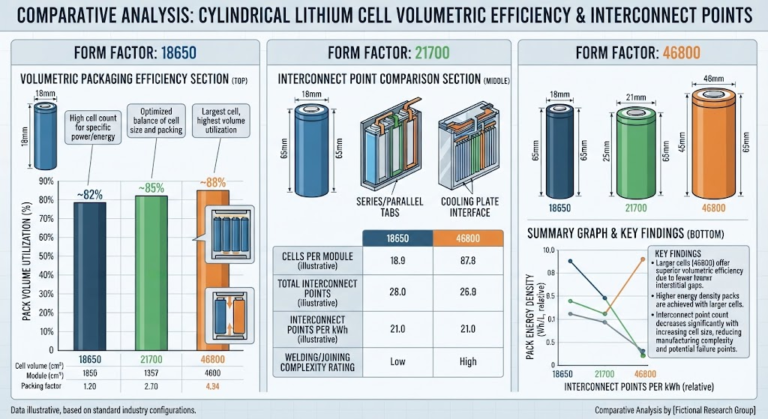
Cylindrical cells are the oldest and most mature form factor. Their round shape allows them to withstand high internal pressures without deforming, making them incredibly safe and stable.
Common formats include the 18650, 21700, and the newer Tesla 4680 cell. These cells are favored for Cylindrical Cells for Industrial Applications because their shape creates natural air gaps in a battery pack, simplifying cooling and thermal management.
Key Advantages:
- Mechanical Stability: The circular cross-section distributes internal stress evenly.
- Manufacturing Consistency: Highly automated production leads to lower defect rates and lower costs per kWh.
- Cycle Life: Excellent longevity due to robust structural integrity.
Prismatic Cells: The Powerhouse for Energy Storage Systems (ESS)
Prismatic cells are rectangular, encased in aluminum or steel. They are designed to maximize space. Unlike cylindrical cells, they leave no “dead space” when stacked, providing superior volumetric energy density.
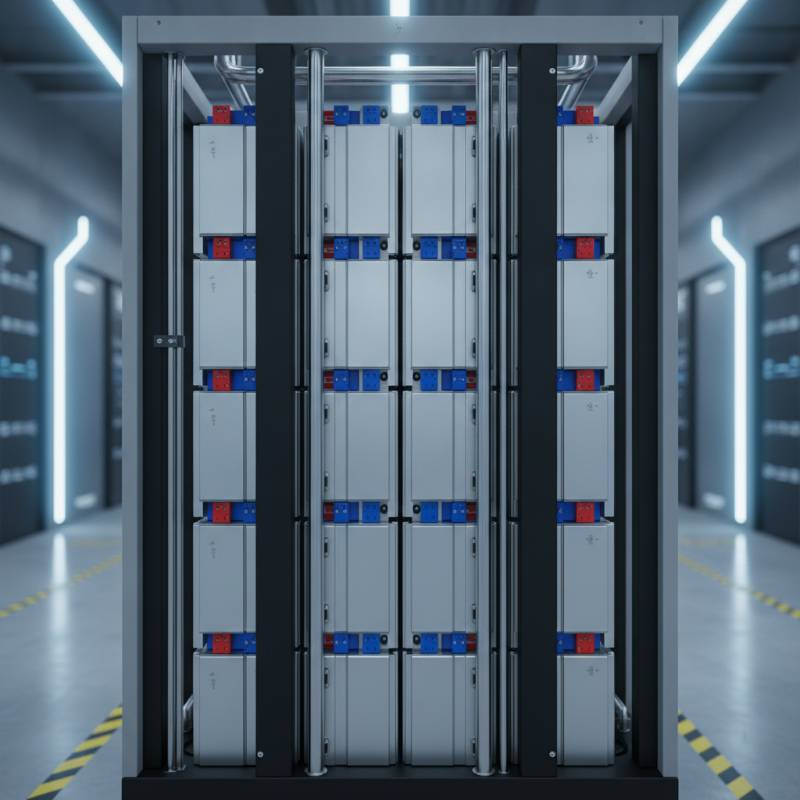
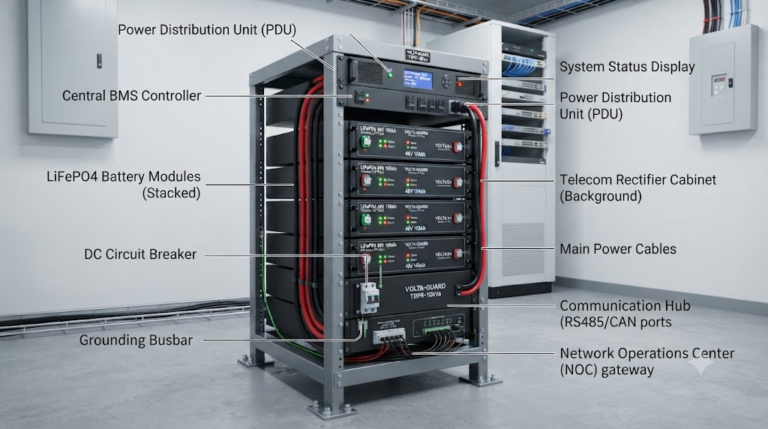
For large-scale projects, Prismatic Cells for Energy Storage are the industry standard. Companies like CATL have pushed this format to its limits, offering capacities exceeding 300Ah per cell. This reduces the number of connections required in a large battery pack assembly, increasing overall system reliability.
Best For:
- Electric Vehicles (EVs) where floor space is limited.
- Grid-scale Energy Storage Systems (ESS).
- Heavy industrial machinery.
Polymer (Pouch) Cells: Maximum Flexibility for Modern Electronics
Often called “pouch cells,” lithium polymer batteries use a flexible foil laminate instead of a rigid metal can. This allows the cell to be incredibly thin or even curved.
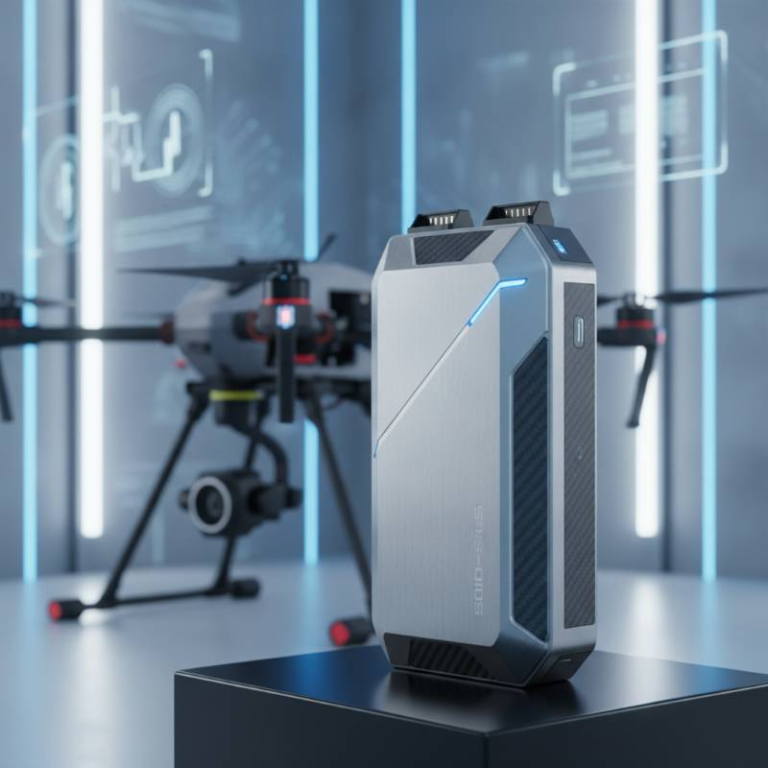
When you Explore Polymer Cells, you find they offer the highest specific energy (Wh/kg) because they lack the weight of a heavy metal casing. However, they require external support within the device to manage “swelling” that occurs during charge/discharge cycles.
Common Uses:
- Medical Devices: Where custom shapes are required to fit ergonomic designs.
- Wearables: Smartwatches and VR headsets.
- Thin Laptops: Maximizing battery runtime in ultra-portable frames.
Comparative Performance Matrix
Based on our 2026 Battery Industry Supply Chain Report, the following table compares the three architectures across critical engineering metrics.
| Metric | Cylindrical | Prismatic | Polymer (Pouch) |
|---|---|---|---|
| Energy Density | Medium-High | High (Volumetric) | Highest (Gravimetric) |
| Mechanical Strength | Excellent | Good | Low (Requires Case) |
| Thermal Cooling | Easy (Air gaps) | Moderate | Complex (Surface) |
| Cost per kWh | Lowest | Medium | Highest |
| Typical Cycle Life | 3000+ | 2000-5000+ (LiFePO4) | 500-1500 |
Manufacturing Standards and Quality Assurance
Safety is non-negotiable. As a leading Chinese battery manufacturer, JHY Battery maintains rigorous global standards. For specialized sectors, we offer ISO 13485 Certified Manufacturing, ensuring our cells meet the stringent safety requirements of medical-grade hardware.
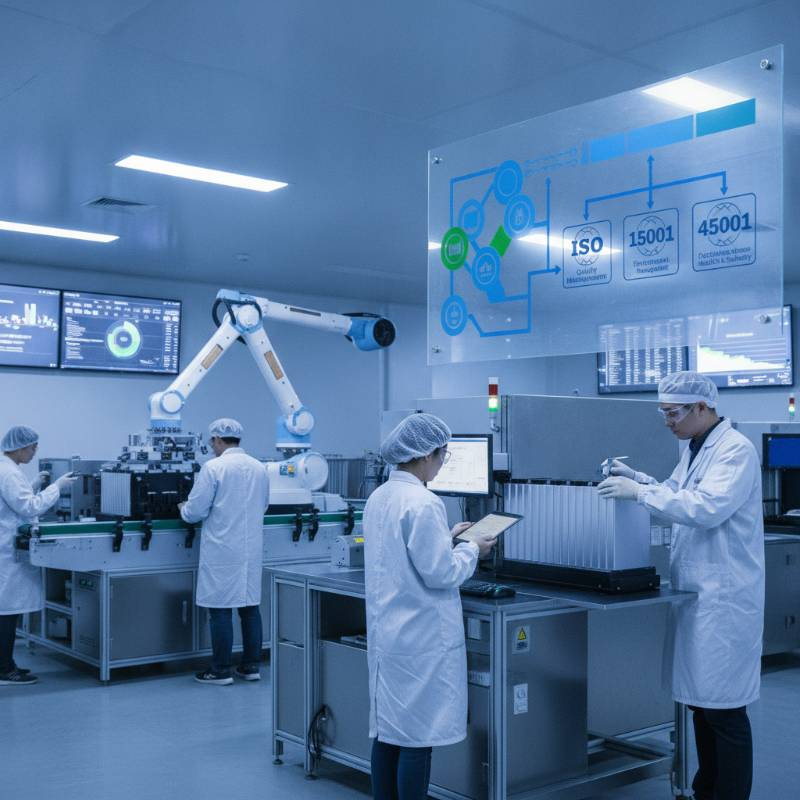
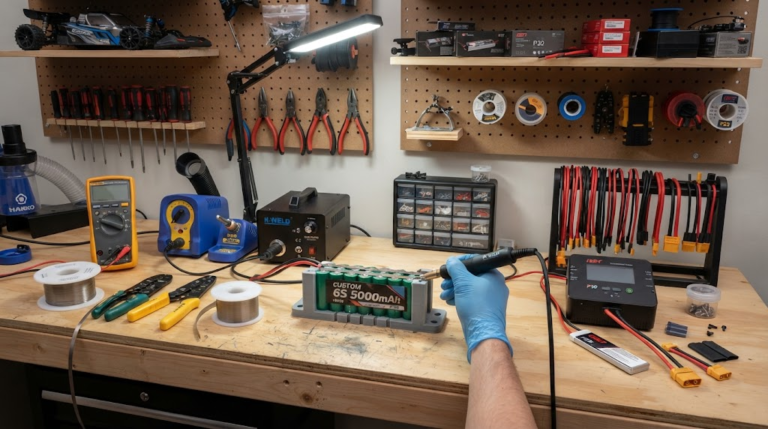
Our facility is verified for ISO 9001 compliance and our products carry UL, CE, UN38.3, and MSDS certifications. We specialize in OEM/ODM solutions, supporting deep customization of voltage, capacity, and integrated Battery Management Systems (BMS) to prevent thermal runaway and extend service life.
Frequently Asked Questions about Battery Cell Types
Which cell type is safest for consumer products?
Cylindrical cells are generally considered the safest due to their rigid casing and pressure relief valves. However, polymer cells are safe when properly integrated with a protective shell and a high-quality BMS.
What is the future of solid-state batteries in 2026?
Solid-state technology is currently being integrated into polymer and prismatic formats. These “semi-solid” cells offer higher thermal stability and are expected to reach mass-market EVs by the end of 2026.
Can I mix different cell types in one pack?
No. Mixing cell types or even different brands of the same type causes imbalances in internal resistance and capacity, leading to premature failure or safety hazards.
Ready to Engineer Your Power Solution?
Don’t settle for off-the-shelf limitations. Partner with JHY Battery for precision-engineered cell selection and custom pack assembly.