FCC Certification for Battery Devices: Compliance Guide
1. FCC Certification for Battery-Powered Devices: The Complete Compliance Guide
Navigating the regulatory landscape for hardware products is one of the most critical stages of product development. For hardware engineers and B2B product managers, the question is rarely whether a device needs testing, but rather which specific tests apply. Battery-powered electronics are no exception to federal oversight.
FCC certification for battery-powered devices verifies that the electronic hardware does not emit harmful electromagnetic interference (EMI) or exceed regulated radio frequency (RF) exposure limits. Even without direct AC power connections, these devices must comply with Federal Communications Commission standards to ensure overall public wireless spectrum safety.
- Part 15 Subpart B & C: Defines limits for unintentional and intentional radiators.
- RF Exposure Limits: Sets maximum permissible exposure for user protection.
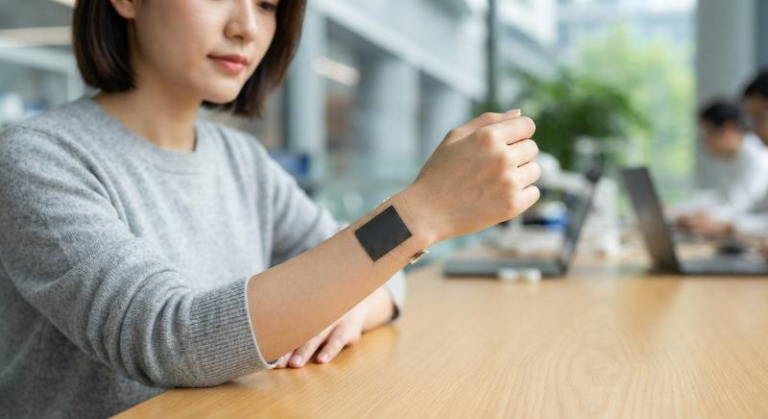
- SAR Testing: Evaluates localized energy absorption for wearable electronics.
- Battery Safety Integration: Couples EMC compliance with UN38.3 and UL battery protection.
Whether you are designing a compact medical wearable, an industrial IoT sensor, or a smart energy storage system, understanding the interplay between battery management and electromagnetic compatibility (EMC) is vital to securing market access.
2. FCC Part 15: Unintentional vs. Intentional Radiators
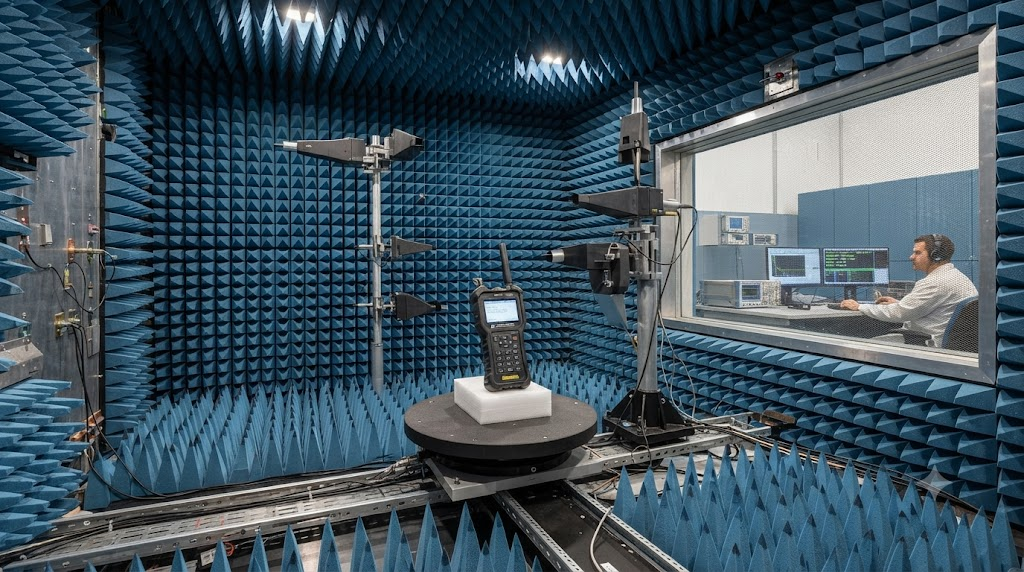
The Federal Communications Commission (FCC) groups electronic devices into two primary regulatory categories under FCC Part 15 regulations. These categories dictate the intensity of the testing process, the submission files required, and the final testing costs.
Unintentional Radiators (Subpart B)
An unintentional radiator is a device that does not purposely generate or transmit radio frequency signals, yet contains internal circuitry operating at radio frequencies. Microcontrollers, digital clocks, and internal high-frequency switching circuits in battery-powered devices fall under this subpart.
Even if your device lacks wireless capabilities like Wi-Fi or Bluetooth, the high-speed digital logic inside can still radiate electromagnetic fields. If these fields are strong enough, they can disrupt nearby communications equipment, requiring strict verification under FCC Part 15 Subpart B limits.
Intentional Radiators (Subpart C)
An intentional radiator is a device designed to emit RF energy to communicate wirelessly. This includes any device utilizing Bluetooth, Wi-Fi, Zigbee, cellular, or proprietary sub-GHz RF modules. These wireless device batteries and systems must undergo extensive RF testing to ensure they do not interfere with other licensed and unlicensed frequencies.
RF Exposure and SAR Testing
For wearable battery devices used within 20 centimeters of the human body, the FCC mandates Specific Absorption Rate (SAR) testing. This evaluates the rate at which RF energy is absorbed by the human body. High-capacity battery packs must maintain consistent power delivery without generating thermal hotspots that could skew SAR readings or degrade safe RF exposure thresholds.
3. The Battery-Powered Exemption: Navigating FCC Part 15.107 Nuances
One of the most valuable cost-saving opportunities in hardware engineering lies in the “Pure Battery-Powered Exemption” outlined in FCC Part 15.107. Understanding the nuances of this clause can save product teams thousands of dollars in laboratory testing fees.
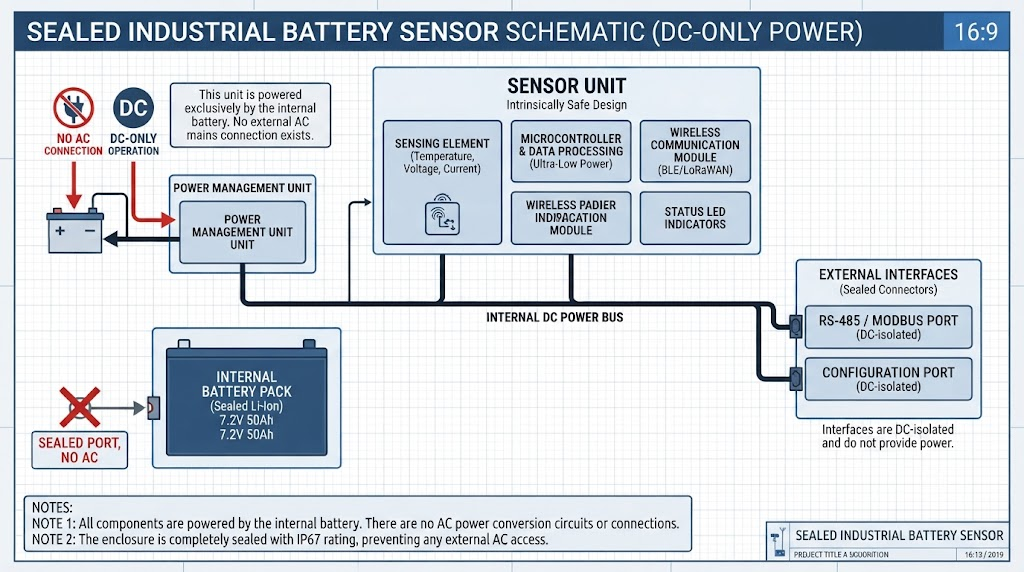
Under FCC Part 15.107, devices that are designed to be powered exclusively from an internal battery and have no facility for connection to public AC power lines—either directly or through an external AC adapter—are exempt from conducted emissions testing.
Conducted emissions testing measures the high-frequency noise your device injects back into the AC power grid. Because a pure battery-operated device has no physical connection to the AC grid, this testing is physically impossible and regulatory-wise unnecessary.
The Charging Port Catch
However, there is a critical catch that hardware designers often miss. If your battery-powered device contains a USB port or a charging cradle that connects to a wall adapter, it is no longer exempt. Even if you do not ship an AC adapter with the product, the fact that a user can plug it into an AC-connected source means it must pass conducted emissions testing in its charging state.
If your device is purely battery-powered—such as a sealed sensor with a non-rechargeable battery—you only need to test for radiated emissions under FCC Part 15.109. This bypasses the complex line impedance stabilization network (LISN) setups required for conducted testing, drastically reducing your test laboratory timeline.
4. The JHY Battery-EMC Co-Design Protocol
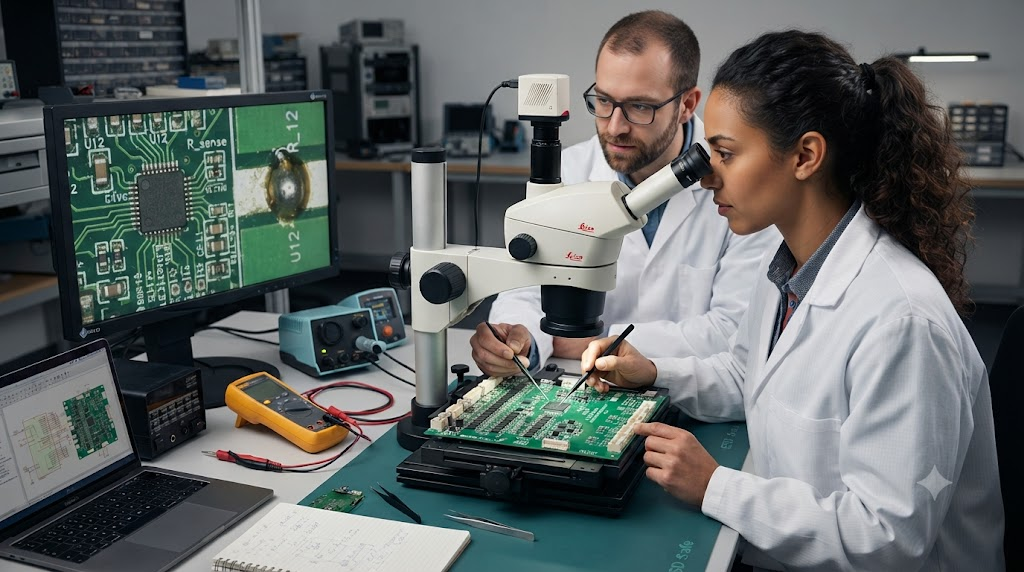
To address the frequent bottlenecks associated with EMC testing, we utilize a specialized engineering methodology: The JHY Battery-EMC Co-Design Protocol. This framework integrates battery chemistry, safety circuitry, and electromagnetic compatibility at the initial schematic level, rather than treating the battery as an isolated, passive component.
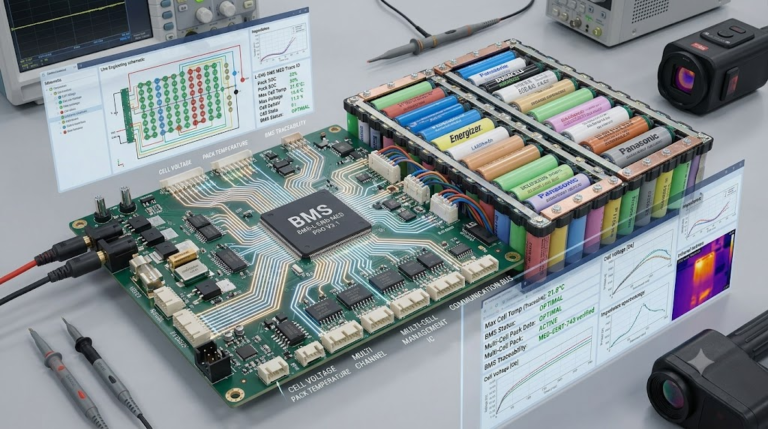
In our testing and development labs, we have observed that high-frequency noise generated by the Battery Management System (BMS) switching regulators is a primary culprit behind radiated emissions failures under FCC Part 15.109. A poorly designed BMS can turn the battery cables into highly efficient antennas, radiating noise across the spectrum.
According to industry compliance data, over 40% of hardware startup delays are caused by unexpected EMC failures during first-round FCC testing. Utilizing pre-certified battery packs and RF modules can reduce time-to-market by up to 60% compared to discrete chip-down designs.
By sourcing optimized custom lithium-ion battery packs from JHY Battery (Juheyuan Science & Technology Co., Ltd.), you receive a system engineered to minimize EMI. Our custom BMS designs incorporate low-ESR decoupling capacitors, optimized ground plane isolation, and ferrite beads placed strategically on the power rails. This keeps high-frequency switching noise contained within the battery enclosure, protecting your system’s overall RF performance.
5. SDoC vs. Full FCC Certification: Decision Matrix
How your battery device certification path is structured depends heavily on whether your product contains wireless transmitters. The FCC offers two main authorization pathways: Supplier’s Declaration of Conformity (SDoC) and Certification.
The table below outlines how to determine the correct pathway for your battery-operated device:
| Device Capability | FCC Category | Required Path | TCB Review Needed? |
|---|---|---|---|
| Pure Digital (No Wireless, e.g., LED Controller) | Unintentional Radiator (Part 15B) | SDoC | No (Self-Declaration) |
| Bluetooth/Wi-Fi Built-In (Chip-down design) | Intentional Radiator (Part 15C) | Full Certification | Yes (Requires FCC ID) |
| Uses Pre-Certified RF Module (e.g., ESP32 module) | Mixed / Unintentional Host | SDoC (Host) + Module ID | No (If module limits met) |
If your device qualifies for SDoC, you must still test it in an accredited laboratory to prove compliance with FCC Part 15 rules. However, you do not need to submit the test reports directly to the FCC or wait for a Telecommunication Certification Body (TCB) to grant an FCC ID. You simply retain the compliance documents in your records and apply the appropriate FCC logo to the product label.
6. Integrating Battery Safety Standards: UN38.3, UL 1642, and FCC Testing
While FCC compliance focuses entirely on electromagnetic emissions, it does not guarantee the physical safety of your battery. For lithium-ion systems, safety certifications run parallel to FCC compliance and are legally required for global distribution and shipping.
UN38.3 Transport Testing
Before any lithium battery or battery-powered product can be transported globally by air, sea, or land, it must pass UN38.3 testing. This series of rigorous tests subjects the battery to extreme thermal, vibration, impact, and low-pressure conditions to ensure it will not catch fire or rupture during transit.
UL 1642 and UL 2054 Standards
Underwriters Laboratories (UL) standards are critical for liability protection and retail acceptance in the United States. UL 1642 covers individual lithium-ion cells, while UL 2054 covers the complete battery pack assembly. Many commercial insurance policies and major retailers mandate these certifications prior to product launch.
By partnering with a certified manufacturer like JHY Battery (Juheyuan Science & Technology Co., Ltd.), you leverage a portfolio of pre-certified batteries. Our custom lithium-ion battery packs already carry key international credentials including UN38.3, UL, CE, and MSDS. This pre-certified foundation simplifies your supply chain, reduces testing overlaps, and speeds up your path to market.
7. Estimating FCC Certification Costs and Timelines for IoT Devices
Budgeting for regulatory compliance requires an understanding of testing fees and engineering trade-offs. The total cost of securing FCC approval depends heavily on your hardware architecture and design decisions.
Typical Laboratory Testing Fees
- FCC Part 15 Subpart B (Unintentional SDoC): $1,500 to $3,000. Testing takes 3 to 5 business days.
- FCC Part 15 Subpart C (Intentional Certification): $5,000 to $15,000+. This depends on the number of radio bands and antennas.
- TCB Registration & Filing Fees: $1,000 to $2,500 per application.
Pre-Certified RF Modules vs. Chip-Down Designs
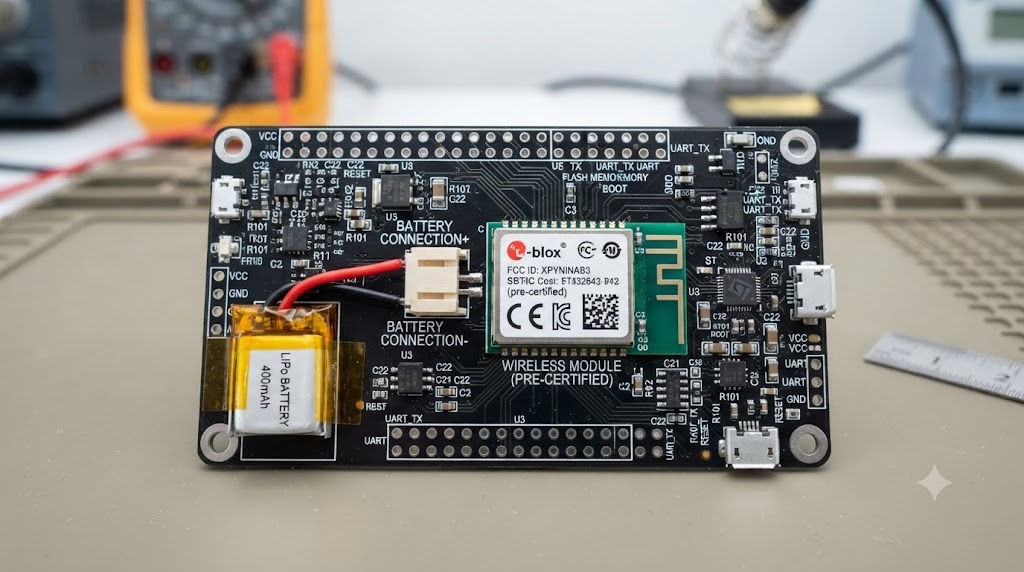
Using a pre-certified RF module allows you to inherit the module manufacturer’s FCC ID for the radio portion. This restricts your testing requirements to unintentional radiator testing (Part 15B) for the host system, saving thousands in lab fees. Conversely, a discrete chip-down design requires full intentional radiator certification, which is complex and expensive, but offers lower per-unit cost at extremely high production volumes.
8. Frequently Asked Questions About Battery Device FCC Compliance
Do purely battery-powered devices need FCC certification?
Yes, if they contain an oscillator or digital circuitry operating above 9 kHz, they are classified as unintentional radiators under FCC Part 15 Subpart B and must comply with emissions limits, usually via the SDoC pathway.
Can I avoid FCC testing if I use a pre-certified wireless module?
You cannot completely avoid testing. While you do not need to re-certify the radio module, you must still perform FCC Part 15 Subpart B testing on your overall system to ensure the host board and battery management system do not cause harmful emissions.
How does a battery management system (BMS) affect FCC testing?
A BMS contains high-frequency switching circuits (such as DC-DC buck or boost converters) that regulate voltage. If not properly shielded or decoupled, these circuits generate electromagnetic noise that can leak into battery cables, causing the device to fail radiated emissions tests.
What is the difference between CE and FCC for battery devices?
FCC is the regulatory standard for the United States and focuses entirely on electromagnetic interference. CE marking is required for the European Union and covers a broader range of directives, including EMC, safety, RoHS environmental standards, and the battery directive.
9. About the Expert Reviewer
Ready to Streamline Your Product’s FCC Compliance?
Don’t let unexpected EMC failures derail your product launch. Partner with JHY Battery for compliance-ready custom lithium-ion battery packs designed to pass strict regulatory checks.
- Review our JHY Battery-EMC integration checklist.
- Consult with our engineering team on custom BMS shielding.
- Request a quote for compliance-certified battery prototypes.