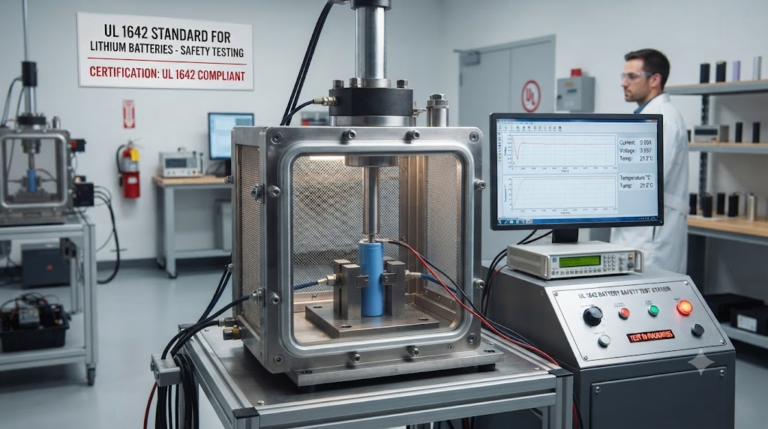
UN38.3 Certification: Lithium Battery Shipping Guide
UN38.3 Certification: Lithium Battery Shipping Guide
Navigating international transport safety rules for lithium-ion and lithium-metal batteries requires strict adherence to safety protocols. This guide breaks down how to secure compliance, avoid costly transit holds, and ensure safe global shipping.
What is UN38.3 Transportation Certification?
UN38.3 certification is a mandatory United Nations standard requiring lithium batteries to undergo rigorous environmental, mechanical, and electrical testing before transport. It ensures that lithium-ion and lithium-metal batteries can withstand the extreme conditions of air, ground, and ocean transit without causing thermal runaway or fires.
This standard applies directly to custom lithium-ion battery packs, single cells, and battery-powered devices. Without a verified test summary, shipping lines, airlines, and customs officials will reject your cargo at the port of origin.
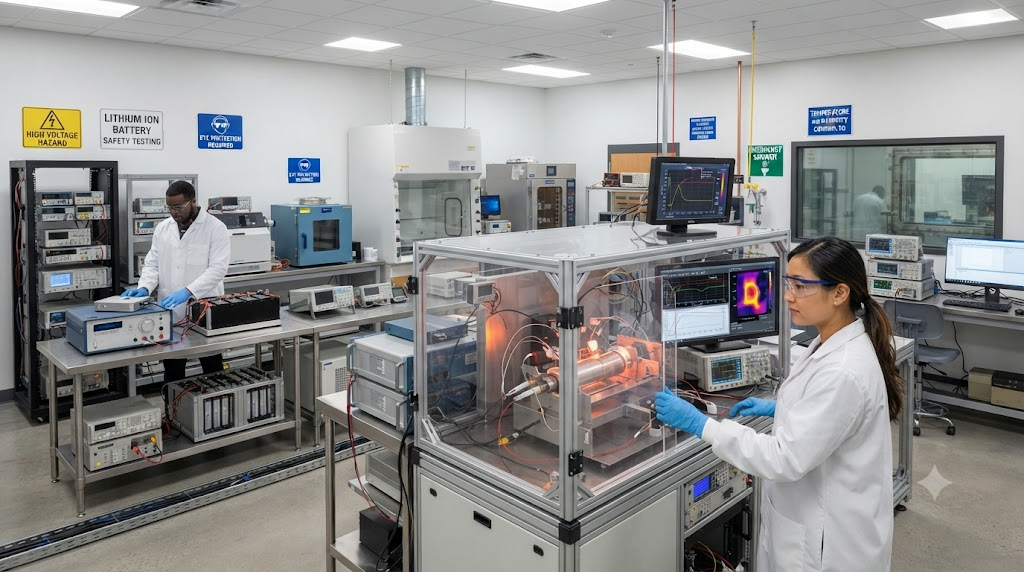
The standard is governed by the UN Manual of Tests and Criteria Section 38.3. It targets the physical stability of the battery under extreme thermal, pressure, and impact stress.
| Test ID | Parameter Name | Core Safety Objective |
|---|---|---|
| T1 | Altitude Simulation | Verifies structural integrity at low pressure (air cargo hold simulation). |
| T2 | Thermal Test | Assesses seal integrity under rapid, extreme temperature changes (-40°C to 72°C). |
| T3 | Vibration | Simulates physical vibration experienced during long-haul transit. |
| T4 | Shock | Tests resistance to sudden physical impacts or drops in transit. |
| T5 | External Short Circuit | Evaluates the battery’s reaction to an external short circuit at 57°C. |
| T6 | Impact / Crush | Simulates severe physical damage or heavy crushing to the cell. |
| T7 | Overcharge | Tests the pack’s ability to handle up to twice the maximum charge current safely. |
| T8 | Forced Discharge | Tests cell safety when subjected to a forced reversal of polarity. |
The 2026 Lithium Battery Shipping Regulations & SoC Limits
International regulatory bodies have significantly tightened protocols around the transport of Class 9 hazardous materials. Compliance frameworks like the IATA Dangerous Goods Regulations (DGR) and the US Department of Transportation’s PHMSA (49 CFR) strictly enforce physical and digital safety parameters.
In our testing and logistics operations, we have seen cargo rejections rise for minor paperwork discrepancies. “Global lithium battery transport compliance audits have increased by 35% year-over-year, driving the need for verified test summaries.”

Furthermore, air cargo safety standards are now non-negotiable regarding energy storage. “Over 92% of international air carriers strictly enforce the 30% State-of-Charge (SoC) limit for lithium battery shipping in 2026.”
Shipping a pack at a 31% charge can result in immediate seizure by aviation inspectors. Logistics managers must configure their manufacturing and testing workflows to discharge cells to exactly 25%–30% SoC before packaging.
The JHY Safe-Transit BMS Framework for UN38.3 Success
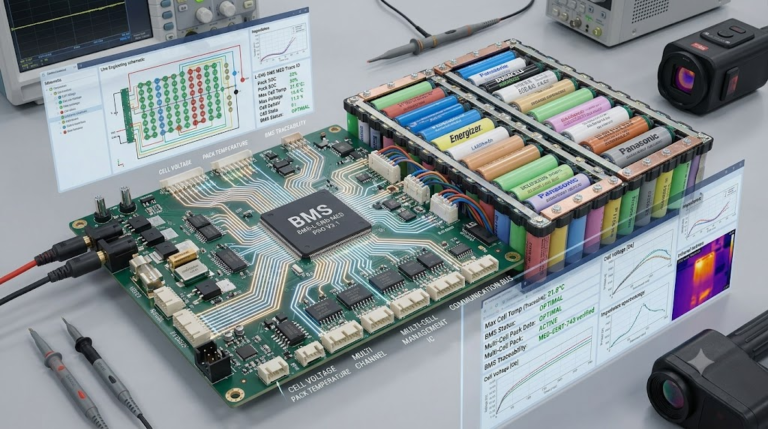
Developing robust LiFePO4 batteries and custom battery configurations requires early-stage compliance modeling. Pack-level testing often fails not because of bad cells, but because of poor Battery Management System (BMS) integration.
Our engineering data confirms a clear trend: “BMS-related configuration issues account for approximately 45% of initial UN38.3 test failures in custom battery packs.” To solve this, JHY Battery developed the JHY Safe-Transit BMS Framework.
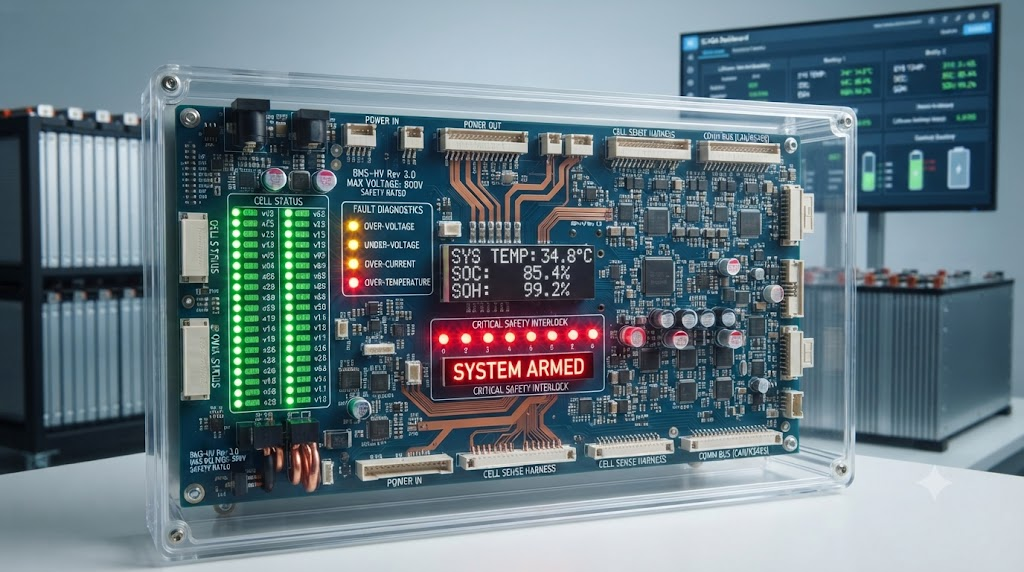
This design framework focuses on three essential elements:
- Transient Response Tuning: Adjusting short-circuit detection times below 250 microseconds to prevent thermal runaway during the T5 test.
- Structural Overcharge Buffering: Setting redundant firmware cut-offs to safely handle 24V inputs on 12V nominal packs during the T7 overcharge test.
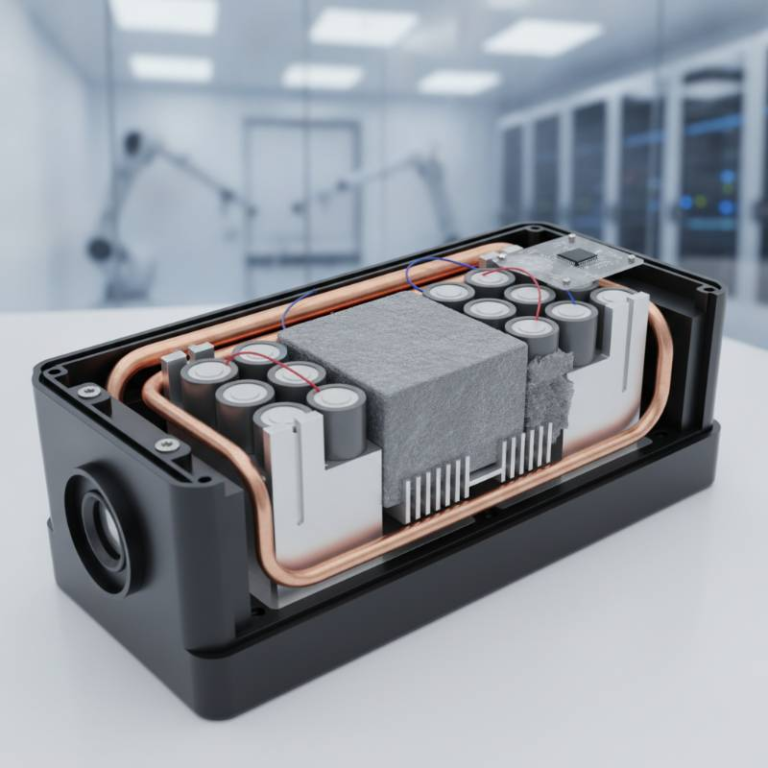
- Vibration-Isolated Mounting: Utilizing high-density silicone potting around critical BMS solder joints to prevent component desoldering in T3 and T4 tests.
“By integrating physical shock dampening with ultra-fast BMS overcurrent protection, we design our battery packs to comfortably clear the T5 and T7 thresholds on the first run, saving our clients weeks of testing delays.”
— Lead Compliance Engineer, JHY Battery
Which UN38.3 Tests Apply to Your Battery?
Not every battery assembly requires the exact same set of tests. The testing scope depends heavily on whether you are shipping individual cells, integrated packs, or complete equipment installations.
Use this diagnostic workflow to determine your path:
Step 1: Determine Component Classification
Are you shipping bare cells, or a fully assembled battery pack with integrated safety circuitry? Bare cells must always go through full T1-T6 and T8 testing first. If the cells are already certified, the pack-level assembly may only require T7 (Overcharge) testing, provided the physical structure hasn’t changed.
Step 2: Evaluate Watt-Hour (Wh) Capacity
- Lithium-ion Cells: Under 20 Wh do not require individual pack testing if built from certified cells. Over 20 Wh requires full pack-level re-certification.
- Lithium-ion Battery Packs: Packs exceeding 100 Wh require complete, independent UN38.3 testing, even if constructed from pre-certified cells.
Step 3: Check for Design Modifications
If you modify a pre-certified battery pack (e.g., swapping the BMS, changing the outer enclosure, or altering cell configurations), you must run a delta-test. Changing more than 20% of the pack’s mass or altering the safety firmware voids the original UN38.3 Test Summary.
UN38.3 Testing Procedures: T1 to T8 Parameters Explained
To pass global battery safety testing and meet dangerous goods regulations, your custom battery must survive these eight rigorous testing phases:
T1: Altitude Simulation
This test simulates an unpressurized aircraft cargo hold at 11.6 kPa for at least six hours. The battery must show no mass loss, no leakage, no venting, and no rupture. The open circuit voltage must remain within 90% of its pre-test value.
T2: Thermal Test
Batteries are stored at 72°C for 6 hours, followed immediately by storage at -40°C for 6 hours. This cycle is repeated 10 times, followed by a 24-hour room temperature rest. This tests structural seals against thermal expansion and contraction.
T3: Vibration
A sinusoidal vibration sweep (7 Hz to 200 Hz back to 7 Hz over 15 minutes) is applied to three mutually perpendicular mounting positions. This test runs for a total of 9 hours to simulate transport vibration.
T4: Shock
Batteries are subjected to a half-sine shock of peak acceleration (up to 150gn for small batteries) and a pulse duration of 6 milliseconds. This replicates sudden physical deceleration during transit drops or vehicle collisions.
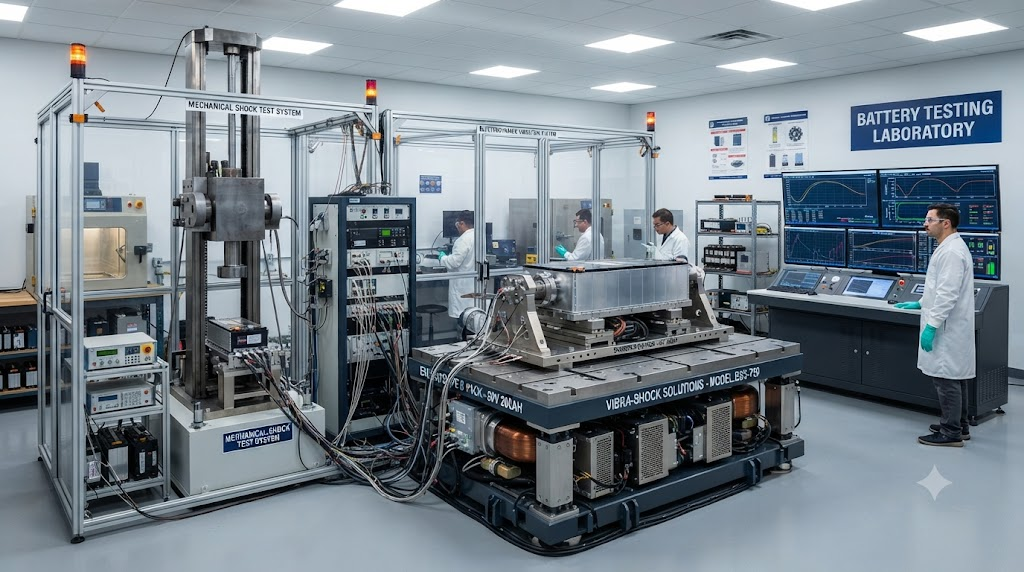
T5: External Short Circuit
At a stabilized temperature of 57°C, an external resistance of less than 0.1 ohm is applied to the terminals. The short circuit condition is maintained for at least one hour after the battery casing temperature cools back down.
T6: Impact / Crush
Cells are subjected to a heavy crush force (13 kN) or a 9.1 kg bar dropped from 61 cm directly onto the cell body. This physical destruction test ensures the internal chemistry does not ignite under catastrophic crushing forces.
T7: Overcharge
For battery packs with charge protection, a current equal to twice the manufacturer’s maximum recommended charge current is forced into the pack for 24 hours. The pack must show no fire or disassembly for seven days post-test.
T8: Forced Discharge
A cell is forced into reverse polarity using an external DC power supply. This simulates a cell failing within a series string, verifying that a single cell failure will not cascade into a pack-level explosion.
Estimated Timeline and Costs for UN38.3 Certification
For complex applications, including industrial equipment and ESS energy storage systems, budgeting for timelines and certification costs is critical to launch dates.
The standard testing duration in an accredited laboratory runs between 3 to 5 weeks, depending on lab backlog and testing cycles. If your battery fails a test, the timeline resets, highlighting the value of pre-testing.
Typical testing costs range from $2,500 to $6,000 USD. This variation depends on battery size, chemistry, and whether you are testing individual cells or a high-voltage pack with an advanced BMS.
When selecting an accredited third-party testing facility, verify their ISO/IEC 17025 accreditation. This ensures their test data is legally accepted by international customs agents and major global freight carriers.
UN38.3 vs. MSDS vs. UL: Understanding the Differences
A common point of confusion for logistics managers is distinguishing between UN38.3, MSDS safety data sheets, and UL product safety certifications. Each document serves a unique role in battery shipping compliance and market entry.
| Standard | Primary Purpose | Legal Requirement | Key Focus Area |
|---|---|---|---|
| UN38.3 | Safe transport verification. | Mandatory for all logistics and shipping channels. | Physical stability during transit environmental stress. |
| MSDS / SDS | Chemical hazard disclosure. | Mandatory for chemical handling and occupational safety. | Emergency response, spill containment, and chemical ingredients. |
| UL (e.g., UL 1973/9540) | Product end-use safety. | Often required by local building codes, grid operators, and insurers. | Operational safety, electrical isolation, and fire containment. |
Frequently Asked Questions (FAQs)
Do I need UN38.3 if my batteries are shipped inside equipment?
Yes. Even if the batteries are pre-installed in devices (UN3481), the internal battery cells and packs must still be fully UN38.3 certified. The outer packaging must also comply with specific drop-test safety standards.
What labeling is required on the outer shipping box?
Packages containing lithium batteries must display the Class 9 Lithium Battery Hazard label, the UN identification number (e.g., UN3480 or UN3481), and a cargo aircraft only label if shipping at 30% SoC via air freight.
Are ocean freight rules different from air freight rules?
While ocean freight is more flexible regarding State-of-Charge (SoC) percentages, both transit methods legally require complete UN38.3 certification and detailed MSDS documents before cargo loading.
Meet Our Compliance Expert
This guide was developed in collaboration with JHY Battery’s lead regulatory compliance team. With over 10 years of experience in battery manufacturing, our engineers oversee ISO9001, CE, UN38.3, MSDS, and UL testing across all custom product lines.
At JHY Battery (Juheyuan Science & Technology Co., Ltd.), we specialize in high-safety OEM/ODM battery packs. Our engineering team designs and tests custom lithium solutions to meet the most stringent global transport standards on the first attempt.
Ready to Ship Globally with Confidence?
Avoid shipping delays, customs seizures, and redesign penalties. Partner with JHY Battery for fully certified, high-performance battery packs tailored to your exact specifications.