EU Battery Regulations 2026: B2B OEM Compliance Guide
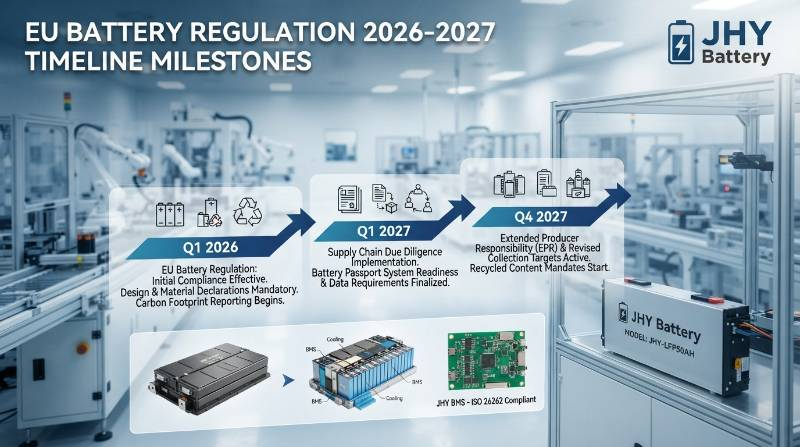
Regulatory Scope & Timeline: Key 2026–2027 Enforcement Milestones Under EU 2023/1542
To export battery systems or battery-integrated equipment to the European Union, manufacturers must comply with Regulation (EU) 2023/1542. This framework replaces Directive 2006/66/EC, transitioning compliance from simple post-market recycling targets to enforceable lifecycle mandates spanning raw material extraction, embedded BMS telemetry, carbon footprint declarations, and mechanical serviceability.
Regulation (EU) 2023/1542 Scope: A single, harmonized legal framework regulating the entire lifecycle of all battery types placed on the EU market, establishing mandatory CE marking conformity, Digital Battery Passports (DBP), carbon footprint thresholds, and supply chain due diligence.
The regulation classifies industrial and consumer batteries into distinct regulatory categories:
- Portable Batteries: Sealed cells and packs ≤5 kg not designed for industrial, traction, or automotive use.
- Light Means of Transport (LMT) Batteries: Traction batteries ≤25 kg powering e-bikes, e-scooters, and light utility vehicles.
- Industrial Batteries: Any pack >5 kg engineered for stationary energy storage (BESS), telecom backup, industrial automated guided vehicles (AGVs), and specialized medical hardware.
- Electric Vehicle (EV) & Starting, Lighting, and Ignition (SLI) Batteries: Heavy traction and conventional automotive start-stop systems.
Enforcement deadlines tighten technical validation across EU customs entry points like Rotterdam, Antwerp, and Hamburg. The critical compliance gates include:
| Article & Mandate | Battery Category Affected | Enforcement Date | Technical Requirement |
|---|---|---|---|
| Article 7: Carbon Footprint | EV, LMT, Industrial >2 kWh | Active / Phase-In | Cradle-to-gate Life Cycle Assessment (LCA) declaration per manufacturing batch. |
| Article 11: Removability | Portable & LMT Packs | 2027 Mandatory | End-user or independent operator replaceability using commercially available tools. |
| Article 14: BMS Telemetry | Stationary ESS, Industrial >2 kWh | Enforced | Real-time readouts of State of Health (SOH), State of Charge (SOC), and cycle life. |
| Article 77: Digital Passport | LMT, Industrial >2 kWh, EV | 2027 Mandatory | Dynamic QR-code accessible cloud register containing full LCA, BOM, and SOH logs. |
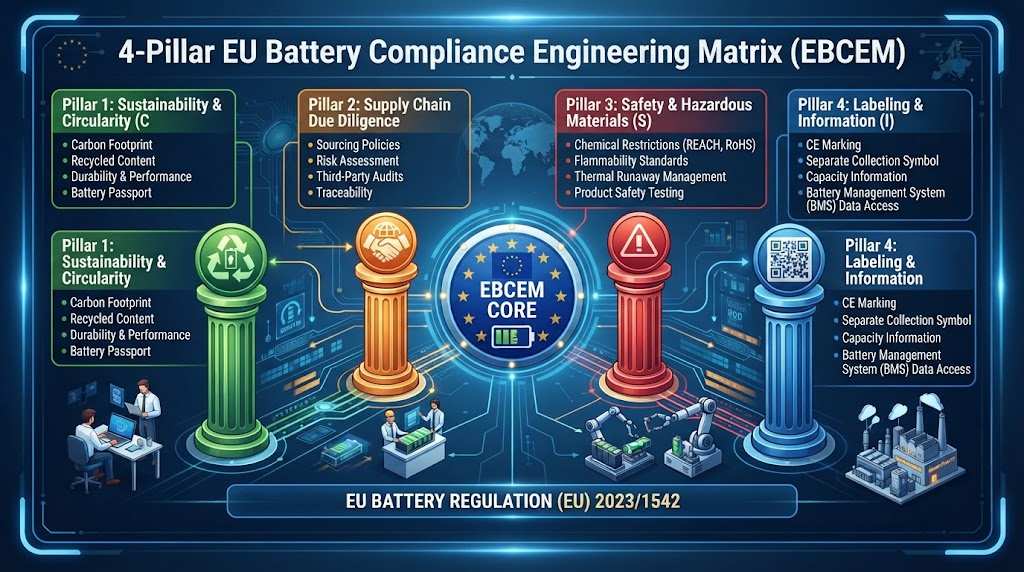
The 4-Pillar EU Battery Compliance Engineering Matrix (EBCEM)
Meeting these standards requires a structured hardware and software design methodology. At JHY Battery, our engineering teams deploy The 4-Pillar EU Battery Compliance Engineering Matrix (EBCEM) to resolve trade-offs between regulatory compliance, mechanical ruggedness, and electrochemical density when developing custom battery packs.
| Engineering Dimension | Legacy / Generic Architecture | EBCEM-Compliant Architecture (JHY Battery) |
|---|---|---|
| 1. Telemetry & DBP Readiness | Basic analog PCM; voltage cutoff only; no external data logging. | Smart BMS with non-volatile EEPROM/Flash; tracks SOC, SOH, impedance; CANBUS/RS485 interface. |
| 2. Mechanical Removability (DFM) | Permanent polyurethane/epoxy potting; ultrasonic welded shells. | Modular compression gaskets (EPDM/silicone); Torx mechanical fasteners; field-serviceable slide rails (IP67 maintained). |
| 3. Cradle-to-Gate LCA Verifiability | Unverified tiered supply chains; no batch-level carbon accounting. | MES lot tracking from cathode precursor synthesis to pack assembly; ISO 14040/14044-compliant carbon calculations. |
| 4. Certification & Safety Redundancy | Single hardware MOSFET cutoff; generic CE self-declaration without notified body audit. | Dual-tier hardware and firmware protection; IEC 62133-2, IEC 62619, and UN 38.3 certified; Module A1/G conformity files. |
Engineering Insight: In our automated manufacturing facilities, every custom pack is matched with cell-level impedance and capacity data recorded in our Manufacturing Execution System (MES). This granular logging maintains our 0.03% (300 PPM) defect rate and automates the creation of verifiable Digital Battery Passports.
Digital Battery Passport (DBP) & Telemetry: Smart BMS Architecture for Articles 14 & 77
Article 77 mandates that industrial batteries over 2 kWh and LMT packs carry a scannable QR code linking to an immutable Digital Battery Passport. This requires a transition from dumb analog battery packs to connected, intelligent systems.
To comply with Article 14, the Battery Management System must continuously monitor, store, and communicate operating parameters via standard industrial protocols such as CANopen, J1939, Modbus RS485, or SMBus.
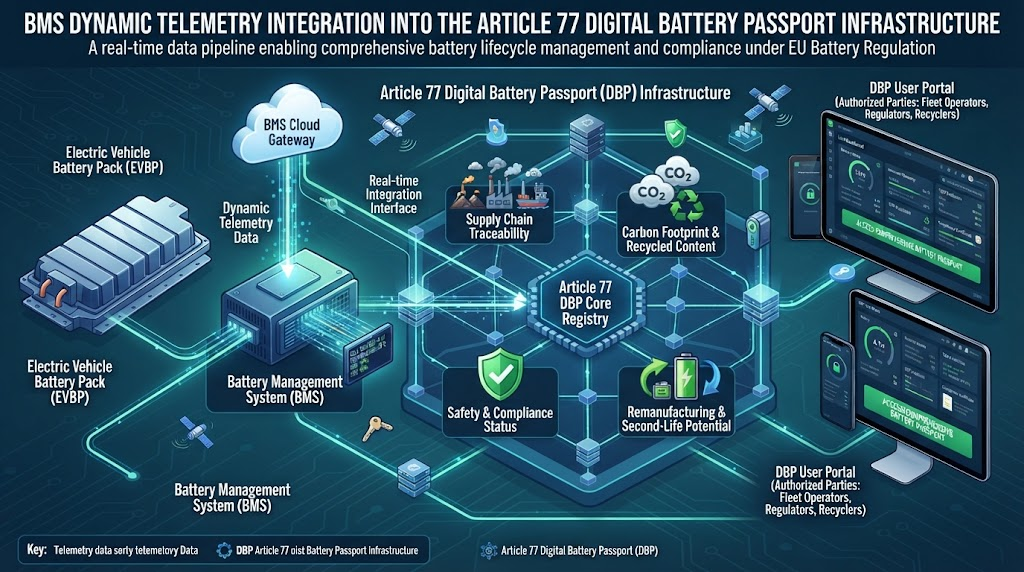
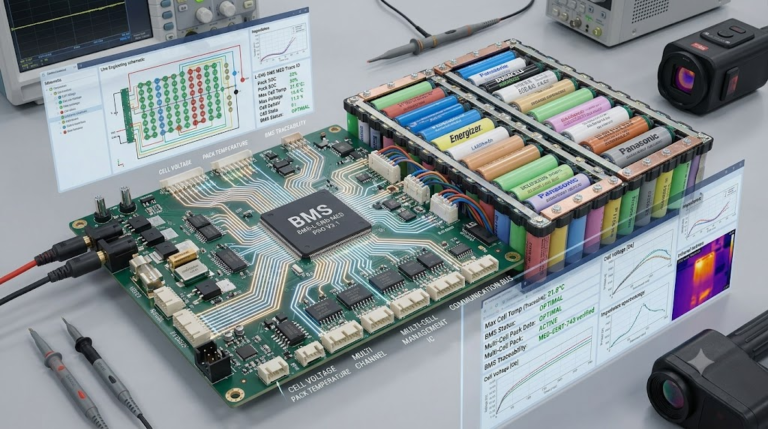
Our smart BMS design platform captures and processes several core telemetry points to maintain Article 14 compliance:
- State of Health (SOH): Evaluated using dynamic Coulomb counting combined with open-circuit voltage (OCV) curve reconstruction during rest periods.
- Internal Cell Impedance ($R_{int}$): Calculated in real-time using current-step response math ($\Delta V / \Delta I$) during heavy load transients to detect dendrite formation or electrolyte dry-out.
- Cumulative Energy Throughput: Lifetime integrated Wh charge/discharge counters stored in non-volatile flash memory to verify warranty conditions and end-of-life status.
- Thermal Runaway Pre-Alarm Logs: High-frequency temperature logging across multi-point NTC thermistor arrays, recording transient thermal deviations over 60°C.
DFM Blueprint: Balancing Article 11 Removability with IP67/IP68 Ingress Protection
Article 11 creates an engineering challenge: portable batteries must be readily removable and replaceable by the end-user with standard tools, while LMT/industrial batteries must be serviceable by independent professionals throughout the product lifecycle.
Historically, industrial manufacturers used structural polyurethane or epoxy potting compounds to achieve ruggedization and IP67/IP68 waterproof ingress ratings. However, permanent potting violates Article 11 because individual cells or modular sub-assemblies cannot be disassembled non-destructively.
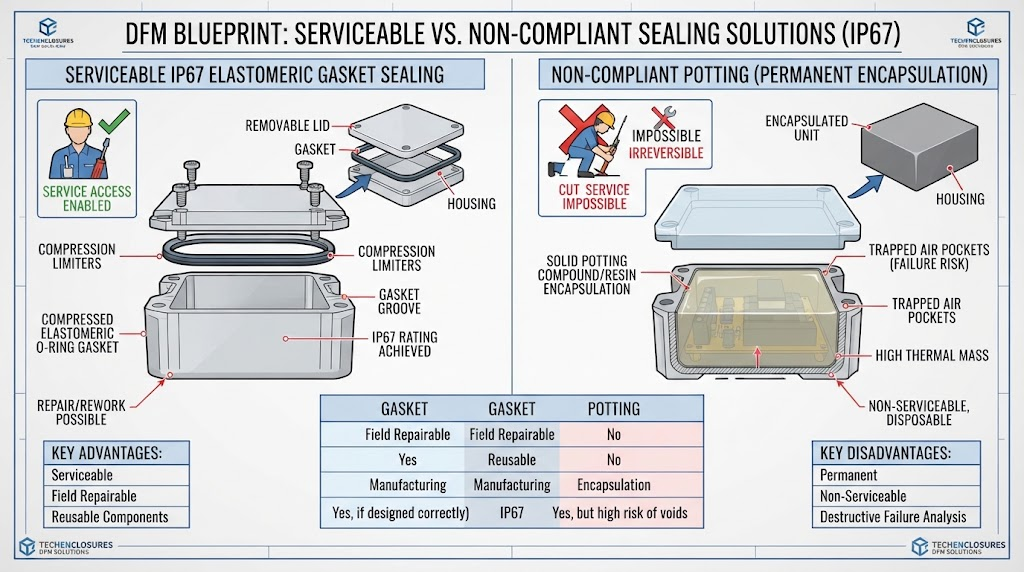
To solve this challenge without compromising mechanical protection, JHY Battery utilizes a three-tier Design for Manufacturability (DFM) mechanical architecture:
- Precision Compression Gaskets: Custom die-cut EPDM or molded liquid silicone rubber (LSR) continuous seals fitted into CNC-machined labyrinth tongue-and-groove channels, maintaining IP67 water resistance under 1.0 meter immersion for 30 minutes.
- Standardized Fastener Matrices: Replacing structural adhesives with captive stainless steel Torx (T10/T20) or metric hex machine screws fitted with vibration-resistant nylon-patch threads.
- Modular Cell Cassettes: Housing cylindrical (18650/21700) or prismatic cells within UL 94 V-0 flame-retardant polycarbonate/ABS carriers that slide out as integrated sub-modules, enabling tool-based disassembly and localized cell replacement.
Cradle-to-Gate Carbon Footprint Declarations (Article 7) & Recycled Content Mandates
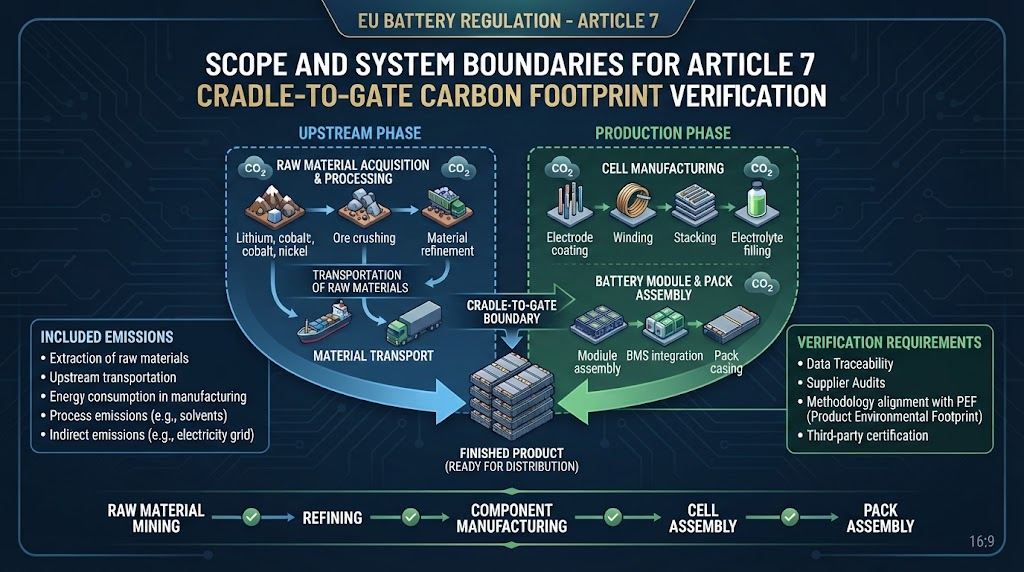
Under Article 7 of Regulation (EU) 2023/1542, exporters must deliver a certified Life Cycle Assessment (LCA) declaration for each battery batch. The assessment boundary spans cradle-to-gate operations, including raw material mining, refining, active precursor synthesis, cell manufacturing, pack assembly, and international transport logistics.
Simultaneously, Article 8 sets aggressive minimum recovery targets for active materials. This influences cell chemistry selection during early architecture phases, particularly when comparing LiFePO4 battery systems against Nickel Manganese Cobalt (NMC) configurations.
| Metric / Compliance Target | Lithium Iron Phosphate (LFP) | Nickel Manganese Cobalt (NMC) | Lithium Cobalt Oxide (LCO) |
|---|---|---|---|
| Cradle-to-Gate Carbon Intensity | Low: ~55–75 kg $\text{CO}_2\text{e}$/kWh (No Co/Ni refining stages). | Moderate-High: ~85–110 kg $\text{CO}_2\text{e}$/kWh due to metal extraction. | High: ~115–140 kg $\text{CO}_2\text{e}$/kWh (Heavy cobalt concentration). |
| Deep Cycle Longevity (80% SOH) | 3,500 to 6,000+ deep cycles. | 1,200 to 2,000 cycles. | 500 to 800 cycles. |
| Article 8 Recycled Content Quotas | Simplified lithium recovery; zero cobalt/nickel dependencies. | Requires verifiable recovery: 16% Cobalt, 6% Lithium, 6% Nickel. | High cobalt content makes supply chain audits critical. |
| Volumetric Energy Density | 320–420 Wh/L | 550–700 Wh/L | 600–750 Wh/L |
High-Reliability Niche Compliance: ISO 13485 Medical Devices, Telecom ESS, and Extreme-Temperature Packs
Generic consumer battery packs are inadequate for harsh deployment scenarios like mission-critical healthcare hardware, sub-zero logistics, and utility-scale communications.
JHY Battery addresses these engineering edge cases with specialized manufacturing protocols:
- ISO 13485 Certified Medical Device Batteries: For portable ventilators, infusion pumps, and automated external defibrillators (AEDs), we manufacture medical device battery packs under ISO 13485 cleanroom controls. These packs feature dual-redundant BMS safety cutoffs and pass both IEC 62133-2 and IEC 60601-1 electrical medical audits.
- Extreme Operating Range (-45°C to +80°C): For cold-chain tracking and outdoor industrial telemetry, our engineering team deploys specialized low-temperature electrolytes and nano-structured anode coatings, maintaining over 78% nominal capacity retention at -40°C without internal pre-heating.
- Telecom UPS & High-Cycle Industrial ESS: Our 24V/48V/72V modular LiFePO4 systems feature dynamic master-slave CAN networking capable of hot-swapping under load while logging Article 77 telemetry data across 6,000+ continuous charge cycles.
Factory-Level Testing & Global Certification Readiness: IEC 62133, IEC 62619, and UN 38.3
Navigating EU conformity assessments under Module A1 (Internal Production Control plus supervised verification) or Module G (Unit Verification) requires verifiable laboratory testing before packs ship from the factory floor.
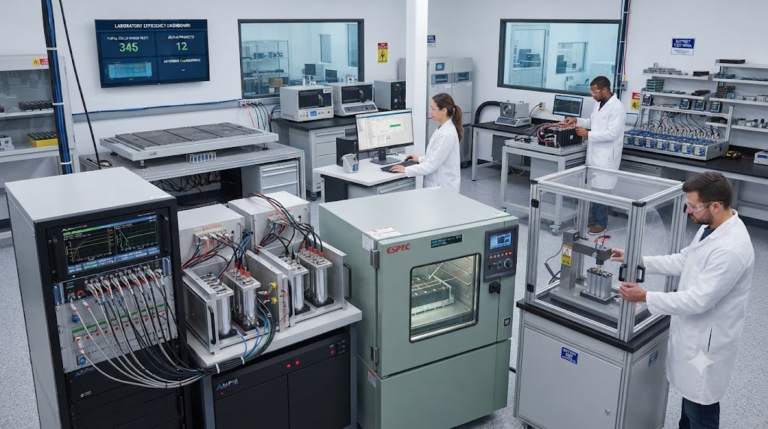
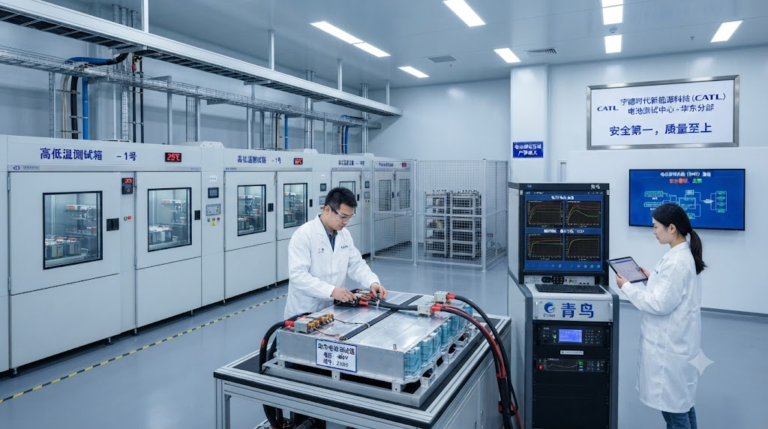
JHY Battery maintains comprehensive in-house environmental and electrical stress-testing labs. Every production batch undergoes rigorous validation against core global battery certifications:
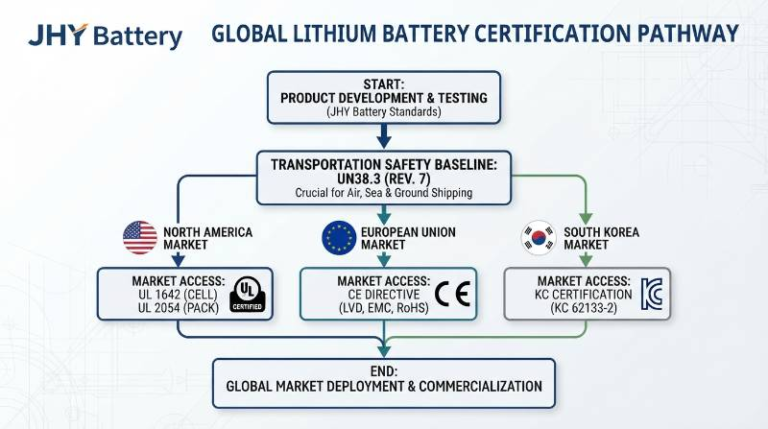
- UN 38.3 Transport Certification: Verifies pack integrity under T1–T8 mechanical and environmental stresses (altitude simulation, thermal shock, vibration, impact, external short circuit, crush, overcharge, and forced discharge).
- IEC 62133-2 (Portable Applications): Assesses electrical abuse resistance, thermal runaway containment, and continuous low-rate charging safety for consumer and commercial hardware.
- IEC 62619 (Industrial & ESS): Validates propagation containment during forced thermal runaway events, drop tests, and BMS functional safety under high-current faults.
- CE Marking & EU Declaration of Conformity: Provides complete technical documentation dossiers, including RoHS/REACH chemical compliance files and Article 39 supply chain due diligence reports.
Manufacturing Quality Standard: JHY Battery operates 100% automated cell-level impedance sorting and voltage-matching lines. Backed by our 1,200+ production team and 800+ R&D engineers, we guarantee a factory defect rate under 0.03% (300 PPM) with complete lot-level MES traceability.
Frequently Asked Questions: Technical Audits, Port Enforcement, and Recycled Content
How do LFP and NMC chemistries compare under EU 2026 Carbon Footprint and Recycled Content thresholds?
Under EU 2023/1542 Article 7 LCA rules, LiFePO4 (LFP) exhibits a lower cradle-to-gate carbon footprint per kWh during cell synthesis due to the absence of nickel and cobalt refining stages. However, NMC chemistry maintains higher volumetric energy density (Wh/L), which reduces transport emissions per unit weight. From a recycled content perspective (Article 8), NMC packs more easily satisfy mandatory cobalt (16%) and nickel (6%) recovery targets, whereas LFP packs excel in cycle life (3,000–6,000 deep cycles), minimizing total lifecycle carbon intensity per operating hour.
Can custom battery packs achieve IP67 waterproof sealing while complying with Article 11 removability rules?
Yes. Compliance with Article 11 prohibits permanent resin encapsulation or aggressive structural glues that prevent non-destructive cell/pack extraction. JHY Battery solves this through precision CNC/injection-molded enclosures using elastomeric EPDM/silicone compression gaskets, serviceable Torx/hex fasteners, and modular sub-pack slide rails, ensuring full IP67 ingress protection while allowing technicians or end-users to replace battery modules using standard tools.
How do EU customs authorities and notified bodies verify Digital Battery Passport compliance at port of entry?
Customs inspectors scan the pack’s physical QR code linking to an Article 77-compliant decentralized data repository. The Digital Battery Passport must provide verifiable static data (manufacturer identification, chemistry, recycled content, carbon footprint declaration) and dynamic telemetry (BMS-verified state of health, remaining capacity, cycle count, and temperature excursion history) signed via public-key cryptography.
What documentation is required to pass EU battery due diligence audits under Article 39?
Importers and manufacturers with net turnover exceeding threshold limits must present third-party audited supply chain due diligence policies covering Cobalt, Natural Graphite, Lithium, and Nickel. Documentation must verify OECD Due Diligence Guidance alignment, upstream refinery mapping, and environmental/social risk mitigation audits from cell synthesis down to mine origin.
Accelerate Your EU Compliance: 3-Step Turnkey OEM/ODM Prototyping Roadmap
Navigating Regulation (EU) 2023/1542 does not have to slow down your product release schedules. JHY Battery shortens your development cycle with our 3-Step Compliance and Prototyping Funnel:
- Step 1: Engineering Sizing & Regulatory Classification: Our compliance architects evaluate your dimensional boundaries, load profiles, operating environments (-45°C to +80°C), and target EU battery category to determine specific Article 7, 11, and 77 requirements.
- Step 2: DFM Simulation, Smart BMS Architecture & LCA Modeling: We generate 3D CAD mechanical assembly models with serviceable IP67 gasket seals, configure custom BMS firmware communication stacks (CANBUS/RS485), and draft the cradle-to-gate LCA documentation.
- Step 3: Rapid Compliant Prototyping & Testing: We deliver fully certified, functional prototype packs within 5 to 7 business days, accompanied by complete UN 38.3, IEC, and Digital Battery Passport verification files for EU regulatory filing.