Custom Medical Cart Battery Solutions | JHY Battery
What Defines a True Medical-Grade Mobile Workstation Battery System?
Sourcing custom battery solutions for hospital mobile workstations requires specifying high-durability chemistries, intelligent power-path telemetry, and certified medical safety enclosures. Purpose-engineered cart battery systems eliminate clinical downtime by delivering consistent power under intensive point-of-care loads while ensuring complete compliance with hospital electromedical safety regulations.
- Battery Chemistry: Lithium Iron Phosphate (LiFePO4) or high-density NMC tailored to cart physical payload and duty cycles.
- Safety Certifications: Mandatory compliance with ISO 13485, IEC 60601-1, IEC 62133, and UL 2054 standards.
- Intelligent BMS Capabilities: SMBus, I2C, or CANbus communication protocols for real-time State-of-Charge (SoC) and cell health monitoring.
- Hot-Swap Duty Cycle Longevity: Redundant switching mechanisms delivering 3,000+ charge cycles under continuous multi-shift rotations.
Hospital mobile workstations—frequently deployed as electronic health record (EHR) stations, medication dispensing carts, and mobile nursing hubs—require continuous power architectures. Off-the-shelf commercial batteries often fail prematurely due to inconsistent duty cycles, aggressive hospital wipe-down chemicals, and unmanaged thermal environments.
Partnering with a dedicated medical device battery manufacturer guarantees that your power pack withstands continuous computing loads, motor-driven lift columns, and constant peripheral draws without risking unexpected brownouts.
Battery Chemistry Comparison: LiFePO4 vs. NMC vs. Sealed Lead-Acid (SLA)
Selecting the optimal cell chemistry directly impacts workstation ergonomics, battery lifespan, and total operational cost. Clinical environments place unique mechanical and thermal stresses on internal cell structures.
“Custom lithium-iron phosphate battery systems deliver up to 3,000+ charge cycles compared to 300-500 cycles in traditional hospital workstation battery packs.”
While Sealed Lead-Acid (SLA) batteries previously served as the standard choice, their heavy footprint and rapid degradation under partial-state-of-charge (PSoC) conditions make them obsolete for modern point-of-care fleets. Nickel Manganese Cobalt (NMC) provides high energy density for compact form factors, but LiFePO4 remains the industry benchmark for safety and longevity.
| Metric / Parameter | Lithium Iron Phosphate (LiFePO4) | Nickel Manganese Cobalt (NMC) | Sealed Lead-Acid (SLA) |
|---|---|---|---|
| Cycle Life (80% DoD) | 3,000 – 4,000 cycles | 1,000 – 1,500 cycles | 300 – 500 cycles |
| Thermal Runaway Temp | ~270°C (Extremely Safe) | ~210°C (Moderate) | Subject to sulfation/gas |
| Energy Density (Wh/kg) | 120 – 160 Wh/kg | 180 – 240 Wh/kg | 30 – 40 Wh/kg |
| Fast Charge Support | 1C to 2C (Under 2 hours) | 0.5C to 1C (2–3 hours) | 0.1C to 0.2C (8–12 hours) |
| Partial Charge Tolerance | Excellent (No memory effect) | Good | Poor (Accelerated decay) |
Implementing LiFePO4 battery solutions provides intrinsic chemical stability. This safety profile prevents oxygen release during mechanical puncture or overcharge events, safeguarding staff and patients alike.
Architecture Approaches: Hot-Swappable Systems vs. In-Base Integrated Power
Hospital cart architectures dictate whether an integrated internal battery module or a hot-swappable battery ecosystem delivers better clinical efficiency. Each topology answers distinct clinical workflows.
Modular Hot-Swappable Battery Systems
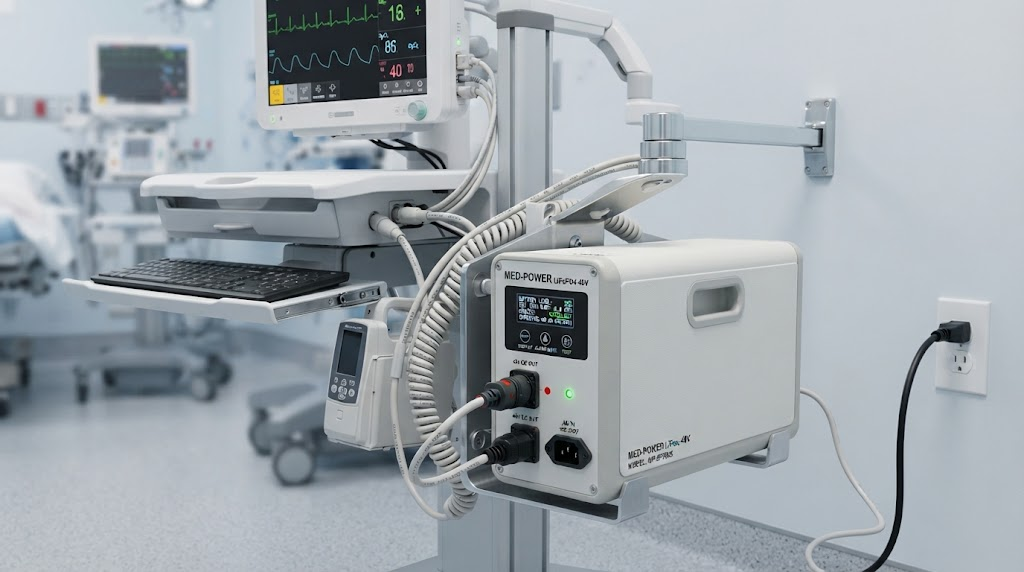
Hot-swappable power relies on dual-bay or single-bay latching batteries. When one pack runs low, the caregiver inserts a fresh pack from a wall-mounted bank without shutting down the computer or losing uncommitted EHR data.
- Enables 24/7 continuous cart utilization without wall-tethering downtime.
- Reduces overall cart push-weight by utilizing smaller, distributed battery modules.
- Requires engineered mechanical guide rails and robust, multi-pin gold-plated connectors rated for 10,000+ insertion cycles.
High-Capacity In-Base Integrated Power
In-base battery systems mount larger, higher-capacity packs directly within the cart chassis. These systems recharge by plugging the mobile cart directly into a hospital wall outlet during shifts or overnight breaks.
- Simplifies cart industrial design and eliminates external charging station infrastructure.
- Provides expansive runtimes (14–18 continuous hours) for heavy computing, barcode scanners, and motorized lift actuators.
- Requires robust fast-charging circuitry to restore 80% capacity within clinical break windows.
Smart BMS Integration and Fleet Telemetry Protocols
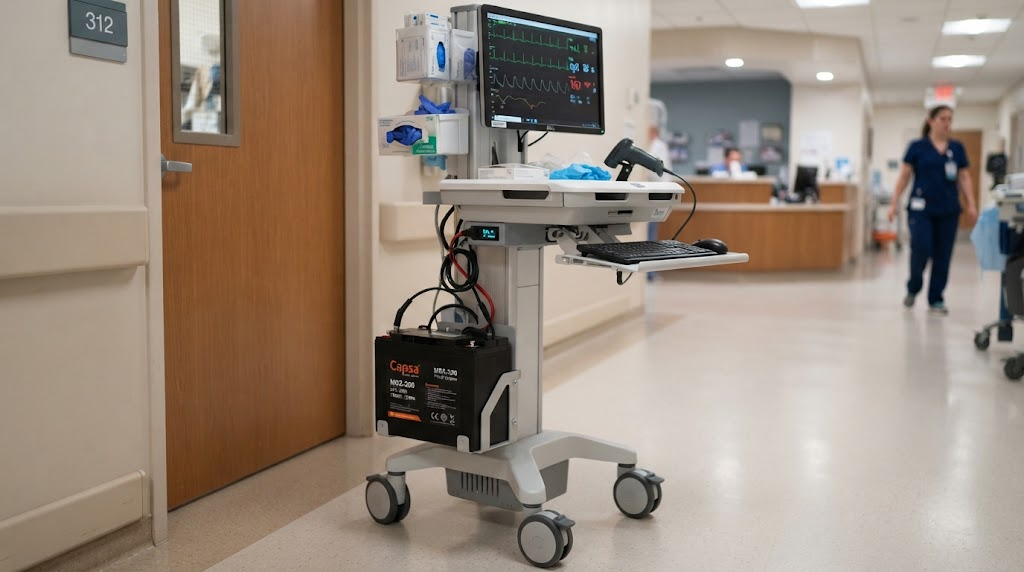
A custom medical cart battery is only as reliable as its integrated Battery Management System (BMS). The BMS acts as the primary safety governor and communication bridge between the cells and the cart’s operating system.
“Over 78% of hospital nursing staff report cart battery depletion as a leading cause of non-scheduled workflow interruptions during 12-hour shifts.”
To eliminate sudden power cutoffs, our smart BMS architectures feature digital fuel gauging that calculates precise runtime based on real-time current draw rather than simple voltage curves. Communication occurs via industrial protocols including SMBus, I2C, CANbus, and RS485.
- Active & Passive Cell Balancing: Equalizes voltage across all series strings to maintain uniform capacity and prevent premature pack degradation.
- Multi-Tier Protection Circuits: Hardware and software triggers defend against overvoltage, undervoltage, short circuits, and overcurrent surges.
- NTC Thermal Monitoring: Multiple embedded thermistors continuously track internal cell temperatures and charging circuit hot spots.
- Fleet Telemetry Integration: Delivers State-of-Health (SoH), cycle counts, and predictive maintenance alerts directly to hospital IT management software.
Through our dedicated OEM battery pack design capabilities, we calibrate BMS firmware algorithms to match specific cart power load spikes caused by thermal label printers, telemetry monitors, and powered height adjustments.
The CarePower-5™ Engineering Protocol for Custom Medical Packs
To ensure high manufacturing consistency and absolute field reliability, JHY Battery utilizes the CarePower-5™ Engineering Protocol. This systematic five-stage framework guides every custom medical workstation power project from concept to volume manufacturing.
- Electrical & Load Profiling: We analyze active vs. idle power draw, peak current surges, expected shift durations, and charging dock parameters to specify optimal cell selection and string configurations.
- Antimicrobial & Impact-Resistant Mechanical Design: Enclosures are modeled using flame-retardant (UL94-V0) polycarbonate/ABS blends engineered to endure clinical drop tests and aggressive hospital disinfectants (bleach, IPA, quaternary ammonium).
- Custom BMS Firmware Calibration: Engineers program custom communication stacks, alarm triggers, State-of-Charge lookup tables, and sleep modes tailored to medical cart motherboards.
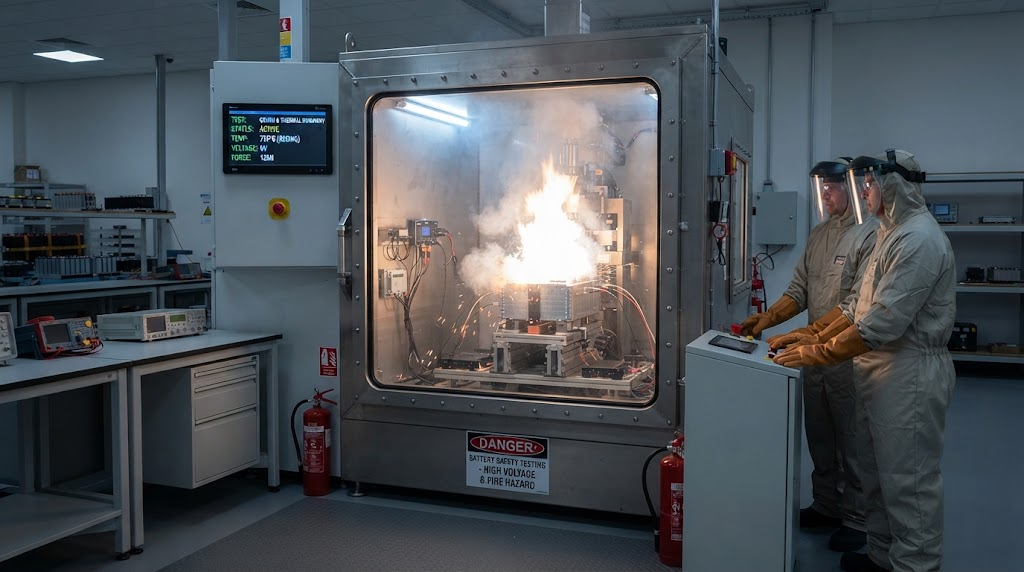
- Multi-Standard Environmental Validation: Prototypes undergo thermal cycling, mechanical shock, vibration, overcharge abuse, and EMC testing in certified laboratory environments.
- ISO-Controlled Batch Production: Full-scale assembly operates under strict traceability, automated cell sorting, automated spot welding, and end-of-line burn-in testing.
Regulatory Compliance & International Healthcare Safety Certifications
Deploying electrical equipment into global healthcare environments requires stringent adherence to international regulatory standards. Sourcing non-compliant battery packs creates serious liability risks and product import delays.
At JHY Battery, our custom lithium-ion battery packs are engineered to meet or exceed key medical and transport mandates:
- IEC 60601-1 & IEC 60601-1-2: Governs basic safety, essential performance, and electromagnetic compatibility (EMC) for medical electrical equipment.
- UL 2054 & UL 1642: Stringent commercial and consumer battery safety standards evaluating cell crush, impact, overcharge, and casing flammability.
- IEC 62133-2: The premier international safety benchmark for secondary lithium cells and batteries used in portable equipment.
- UN 38.3 & MSDS: Mandatory United Nations transport certifications ensuring packs can be safely shipped globally via air and sea freight.
- ISO 9001 & ISO 13485 Alignment: Controlled factory quality management systems guaranteeing lot traceability and zero-defect quality control.
For detailed medical electrical equipment safety protocols, technical teams can consult the official standards catalog on the International Electrotechnical Commission (IEC) portal.
Mixed-Fleet Cart Compatibility Matrix
Many hospitals operate mixed fleets comprising workstations from multiple equipment brands. Custom battery packs must match mechanical mounting points and electrical interfaces seamlessly.
| Cart Platform | Nominal Voltage / Capacity | Form Factor / Mounting | Interface & Protocol |
|---|---|---|---|
| Ergotron StyleView® Series | 12.8V / 40Ah – 45Ah LiFePO4 | Base Drawer / Enclosed Bay | Molex / Anderson Powerpole (SMBus) |
| Humanscale Healthcare Carts | 14.4V / 20Ah – 30Ah LiFePO4/NMC | Modular Column Click-in | Gold Multi-Blade Connector (I2C) |
| Capsa Healthcare (T7/CareLink) | 12.8V / 30Ah – 40Ah LiFePO4 | Undercarriage Slide Module | Direct Blade Terminal / CANbus |
| Enovate Medical Workstations | 12.8V – 25.6V Dual Swappable | Quick-Release Latch Cassette | Proprietary Pinout (SMBus/RS485) |
Total Cost of Ownership (TCO) & Fleet ROI Analysis
While standard replacement SLA batteries carry a lower upfront price tag, their frequent failure rate makes them significantly more expensive over time.
“Upgrading from sealed lead-acid (SLA) to custom LiFePO4 batteries reduces medical cart fleet replacement cycles by over 65% across a 5-year operating window.”
A typical 200-cart hospital fleet deploying custom lithium solutions realizes financial and operational gains across three core areas:
- Reduced Battery Replacement Labor: SLA packs require replacement every 12 to 18 months, requiring hundreds of biomedical technician service hours. Custom LiFePO4 systems operate reliably for 5 to 7 years.
- Lower Nursing Downtime: Extended runtimes ensure carts remain active through entire 12-hour shifts, preventing lost charting time and improving clinician satisfaction.
- Elimination of Structural Wear: Lithium packs weigh roughly 60% less than equivalent lead-acid blocks, reducing mechanical stress on cart casters, motor lifts, and structural welds.
Why Partner with JHY Battery for Medical Workstation Power Solutions?
JHY Battery (Juheyuan Science & Technology Co., Ltd.) is a recognized leader in custom lithium-ion and LiFePO4 battery pack manufacturing with over a decade of dedicated engineering expertise.
We provide full-scope OEM/ODM solutions tailored directly to the demanding requirements of global medical workstation manufacturers and hospital equipment distributors:
- Complete Customization Freedom: Deep customization across voltage, capacity, form factor, connector types, and BMS communication protocols.
- Stringent Quality Infrastructure: ISO 9001 certified manufacturing with full traceability on all Grade-A cell batches and internal components.
- International Certification Support: Direct assistance in acquiring CE, UL, UN 38.3, MSDS, and IEC certifications to fast-track your market entry.
- End-to-End Technical Support: Dedicated biomedical power systems engineers collaborating directly with your mechanical and electronic teams.
How to Start Your Custom Battery Engineering Project in 3 Steps
Starting a custom medical workstation battery project with JHY Battery is straightforward and designed for rapid prototyping turnaround:
- Submit Electrical & Dimension Specs: Provide your voltage, capacity, peak current, mechanical boundary envelope, and preferred communication interface (SMBus, CAN, I2C).
- Engineering CAD & BMS Architecture Review: Our engineering team delivers a complete 3D mechanical model, schematic layout, and BMS specification document within 48 to 72 hours.
- Prototype Validation & Scaled Production: Receive functional prototypes for mechanical fit, thermal evaluation, and regulatory certification testing prior to mass production rollout.
Frequently Asked Questions (FAQs)
What is the typical life expectancy of a custom LiFePO4 cart battery pack?
Under daily multi-shift cycling, a high-quality LiFePO4 battery pack typically delivers between 3,000 and 4,000 cycles before reaching 80% of its initial capacity. In typical clinical hospital use, this translates to 5 to 7+ years of continuous service.
Can custom battery enclosures withstand hospital disinfectant wipes?
Yes. Custom medical enclosures are manufactured using flame-retardant, high-grade ABS/PC materials engineered to resist common healthcare cleaning agents, including bleach solutions, isopropyl alcohol, hydrogen peroxide, and quaternary ammonium compounds without cracking or discoloring.
How does the battery communicate state of charge to the cart operating system?
Our intelligent BMS modules support standard communication protocols such as SMBus, I2C, and CANbus. This allows the medical cart’s onboard PC or micro-controller to display exact runtime percentages, temperature readouts, and remaining cycle counts directly on screen.
What is the typical lead time for custom medical battery pack prototypes?
Following design approval and schematic confirmation, initial functional engineering prototypes are typically manufactured and dispatched within 14 to 21 business days.
About the Technical Reviewer
Senior Medical Power Systems Engineer, JHY Battery: Bringing over 12 years of specialized experience in lithium-ion and LiFePO4 battery pack architecture, our engineering team has designed and delivered power systems for global healthcare equipment brands, point-of-care workstations, and mission-critical industrial electronics.
Ready to Upgrade Your Medical Cart Fleet Power?
Partner with JHY Battery for certified, high-reliability custom LiFePO4 and lithium-ion solutions engineered to eliminate workstation downtime.