Medical Lithium Battery Safety & UL 60601-1 Compliance
Core Principles of Medical Battery Safety and UL 60601-1
UL 60601-1 compliance for medical lithium batteries requires verifying that an internal or external rechargeable power pack maintains basic safety and essential performance during both normal operation and abnormal single-fault conditions within medical electrical equipment.
To achieve certification, engineering teams must fulfill four essential compliance mandates:
- Single-fault safety and fail-safe BMS design: Protecting against independent hardware failures without hazardous discharge or temperature spikes.
- Thermal runaway containment: Mitigating cell-to-cell propagation using non-flammable thermal barriers and flame-retardant enclosures.
- Electrical insulation and dielectric strength: Providing verified Means of Patient Protection (MOPP) and Means of Operator Protection (MOOP).
- Mandatory secondary certification under IEC 62133-2: Ensuring pre-certified cell and sub-pack safety under harmonized international standards.
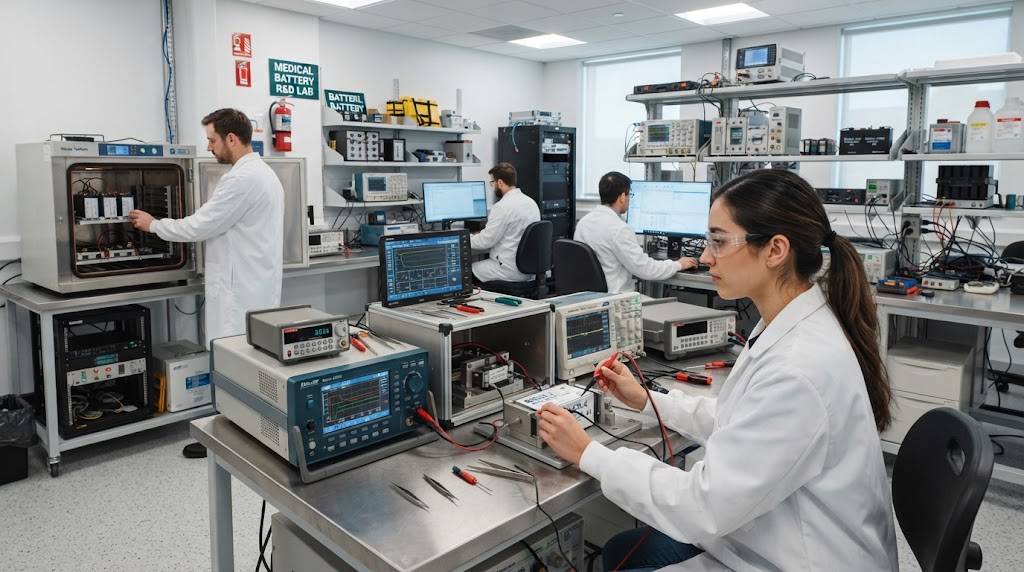
Standard Definition: ANSI/AAMI ES 60601-1 (harmonized with IEC 60601-1 3rd edition) defines medical electrical equipment safety through rigorous risk management under ISO 14971, requiring that no single electrical, mechanical, or thermal failure mode can result in an unacceptable risk to patients or clinical operators.
Medical power systems face operational stresses far beyond commercial electronics. A portable infusion pump, surgical power tool, or patient monitor cannot drop power unexpectedly or vent toxic gases inside a surgical suite. Over 65% of medical device electrical sub-assembly FDA 510(k) delays stem from incomplete battery single-fault condition documentation. Addressing compliance early during battery pack engineering eliminates costly product redesigns.
Medical Battery Regulatory Hierarchy: Cell vs. Pack vs. System Standards
Navigating medical battery certification requires distinguishing between component-level testing and system-level qualification. Confusing cell standards with equipment-level standards is one of the most common pitfalls in medical device development.
| Level | Applicable Standard | Primary Testing Focus | Regulatory Scope |
|---|---|---|---|
| Cell Level | UL 1642 / IEC 62133-2 | Electrochemical stability, internal short circuit, crush | Prerequisite for pack assembly |
| Pack Level | IEC 62133-2 / UL 2054 / UN 38.3 | BMS overcharge, mechanical drop, vibration, transport | Sub-system certification & shipping |
| System Level | UL 60601-1 / IEC 60601-1 | Clause 15.4.3.4, single-fault BMS failure, patient isolation | End-device market authorization |
UL 1642 and IEC 62133-2 validate bare lithium-ion and LiFePO4 cells against physical destruction and thermal runaway. However, incorporating an IEC 62133-2 approved cell does not automatically make the final medical device compliant with UL 60601-1.
The device manufacturer must verify how the integrated Battery Management System (BMS) manages fault states in real time when installed inside the medical device enclosure.
FDA Consensus Standards and ANSI/AAMI ES 60601-1 Recognition
The United States FDA Center for Devices and Radiological Health (CDRH) recognizes ANSI/AAMI ES 60601-1 as a core consensus standard. Submitting a Declaration of Conformity streamlines the 510(k) review process.
To accept the battery sub-assembly, FDA reviewers require clear traceability between the battery risk analysis in ISO 14971 and the electrical bench tests executed under ANSI/AAMI ES 60601-1 Clause 15.4.3.4.
The JHY Dual-Path Medical Battery Compliance Protocol
Engineering custom medical battery packs requires a unified development strategy that addresses both North American (FDA/UL) and European (EU MDR/IEC) requirements simultaneously. Juheyuan Science & Technology Co., Ltd. (JHY Battery) applies a structured framework known as the Dual-Path Medical Battery Compliance Protocol.
This methodology integrates regulatory checkpoints into each design phase:
- Stage 1: Cell Qualification & Chemistry Baseline: Utilizing tier-one cells with active UL 1642 and IEC 62133-2 CB certificates, verifying chemistry match for cycle life and thermal margins.
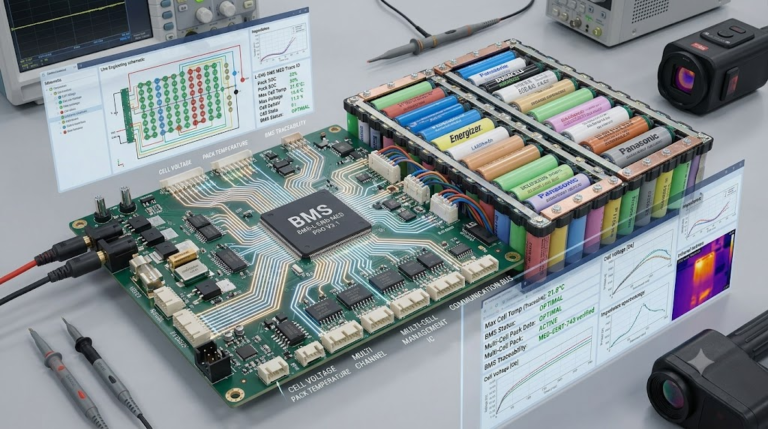
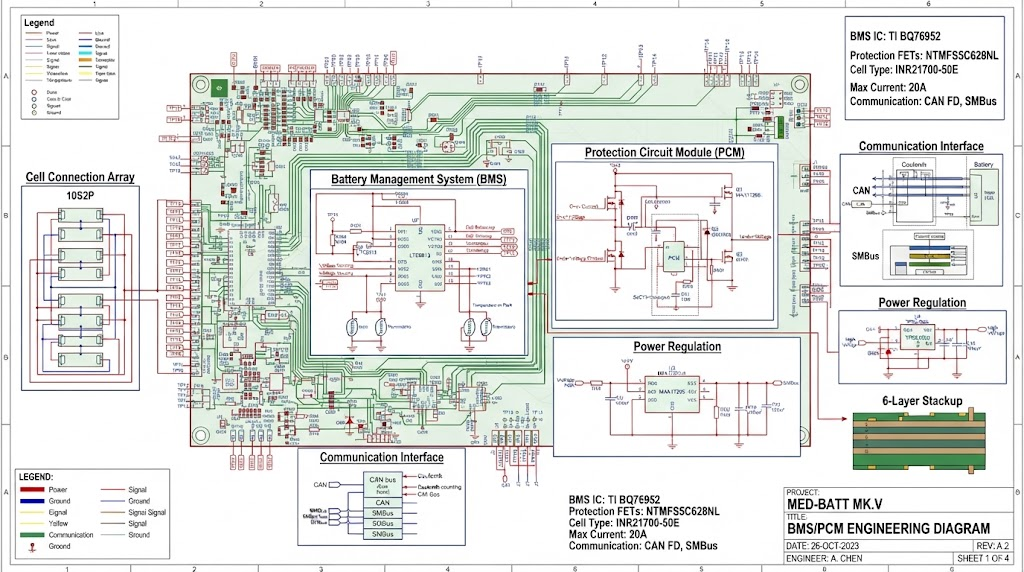
- Stage 2: Redundant Hardware BMS Architecture: Designing dual-layer protection circuits with independent secondary IC shutoffs to address Clause 15.4.3.4 single-fault requirements.
- Stage 3: Thermal Propagation Mitigation: Modeling heat paths using cell spacing, heat sinking, and flame-retardant enclosures (UL 94 V-0).
- Stage 4: Unified CB Scheme Testing: Executing pack testing via an accredited IECEE CB laboratory to generate universal test reports for both UL and IEC standards.
With over a decade of OEM/ODM experience as a specialized battery manufacturer in China, JHY Battery builds custom lithium-ion and LiFePO4 battery solutions backed by ISO 9001 quality systems and complete certification portfolios (UN 38.3, CE, MSDS, UL).
Clause 15.4.3.4 Compliance: Single-Fault Condition and BMS Redundancy
The most demanding element of UL 60601-1 battery testing is Clause 15.4.3.4 (Batteries and Battery Chargers). The standard mandates that the battery system must not catch fire, explode, or produce hazardous chemical emissions when subjected to any single component failure.
Standard consumer-grade BMS topologies rely on a single micro-controller or analog front-end (AFE) IC. Under UL 60601-1, an auditor will simulate the failure of that primary protection IC by shorting its pins or opening its sensing circuit.
Single-Fault Requirement: If the primary charge-control FET fails in a shorted state during high-current charging, a secondary, completely autonomous hardware protection circuit must disconnect the battery before cell voltage exceeds safety limits.
To pass Clause 15.4.3.4, a custom medical BMS should include:
- Dual MOSFET Switches in Series: Allowing independent cut-off if one switch fails closed.
- Secondary Overvoltage Protector: A dedicated, hardwired IC controlling a chemical fuse or secondary disconnect gate.
- Independent Temperature Sensors (NTC): Multi-point thermistor arrays monitoring both cell centers and power semiconductors.
- Galvanic Isolation & Creepage: Sufficient physical clearance on PCB traces to meet insulation requirements for patient protection.
Thermal Management and Enclosure Integrity Under Simulated Abuse
Thermal safety in medical equipment requires preventing thermal runaway from breaching the outer casing. In our thermal stress evaluations, physical separation between cells is the most reliable defense against thermal propagation.
Battery enclosures must utilize materials rated UL 94 V-0 or higher for flame retardancy. Enclosures should also pass impact and drop tests without exposing live contacts or compromising the internal cells.
Battery Chemistry Evaluation for Healthcare: LiFePO4 vs. NMC
Choosing the right cell chemistry directly impacts thermal safety margins and regulatory compliance under UL 60601-1.
| Performance Parameter | LiFePO4 (Lithium Iron Phosphate) | NMC (Nickel Manganese Cobalt) |
|---|---|---|
| Thermal Runaway Onset | > 270°C (High Stability) | 150°C – 210°C (Moderate) |
| エネルギー密度 | 90 – 160 Wh/kg | 180 – 260 Wh/kg |
| Cycle Life (80% DoD) | 2,000 to 5,000+ cycles | 500 to 1,200 cycles |
| UL 60601-1 Risk Profile | Low thermal risk, simpler mitigation | Requires strict active thermal design |
| Best Suited For | Hospital carts, surgical tables, ESS | Handheld monitors, compact wearables |
LiFePO4 battery chemistry demonstrates thermal runaway onset temperatures exceeding 270°C compared to 150-210°C for traditional NMC formulations. This thermal headroom makes LiFePO4 an attractive choice for stationary hospital equipment, surgical carts, and diagnostic units where safety and cycle longevity outweigh minimal footprint requirements.
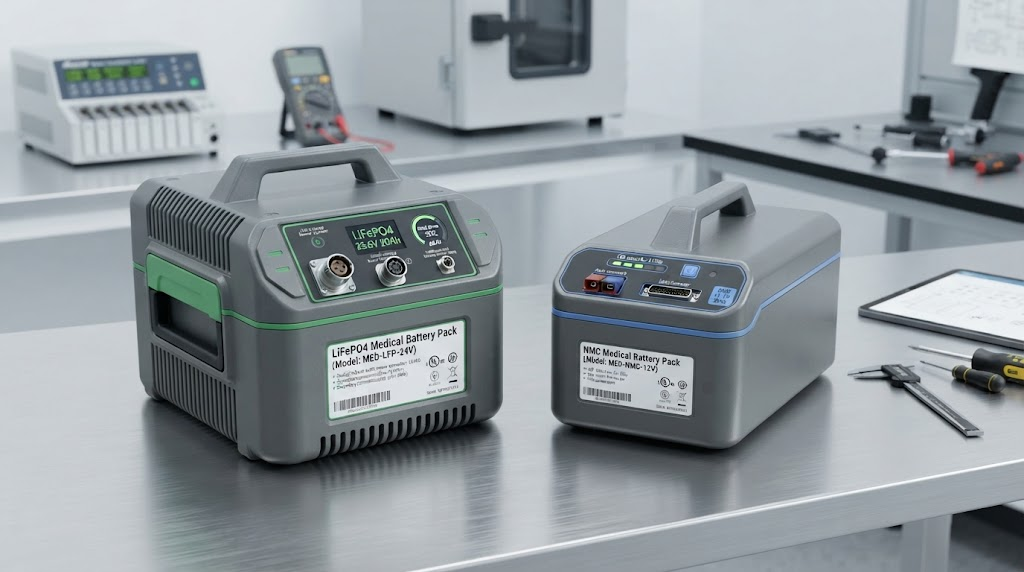
For ultra-compact, handheld medical devices where high energy density is mandatory, NMC packs remain common. However, they require comprehensive BMS redundancy and structural containment to satisfy UL 60601-1 abuse testing.
North America vs. Europe: Dual-Path Regulatory Testing Matrix
Launching medical equipment in North America and Europe requires coordinating two different regulatory bodies. Dual-path harmonized testing under the IECEE CB Scheme reduces redundant regulatory lab costs by up to 40% for global medical market entry.
| Compliance Parameter | United States (FDA / OSHA) | European Union (EU MDR 2017/745) |
|---|---|---|
| Core System Standard | ANSI/AAMI ES 60601-1 / UL 60601-1 | EN 60601-1:2006 + A1:2013 + A2:2021 |
| Pack-Level Standard | UL 2054 (often required by NRTL) | EN 62133-2 |
| Risk Management | ISO 14971 (FDA recognized version) | EN ISO 14971:2019 + A11:2021 |
| Laboratory Accreditation | OSHA NRTL Listed (e.g., UL, Intertek, CSA) | Notified Body Review / CE Declaration |
| Harmonization Path | IECEE CB Scheme Test Certificate covering IEC 60601-1 & IEC 62133-2 with US/EU national differences | |
By specifying dual-rated components and utilizing a CB Scheme test report, manufacturers eliminate duplicate testing cycles when filing for FDA 510(k) clearance and CE mark technical files.
Technical Dossier Checklist for Medical Battery 510(k) and EU MDR Files
When compiling regulatory filings, include a dedicated battery section within the medical device technical dossier. Reviewers expect the following documentation:
- UN 38.3 Lithium Battery Test Summary: Verification of altitude simulation, thermal cycling, vibration, shock, external short-circuit, impact/crush, overcharge, and forced discharge.
- Cell Traceability Records: Manufacturer datasheets, batch validation data, and UL 1642 / IEC 62133-2 CB certificates.
- BMS Electrical Schematics & BOM: Detailed circuit layouts highlighting secondary hardware cutoffs, component derating analysis, and safety-critical isolation gaps.
- Battery FMEA (Failure Mode and Effects Analysis): Detailed risk breakdown under ISO 14971 addressing Clause 15.4.3.4 fault injection scenarios.
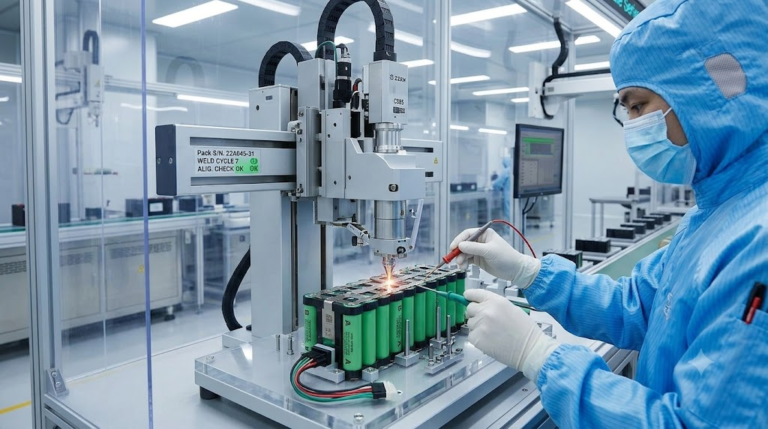
- Cell Matching & Quality Plan: Manufacturing quality documentation verifying cell balancing, automated welding controls, and end-of-line testing under ISO 9001.
Expert Author & Compliance Engineering Review
This technical guide was authored and reviewed by senior battery systems engineers specializing in medical power supply certification and custom pack architecture.
Verified by JHY Battery Technical Compliance Review Team
Our engineering department oversees custom lithium-ion and LiFePO4 battery pack projects for global medical device, industrial, and energy storage system (ESS) applications. Backed by ISO 9001 certified manufacturing, our design workflows align with ANSI/AAMI ES 60601-1, IEC 62133-2, and UN 38.3 standards.
Frequently Asked Questions About Medical Lithium Battery Compliance
Does an IEC 62133-2 certified cell guarantee UL 60601-1 compliance?
No. IEC 62133-2 validates safety at the cell and generic pack level. UL 60601-1 evaluates the entire medical device system, specifically how the BMS, power supply, and physical enclosure manage Clause 15.4.3.4 single-fault conditions and thermal isolation.
Why is single-fault testing in medical BMS design so strict?
In life-support and clinical equipment, a battery short circuit or thermal event presents direct safety hazards to patients and operators. UL 60601-1 Clause 15.4.3.4 mandates hardware-level redundancy so that if the primary BMS switch or IC fails, a secondary cutoff mechanism safely disconnects the load.
Can I replace an approved medical battery pack with a generic alternative?
No. Replacing a medical battery pack with a non-certified unit invalidates the device’s 510(k) clearance or CE marking. Replacement packs must match the technical specifications, BMS safety cutoffs, and regulatory approvals defined in the original device technical dossier.
What chemistry is best for medical carts and surgical mobile units?
LiFePO4 is well suited for medical carts and mobile surgical stations due to its high thermal stability (runaway onset >270°C) and extended service life (2,000–5,000 cycles). For handheld devices with tight space constraints, high-density NMC packs with redundant hardware protection are typically selected.
Need a Custom Medical Battery Pack Built for UL 60601-1 Compliance?
Partner with JHY Battery to design, prototype, and certify tailored lithium-ion and LiFePO4 battery packs with fully redundant BMS architectures.