Lithium Upgrades for Electric Pallet Jacks: B2B Guide
Modernizing Class III Fleets: The Shift to Lithium Upgrades
Managing a busy warehouse requires maximizing equipment uptime. Class III material handling equipment, such as electric walkie pallet jacks, forms the backbone of daily loading dock operations. Yet, traditional lead-acid batteries frequently bottleneck these operations due to long charging cycles, high maintenance demands, and rapid voltage drops.
A professional lithium battery upgrade for electric pallet jacks offers a direct path to modernizing your fleet. By replacing outdated battery packs with high-performance lithium-ion technology, fleet operators can eliminate maintenance overhead and streamline shift patterns.
At chinabatterymanufacturer.com, we engineer advanced industrial lithium solutions designed to fit seamlessly into existing battery compartments, providing a plug-and-play transition for global logistics fleets.
The Core Benefits of Lithium Retrofitting for Pallet Jacks
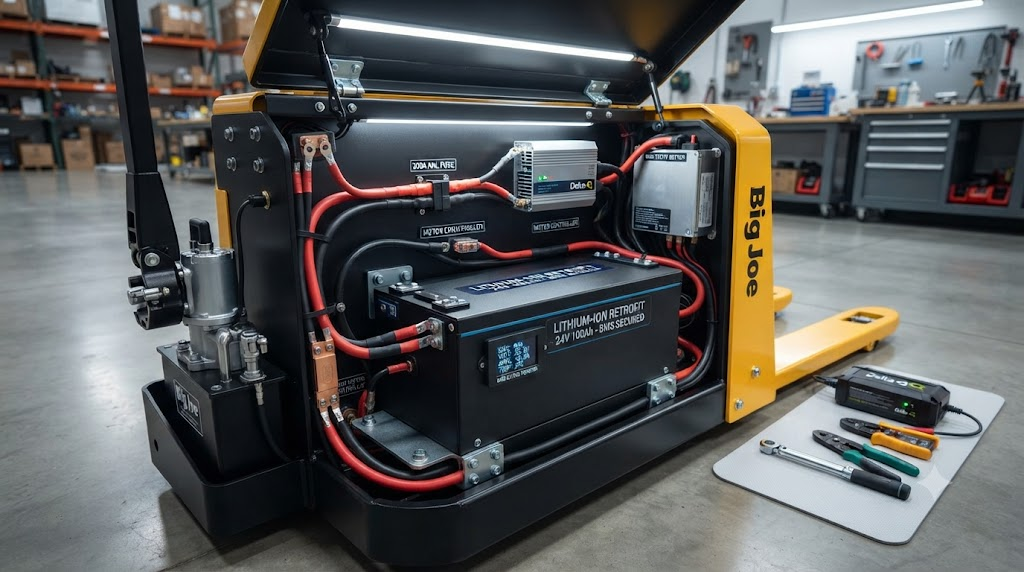
Upgrading to a lithium battery instantly improves electric pallet jack performance by eliminating maintenance, enabling rapid opportunity charging, and tripling service life. This transition eliminates battery watering, acid corrosion, and long charging bottlenecks, allowing material handling equipment to operate continuously across multiple shifts.
- 充電時間: Lead-acid requires 8 hours of charging plus 8 hours of cooling; lithium charges fully in 1 to 2 hours.
- Weight: Lead-acid batteries weigh 300+ lbs to act as ballast; lithium units weigh 60-80 lbs, utilizing custom-engineered steel ballast to match OEM chassis specs.
- Cycle Life: Lead-acid provides 1,500 cycles at 50% depth of discharge; lithium delivers 3,500 to 5,000+ cycles at 80% depth of discharge.
- Operational Uptime: Lead-acid limits jacks to single-shift operations; lithium supports 24/7 continuous multi-shift operations using opportunity charging during short breaks.
Implementing a lead-acid battery replacement program means your material handling equipment spends more time on the active warehouse floor and less time sitting idle in dedicated charging bays.
The Tri-Phase Retrofit Protocol (TRP) for Fleet Upgrades
In our testing and deployment across global logistics hubs, we have established a proprietary framework called the Tri-Phase Retrofit Protocol (TRP). This methodology ensures safe, efficient, and standardized conversions of Class III pallet jacks.
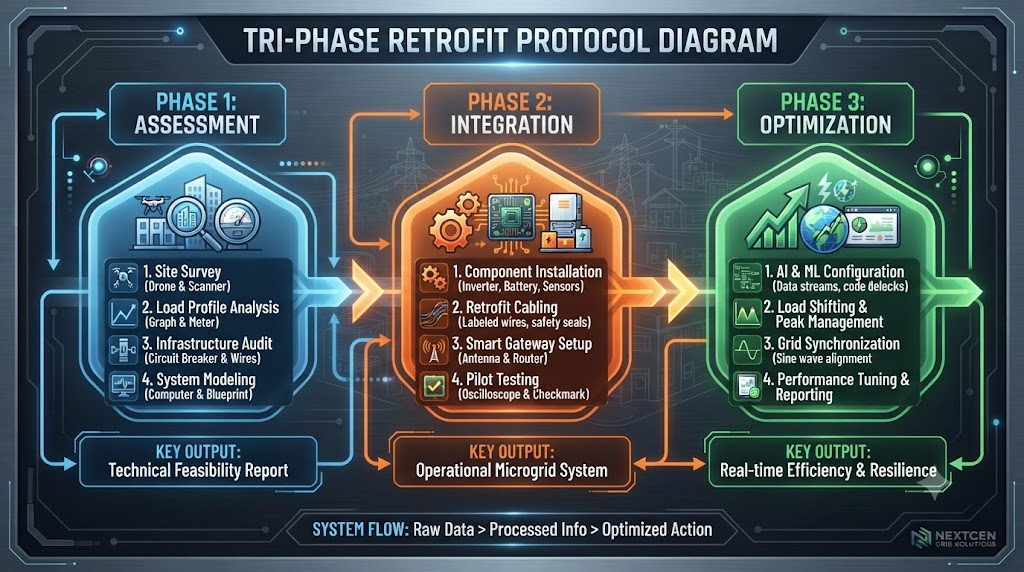
Phase 1: Compatibility & Ballast Assessment
Based on our data, substituting a heavy lead-acid battery with a lightweight lithium-ion battery without adjusting the physical mass can compromise safety. The drive wheel of the pallet jack requires sufficient downforce to maintain traction, especially on ramps.
The first phase requires measuring the exact dimensions of the battery compartment and calculating the required ballast weight to safely match the OEM specifications of the equipment manufacturer.
Phase 2: BMS & Charger Integration
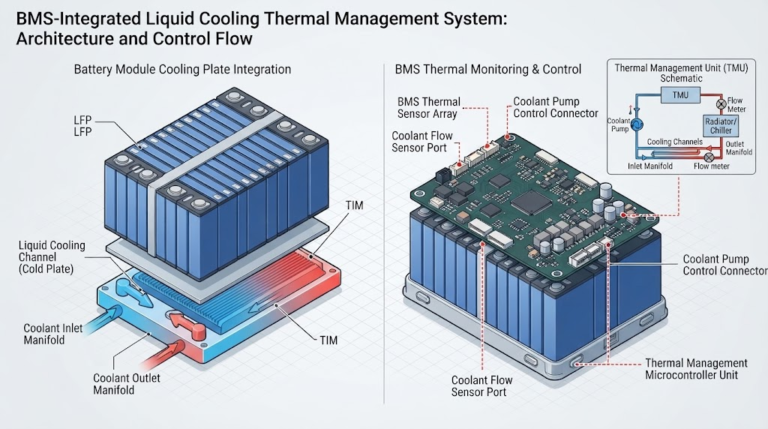
Modern material handling efficiency relies on communication between the battery, the vehicle, and the charger. We define BMS compatibility as the seamless integration of a smart battery management system (BMS) with the pallet jack’s internal controller.
This protocol ensures the BMS can communicate state-of-charge (SoC) metrics directly to the operator’s dashboard, preventing unexpected shutdowns and managing safe energy draw limits.
Phase 3: Fleet Calibration
Once installed, the battery is calibrated with dedicated high-frequency chargers. Operational parameters are adjusted to support rapid opportunity charging cycles during scheduled worker breaks, maximizing overall energy efficiency.
Physical Compatibility and Ballast Weight Matrix
A critical technical detail often overlooked during aftermarket upgrades is the physical weight distribution. Because lithium cells are highly energy-dense, they weigh significantly less than lead-acid cells of the same amp-hour capacity.
To maintain steering traction and brake performance, physical compatibility must be preserved by integrating heavy steel plates into the battery casing. Below is a ballast weight guide for common Class III OEM models:
| OEM Model Group | Original Lead-Acid Weight (lbs) | Standard Lithium Weight (lbs) | Required Steel Ballast (lbs) | Resulting Stability Metric |
|---|---|---|---|---|
| Toyota Material Handling (8HBW23) | 280 – 320 | 65 | +215 to +255 | 100% OEM Match |
| Yale Materials Handling (MPB045-VG) | 300 – 350 | 70 | +230 to +280 | 100% OEM Match |
| Hyster Company (W45ZHD) | 290 – 330 | 68 | +222 to +262 | 100% OEM Match |
Selecting a pre-engineered conversion kit that includes built-in steel ballast prevents the drive tires from slipping on slick warehouse floors or loading ramps. Learn more about custom sizing options in our Industrial Battery Solutions guide.
Performance & Efficiency Metrics: Lithium vs. Lead-Acid
The operational contrast between these two technologies is stark, especially under continuous load. Lead-acid batteries suffer from a phenomenon known as voltage sag. As the battery discharges below 50% capacity, the voltage drops, causing the pallet jack to travel and lift slower.
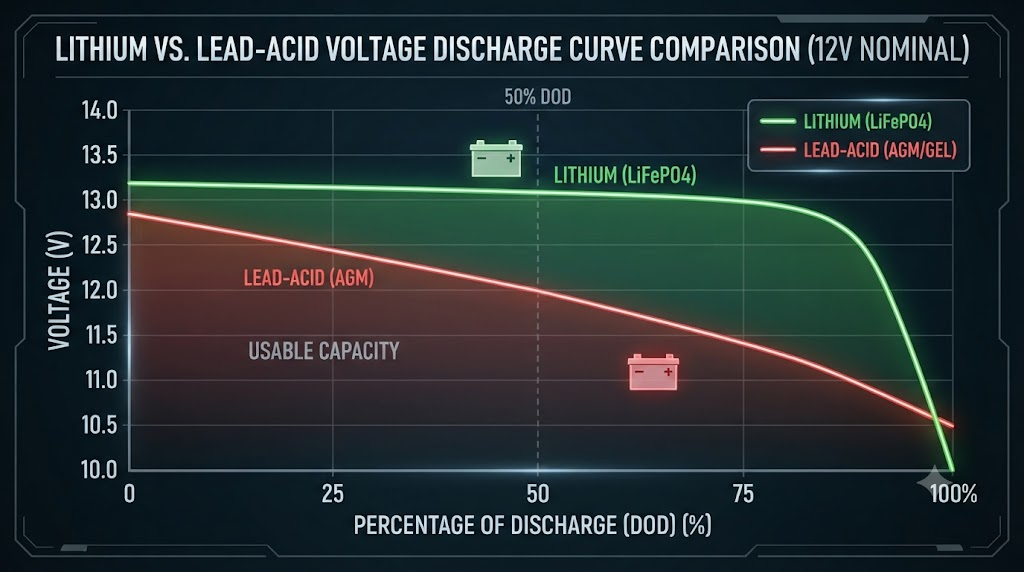
A lithium battery upgrade for electric pallet jacks prevents voltage sag completely. The discharge curve remains flat, delivering full power and speed until the battery is completely depleted.
Furthermore, opportunity charging advantages completely redesign the daily workflow. Instead of swapping batteries or parking the jack for 8 hours, operators plug the equipment into fast chargers during 15-minute breaks or lunch hours. This keeps the battery in a optimal state of charge throughout the day.
According to safety and efficiency guidelines outlined by the Occupational Safety and Health Administration (OSHA), eliminating battery swapping rooms also significantly reduces workplace injury risks associated with handling heavy lead-acid cells.
Niche Scenario: Optimizing Cold Storage Operations at -20°C
Freezer and cold chain environments present severe challenges to industrial batteries. Traditional lead-acid chemistry experiences major slowdowns in cold temperatures, losing up to half of its rated capacity.
“Cold storage facilities see a 50% recovery in battery capacity loss by switching to heated lithium-ion packs.”
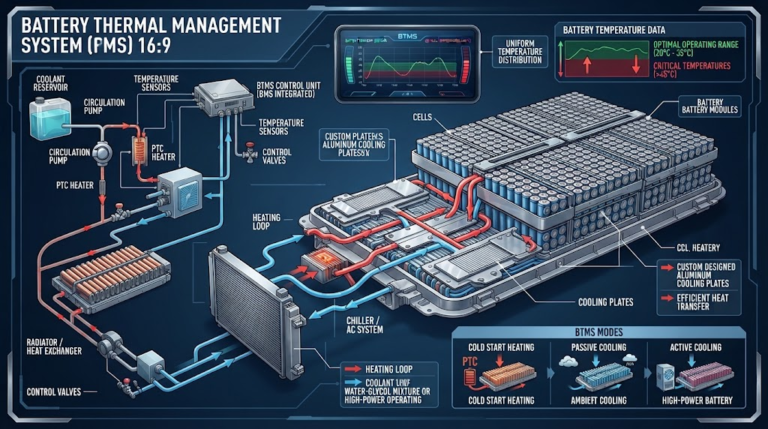
Standard lithium batteries also face charging limitations in sub-zero temperatures, as attempting to charge them below freezing can cause permanent lithium plating. To solve this, advanced industrial upgrades feature integrated thermal management.
These specialized heated lithium battery systems use internal heating elements powered by the charger itself. Before accepting a charge, the battery automatically warms its internal cells to a safe temperature, ensuring maximum capacity recovery and fast charging speeds even in cold storage warehouses.
Financial Analysis: TCO and ROI of Lithium Conversions
While the initial acquisition price of lithium is higher than lead-acid, the Total Cost of Ownership (TCO) presents a clear financial case for the upgrade. Businesses must factor in labor costs, energy use, and long-term replacement frequency.
Over a 5-year period, the savings on maintenance-free industrial batteries accumulate rapidly. Lead-acid batteries require weekly watering, regular equalization charges, and dedicated washing to prevent acid corrosion.
“Lithium-ion upgrades reduce fleet maintenance costs by up to 70% over a 5-year lifecycle.”
By eliminating battery watering labor, acid cleanup, and redundant backup batteries, a warehouse operating 20 pallet jacks can save thousands of dollars annually. To calculate your exact fleet payback period, access our interactive TCO Calculator Tool or consult with our team regarding Fleet Maintenance Services.
Step-by-Step DIY Retrofit and Installation Guide
Retrofitting an existing electric walkie pallet jack with a lithium conversion kit is a straightforward task when utilizing certified pallet jack lithium conversion kits.
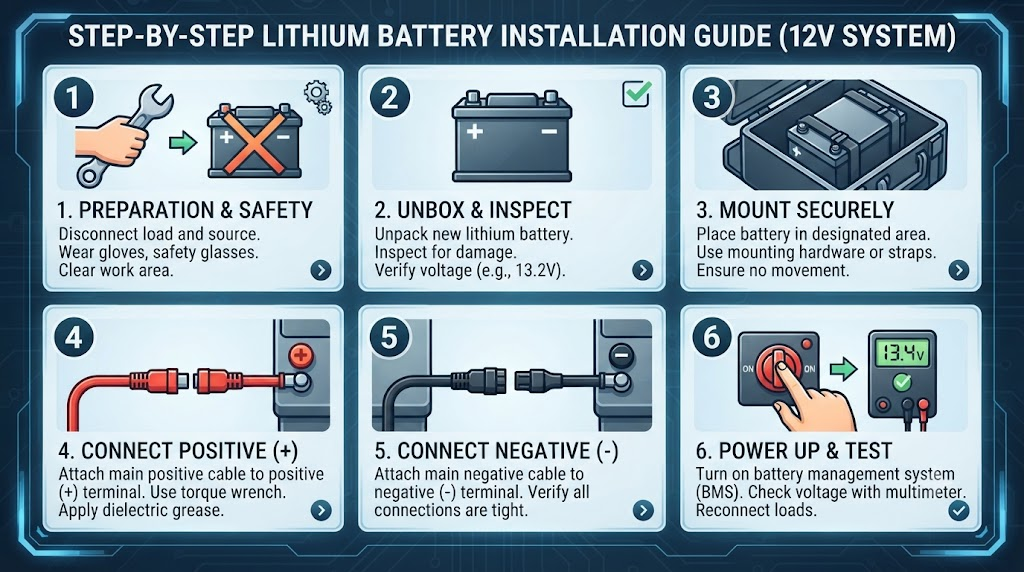
The Installation Process
- Power Down and Secure: Park the pallet jack on a level surface, engage the emergency stop, and turn off the key switch.
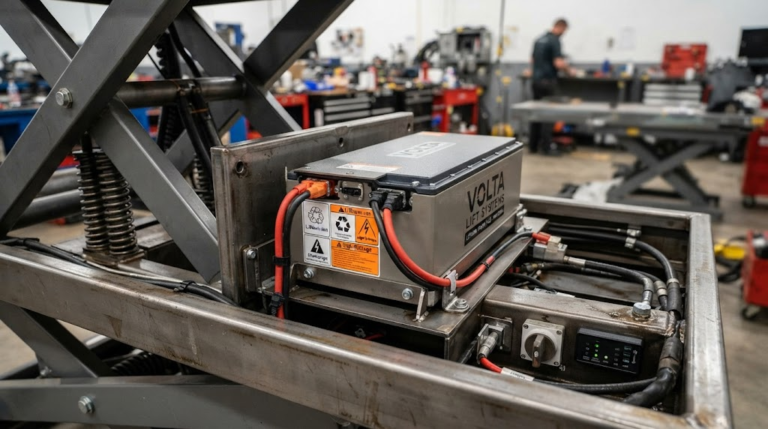
- Remove the Old Battery: Disconnect the main battery connector. Use a hoist to carefully lift the heavy lead-acid battery out of the compartment.
- Clean the Compartment: Neutralize any residual battery acid or debris left behind in the steel battery tray.
- Install the Ballast Plate: Position the custom steel ballast plates into the bottom of the tray to ensure proper OEM traction weight.
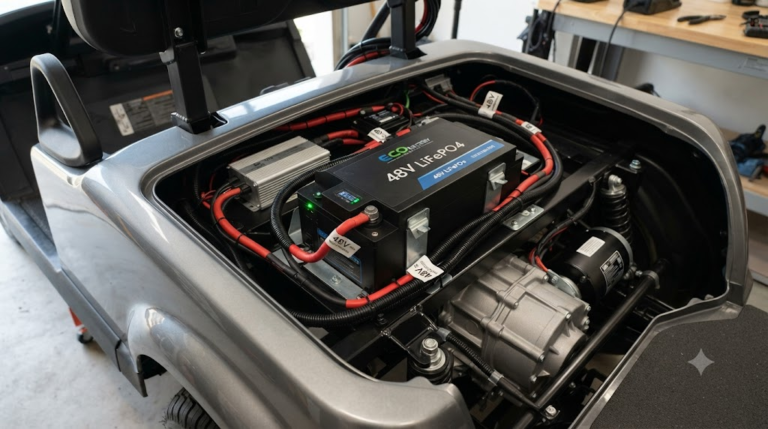
- Mount and Connect the Lithium Battery: Slide the new lithium pack into place. Secure it using the integrated mounting brackets.
- Integrate the BMS and Display: Mount the external SoC indicator on the control arm or dashboard, routing the communication cables safely away from pinch points.
- Final Connection: Secure the main power connector to the pallet jack’s power receptacle. Turn on the battery power switch and verify system diagnostics.
“When retrofitting industrial equipment, prioritizing safety compliance is critical. Always ensure your lithium-ion battery system is certified under UL 2580 standards for electric vehicles and has undergone rigorous UL 9540A testing to verify thermal safety limits.”
— Marcus Vance, Certified MHE Systems Engineer
Frequently Asked Questions About Lithium Pallet Jack Upgrades
Do lithium upgrades void the OEM warranty on my pallet jack?
In most jurisdictions, using a high-quality aftermarket lithium battery does not void the equipment warranty, provided the battery meets the voltage and physical weight requirements specified by the manufacturer. Our conversion kits are engineered to match OEM electrical specs closely.
Can I use my existing lead-acid charger for the new lithium battery?
No, lithium batteries require dedicated charging profiles managed by the BMS to prevent overcharging and balancing issues. Always use the high-frequency lithium charger provided with the retrofit kit.
How long does a lithium battery upgrade last?
A quality lithium-ion battery will typically last between 3,500 and 5,000 charge cycles. In a standard single-shift warehouse environment, this equates to roughly 7 to 10 years of reliable service life, compared to 3 to 5 years for lead-acid.
Ready to Upgrade Your Fleet?
Eliminate high maintenance costs and improve your warehouse efficiency. Contact our engineering team today to receive a custom compatibility assessment for your fleet.