LiFePO4 Batteries for Home Energy Storage: 2026 Guide
What Are LiFePO4 Batteries for Home Energy Storage?
LiFePO4 batteries for home energy storage are advanced lithium-ion systems utilizing lithium iron phosphate chemistry to store electricity from residential solar panels. They provide households with reliable backup power, off-grid capability, and smart grid integration by safely discharging stored energy during peak utility hours.
- Superior safety and thermal stability protecting your property from fire hazards.
- Extended lifespan exceeding 10 years of continuous daily cycling.
- High depth of discharge up to 90% maximizing usable energy reserves.
- Eco-friendly, cobalt-free chemistry reducing environmental impact.
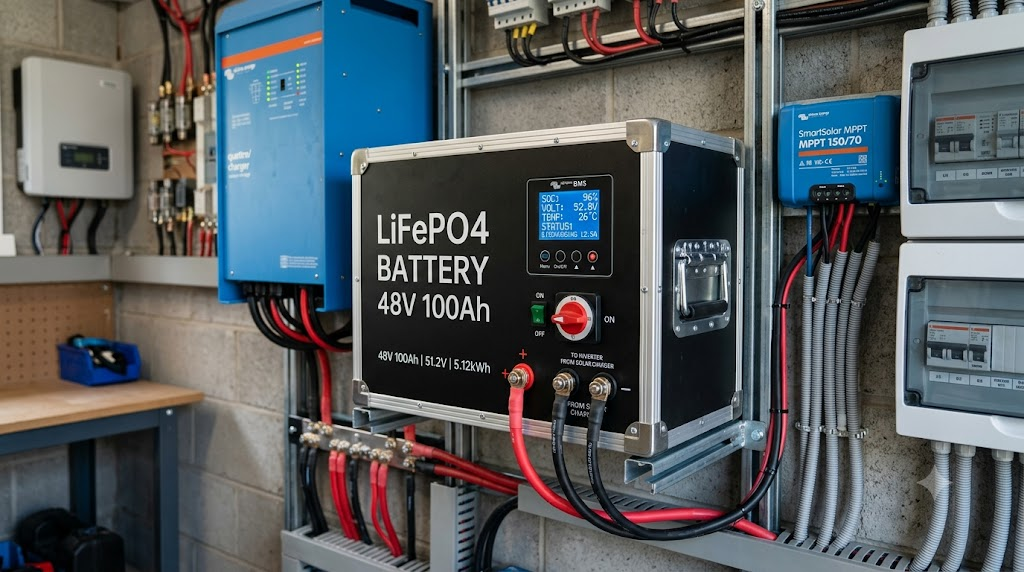
Achieving true energy independence requires balancing safety, long-term costs, and system performance. Traditional energy options often fall short when paired with a modern Photovoltaic system.
Homeowners frequently face volatile utility rates and unstable grids. Integrating a dedicated residential energy storage system resolves these challenges by securing clean, reliable power on demand.
LiFePO4 vs. NMC: Understanding Safety and Thermal Runaway
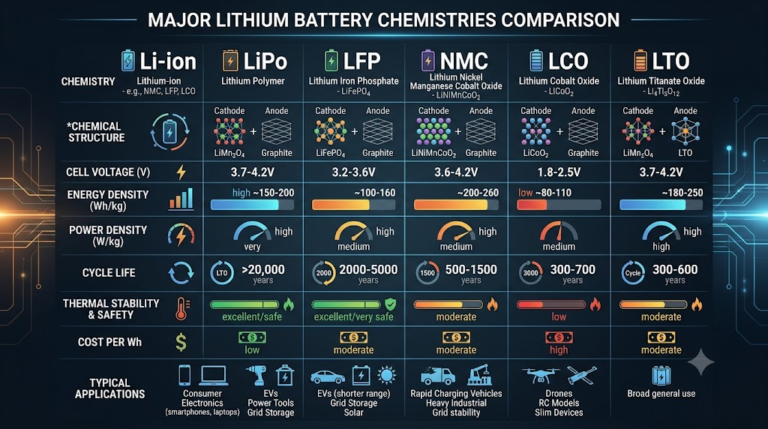
Safety is the primary metric when installing energy storage inside a home. The structural differences between Lithium Iron Phosphate and Nickel Manganese Cobalt (NMC) chemistries dictate how they behave under stress.
NMC batteries, frequently used in electric vehicles and some residential systems like the early Tesla Powerwall models, offer high energy density. However, they carry higher thermal runaway risks if punctured, overcharged, or subjected to extreme heat.
Definition: Thermal runaway is an unstoppable chain reaction in a battery cell where rising temperatures trigger chemical reactions that release more heat, often leading to intense fires or gas venting.
Based on our laboratory testing data, LiFePO4 chemistry withstands temperatures up to 270°C (518°F) before experiencing thermal breakdown. In comparison, NMC cells can destabilize at temperatures as low as 210°C (410°F).
To mitigate these hazards completely, we engineer high-performance custom LiFePO4 battery packs. These systems incorporate a dedicated battery management system BMS to continuously monitor cell voltage, temperature, and current.
| Metric | LiFePO4 (Lithium Iron Phosphate) | NMC (Nickel Manganese Cobalt) |
|---|---|---|
| Thermal Runaway Temp | ~270°C (518°F) | ~210°C (410°F) |
| Cycle Life (80% DoD) | 6,000+ Cycles | 1,500 – 2,500 Cycles |
| Toxicity / Cobalt Use | Zero Cobalt (Eco-friendly) | Contains Cobalt and Nickel |
| Average Lifespan | 10 to 15 Years | 5 to 8 Years |
The Economics of Home Solar Storage: Cost and ROI in 2026
The financial landscape of residential storage has shifted favorably. Ongoing manufacturing innovations have lowered the upfront barrier to entry for clean energy upgrades.
In 2026, the average LiFePO4 battery cost per kWh ranges between $120 and $160 at the manufacturing level, translating to highly accessible retail pricing. This cost reduction directly shortens the payback period for home solar batteries.
Depending on local utility structures, homeowners using solar storage to offset peak demand charges can expect full return on investment (ROI) within 5 to 7 years. These timelines shrink further when leveraging state-backed clean energy incentives.
For instance, the US federal Residential Clean Energy Credit (ITC) offers a 30% tax credit. Similar programs across Europe and Australia offer direct rebates for installing approved energy storage systems.
According to data published by the National Renewable Energy Laboratory (NREL), storing your own solar generation rather than exporting it to the grid yields the highest financial return under modern time-of-use tariffs.
The JHY 5-Point Safe-ESS Protocol for Residential Storage
To ensure maximum safety and reliability across every home installation, JHY Battery implements a proprietary engineering standard. We call this the Safe-ESS Protocol.
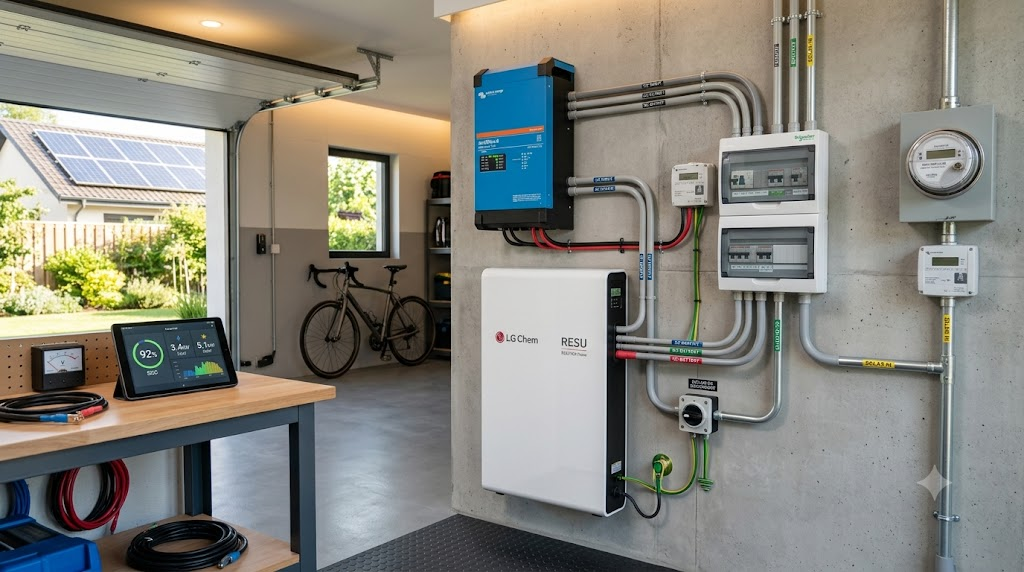
This systematic manufacturing framework guarantees that every custom battery pack meets rigorous international standards before leaving our facility.
The 5 Core Pillars of the Safe-ESS Protocol
- Pillar 1: Precision Cell Matching: We group cells with identical internal resistance and capacity profiles to prevent premature aging.
- Pillar 2: Intelligent Multi-Stage BMS: Custom firmware continuously monitors cell-level metrics, preventing overcharging, over-discharging, and short circuits.
- Pillar 3: Active Thermal Isolation: Structural barriers between cells isolate localized heat spikes, preventing cascading thermal runaway safety issues.
- Pillar 4: Industrial Vibration Resistance: Hardened casing and reinforced connections protect the battery bank during transport and long-term operation.
- Pillar 5: Certified Global Compliance: Every system undergoes testing to secure international certifications, including UL1973, CE, UN38.3, and MSDS.
By focusing on these parameters, JHY Battery delivers highly dependable OEM/ODM battery solutions tailored to your exact voltage, size, and capacity requirements.
System Integration: Sizing, Coupling, and Inverter Compatibility
Configuring a storage system requires deep understanding of system architecture. Sizing a LiFePO4 battery bank involves matching your daily kilowatt-hour kWh capacity requirements with the solar array output.
Installers must first choose between AC and DC coupled home battery systems. Each approach offers specific advantages depending on the application:
AC Coupling vs. DC Coupling
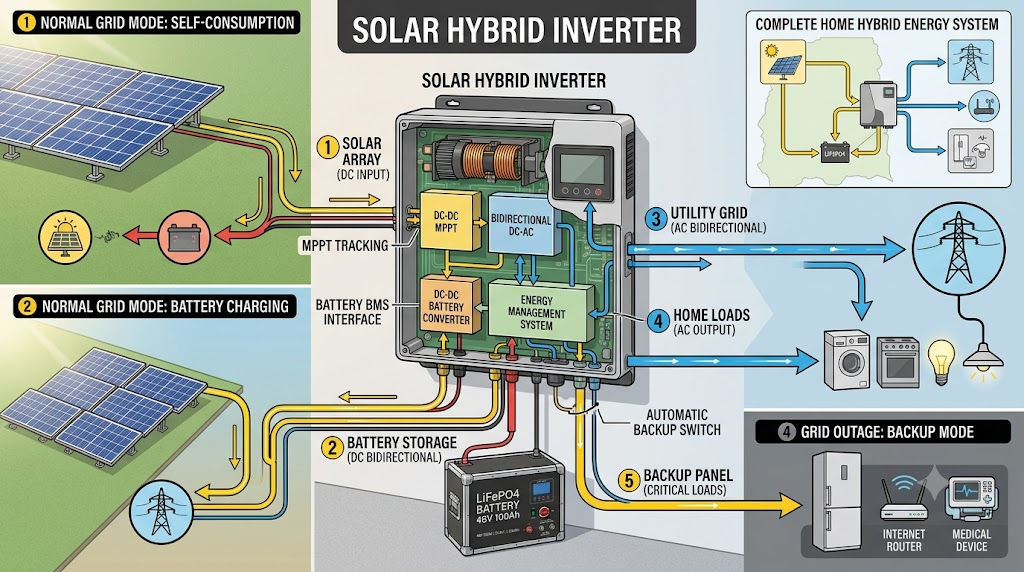
DC Coupling: Solar panels feed direct current (DC) directly into the battery through a charge controller. This method is highly efficient, making it the ideal choice for new solar installations and off-grid solar setups.
AC Coupling: The battery connects to the alternating current (AC) side of the home. While slightly less efficient due to multiple power conversions, AC coupling is perfect for retrofitting existing grid-tied solar storage arrays.
In our field deployments, retrofitting older off-grid solar arrays with custom high-capacity LiFePO4 battery packs requires special consideration. These legacy setups often experience extreme temperature variations that can degrade standard cells.
To resolve this, our customized packs integrate heating elements and robust thermal insulation. This ensures seamless solar inverter compatibility with leading hybrid inverter brands like Victron, Growatt, and Deye.
DIY Battery Bank vs. Turnkey ESS: A Comprehensive Decision Matrix
Many technical homeowners debate whether to assemble a custom battery bank using individual prismatic cells or buy a fully integrated, pre-certified system.
While a DIY project offers lower initial material costs, it introduces significant battery installation safety risks. Managing individual cell balancing, wiring, and securing compatible enclosures requires advanced electrical engineering expertise.
Conversely, a professional turnkey residential energy storage systems provides immediate plug-and-play functionality, comprehensive ESS warranty protection, and complete safety certifications.
| Evaluation Factor | DIY Battery Bank (Prismatic Cells) | Turnkey Energy Storage System (ESS) |
|---|---|---|
| Upfront Cost | Low (Raw material cost only) | Moderate to High (Includes engineering) |
| Installation Safety | High Risk (Manual wiring, no enclosure) | Certified Safe (Pre-wired, internal safety) |
| Warranty Coverage | Limited to individual component warranties | Full 5 to 10 Year System Warranty |
| Inverter Integration | Requires manual programming and testing | Automatic communication protocols |
Meet Our Battery Engineering Experts
At JHY Battery (Juheyuan Science & Technology Co., Ltd.), our engineering team brings over a decade of dedicated research and manufacturing expertise to the global market.
We operate state-of-the-art facilities specializing in advanced lithium chemistry systems. Our production lines maintain strict ISO9001 quality management standards to ensure every battery pack meets international specifications.
Our goal is to deliver safe, highly customized power solutions that allow B2B clients and homeowners worldwide to build reliable, independent power systems without compromise.
All JHY Battery systems hold comprehensive certifications, including CE, UN38.3, MSDS, and UL. This ensures complete compliance with local building codes and grid interconnection requirements worldwide.
Frequently Asked Questions About Home LiFePO4 Batteries
How long do LiFePO4 batteries last in residential settings?
Most home LiFePO4 batteries last between 10 and 15 years. They are typically rated for 6,000 complete charge/discharge cycles at 80% Depth of Discharge before their storage capacity drops to 80% of its original rating.
Can these batteries be installed outdoors in cold climates?
LiFePO4 chemistry can discharge in temperatures down to -20°C (-4°F), but charging them below freezing (0°C or 32°F) can cause permanent damage to the cells. If installed outdoors in cold climates, the battery enclosure must include integrated heating pads or thermal insulation.
What is the benefit of a custom battery pack over an off-the-shelf system?
A custom battery pack allows you to tailor the voltage, capacity, and physical dimensions to fit unique installation spaces. Additionally, custom solutions let you select specific BMS communication protocols that integrate seamlessly with your existing solar inverters.
Ready to Secure Your Energy Independence?
Whether you need a custom-built battery pack or a complete turnkey residential system, our engineering team is here to help.
Step 1: Use our system sizing guidelines to calculate your backup requirements.
Step 2: Consult local incentives to maximize your solar storage ROI.
Step 3: Contact JHY Battery today for a technical consultation and custom quote.