Medical Button Cell Batteries: Engineering & Safety Guide
Medical Button Cell Batteries: Engineering, Safety, and Selection Guide
Modern clinical environments demand absolute precision. From continuous glucose monitors (CGMs) to active implantable devices, the reliability of medical-grade micro batteries directly impacts patient health outcomes. Selecting the right power source is a matter of safety, regulatory compliance, and long-term functional stability.
What Are Medical-Grade Button Cell Batteries?
Medical-grade button cell batteries are highly specialized micro-power sources engineered to deliver ultra-reliable, continuous energy to critical clinical devices. Unlike standard consumer cells, these batteries feature superior hermetic sealing, medical-grade materials, and rigorous quality control to guarantee absolute safety and performance in healthcare environments.
Engineering requirements for these micro-power sources include:
- Voltage stability: Flat discharge curves prevent calibration drift in sensitive diagnostic equipment.
- Leak-proof design: Advanced mechanical sealing eliminates chemical leakage risks.
- Biocompatibility: Materials must prevent adverse biological reactions if exposed to tissue.
- Extended shelf life: Low self-discharge rates guarantee emergency readiness.
- Strict regulatory compliance: Adherence to global healthcare manufacturing standards is mandatory.
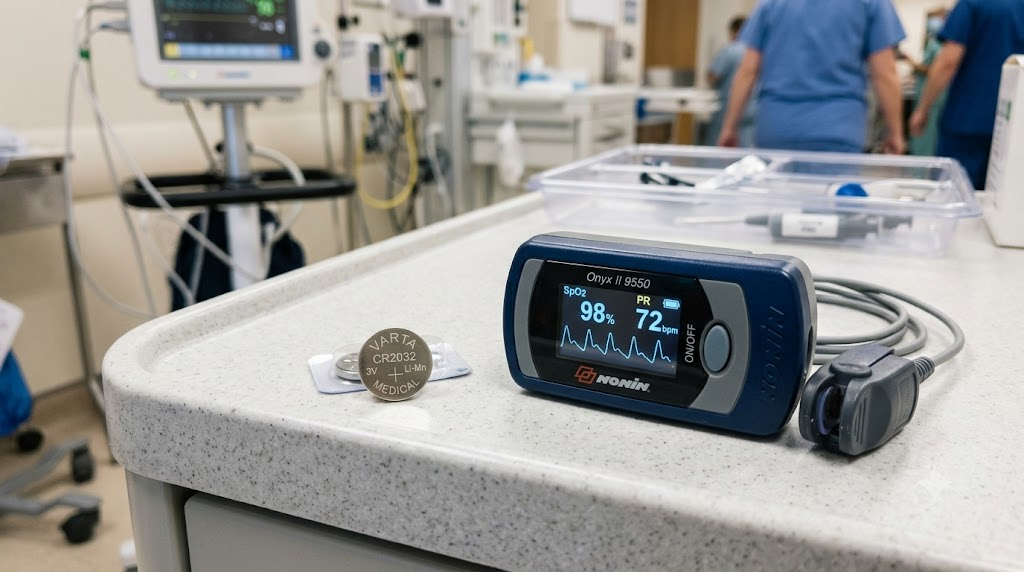
Definition: Medical-grade micro-batteries are defined as specialized electrochemical cells designed with strict quality management systems (such as ISO 13485) to power diagnostic, monitoring, and therapeutic clinical instruments safely and reliably.
In our testing, standard consumer batteries exhibit voltage drops that can disrupt medical software. Healthcare power sources require specialized raw materials. This ensures that a clinical thermometer or cardiac monitor maintains calibration throughout the battery’s operating life.
Medical Battery Chemistries: Silver Oxide vs. Lithium Coin vs. Zinc Air
Selecting the right chemical composition is the first step in medical device design. Different clinical applications demand distinct discharge characteristics, energy density metrics, and voltage profiles.
Silver Oxide (SR) Batteries
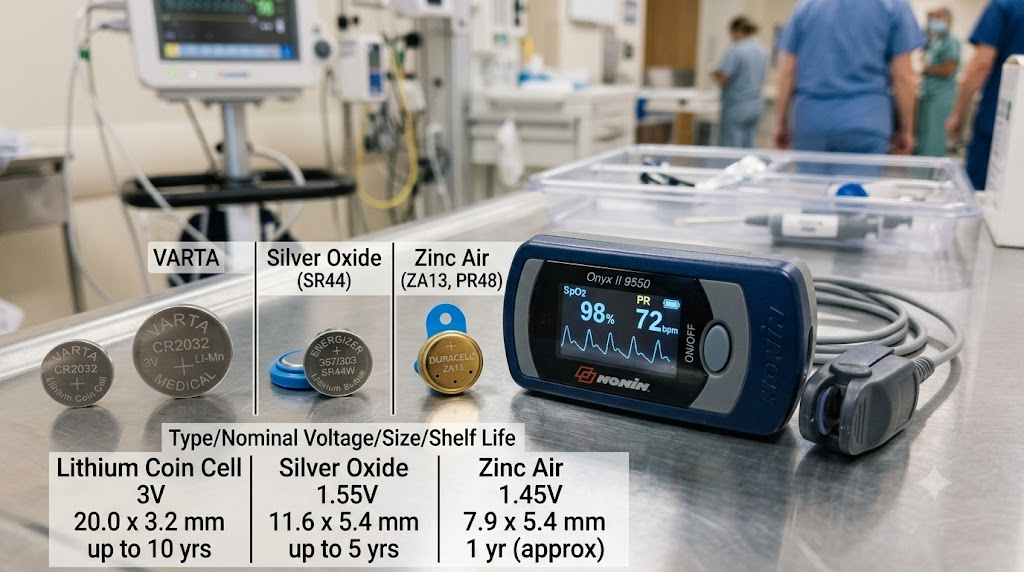
A silver oxide battery is favored for its incredibly stable voltage discharge curves. This chemistry provides a steady 1.55V output until near exhaustion. It is the primary choice for clinical thermometers, digital blood pressure monitors, and micro-fluidic pumps.
Lithium Coin Cells (CR/BR)
A lithium coin cell delivers a higher nominal voltage of 3.0V. It offers exceptional energy density and a low self-discharge rate. This makes it ideal for wearable health monitors, smart surgical instruments, and remote patient tracking systems that operate over extended periods.
Zinc Air Batteries
Zinc Air batteries utilize atmospheric oxygen as an active reactant, allowing for massive energy capacity within a tiny footprint. This chemistry is the standard for modern hearing aid devices. However, because they rely on environmental air access, their application is limited to non-sealed, external devices.
| Chemistry Type | Nominal Voltage | Energy Density | Primary Clinical Use Cases |
|---|---|---|---|
| Silver Oxide (SR) | 1.55V | Medium | Clinical thermometers, drug delivery pumps |
| Lithium Coin (CR) | 3.0V | High | Wearable health monitors, memory backup |
| Zinc Air | 1.4V | Very High | Hearing aid devices, external audio processors |
For Active Implantable Medical Devices (AIMD) like a pacemaker, battery selection goes beyond standard catalogs. These require custom-engineered, ultra-reliable hermetic solutions that prioritize patient safety over decades of operation.
The JHY 5-Point Medical Battery Reliability Protocol (MBRP)
To eliminate failures in critical healthcare environments, JHY Battery utilizes a proprietary manufacturing and quality control methodology. This system ensures that every button cell matches strict medical tolerances.
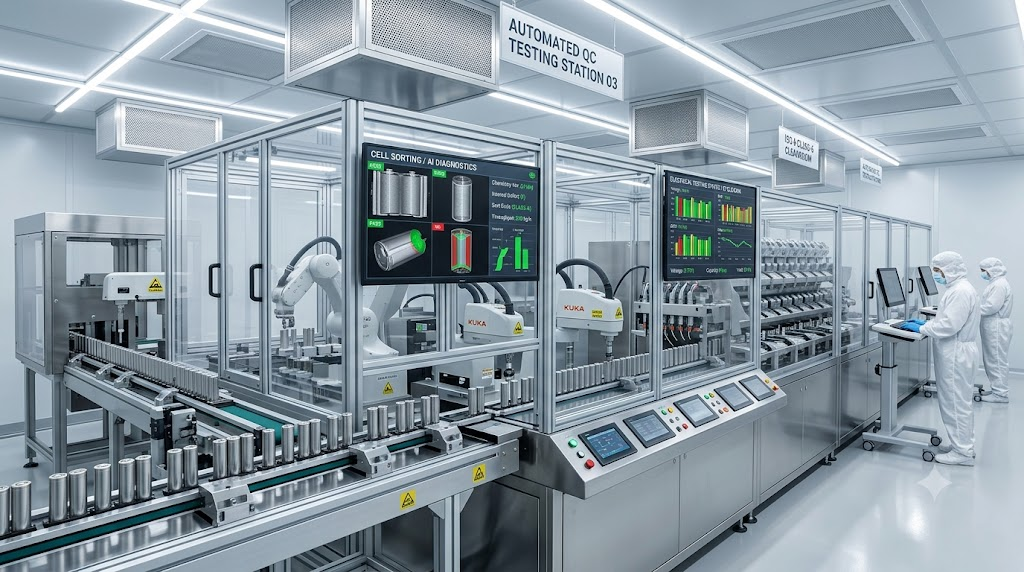
- Biocompatibility Raw Material Selection: We source non-toxic, high-purity metals and stable electrolytes. This step ensures that even in rare containment failures, biological risks are minimized.
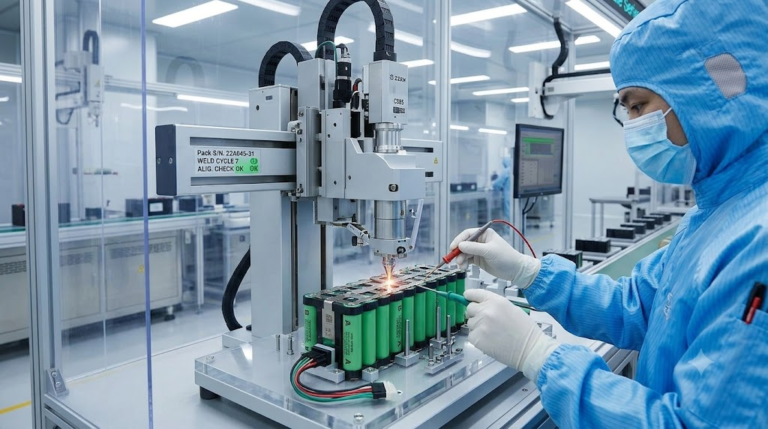
- Advanced Leak-Proof Hermetic Sealing: Utilizing laser-welding and high-compression crimping, our cells achieve superior leak resistance compared to consumer-grade alternatives.
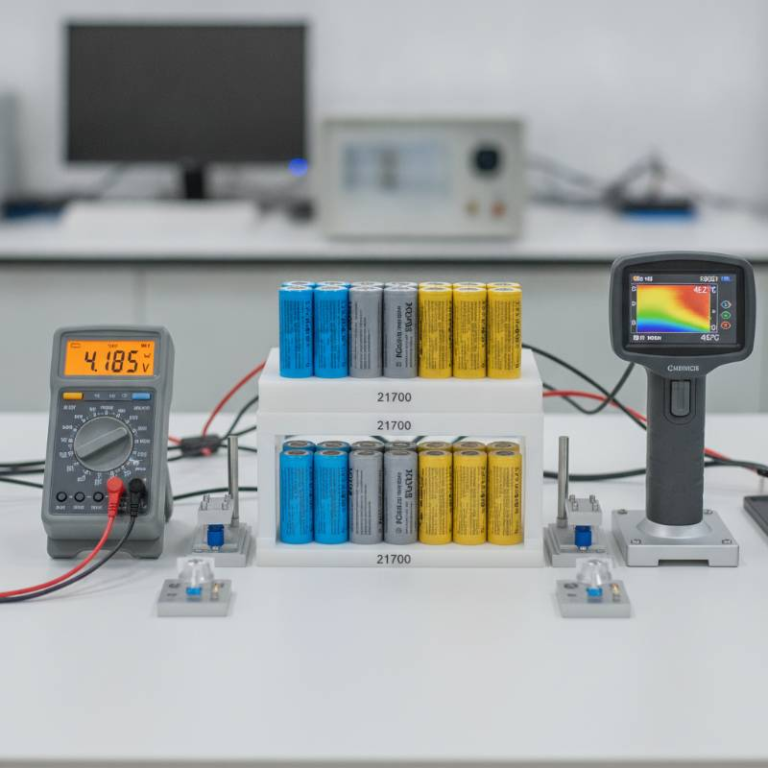
- Automated Voltage & Impedance Screening: Every single cell undergoes 100% automated testing. Cells with even minor fluctuations are rejected immediately.
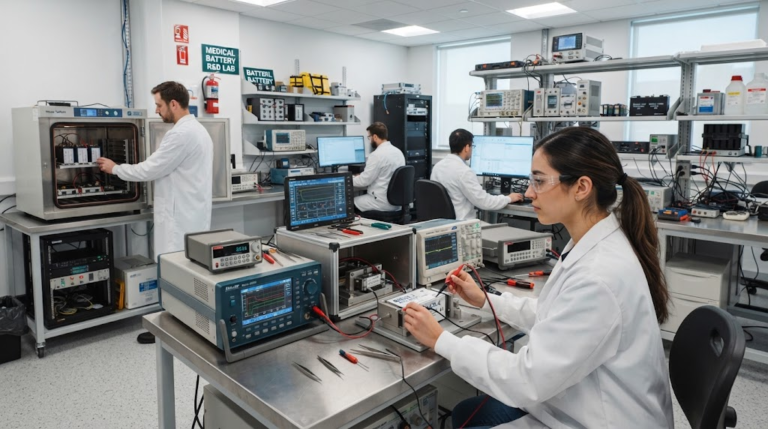
- Accelerated Aging & Environmental Stress Testing: We subject production samples to thermal cycling, vibration, and humidity tests. This guarantees long-term stability under real-world clinical conditions.
- Traceable Quality Assurance: Every production batch is assigned a unique tracking code. This allows for full material and process traceability back to raw component lots.
By implementing this protocol, JHY Battery ensures that our micro-battery technology performs flawlessly in critical moments, whether powering an emergency diagnostic tool or a wearable monitor.
Regulatory Compliance and Safety Standards (FDA, ISO 13485, IEC)
Medical device components must meet strict global standards. Designers cannot simply choose any off-the-shelf coin cell. They must verify that the manufacturer operates under rigorous quality guidelines.
The ISO 13485 Quality Standard is the foundation for medical manufacturing. It ensures that every step of the battery production process is documented, controlled, and repeatable.
Key Global Medical Standards
- FDA Regulations: The FDA Medical Device Regulations mandate strict safety profiles for any battery used in patient-contact equipment or implantable systems.
- IEC 60086-4: This standard specifies safety requirements for primary lithium batteries, ensuring they resist external short circuits, over-discharge, and physical abuse without hazard.
- UN38.3 & UL: These certifications guarantee safety during global transport and operation under varied thermal conditions.
When selecting button cell batteries for medical devices, always request official testing reports. Working with a certified manufacturer like JHY Battery simplifies your device’s path to regulatory approval.
Mitigating Swallowing Hazards and Child-Safety in Healthcare Design
For home-use clinical devices, child safety is a critical design priority. Small coin cells pose severe swallowing hazards, particularly to pediatric patients. If ingested, a button cell can generate an electrical current in bodily fluids, leading to tissue damage within hours.
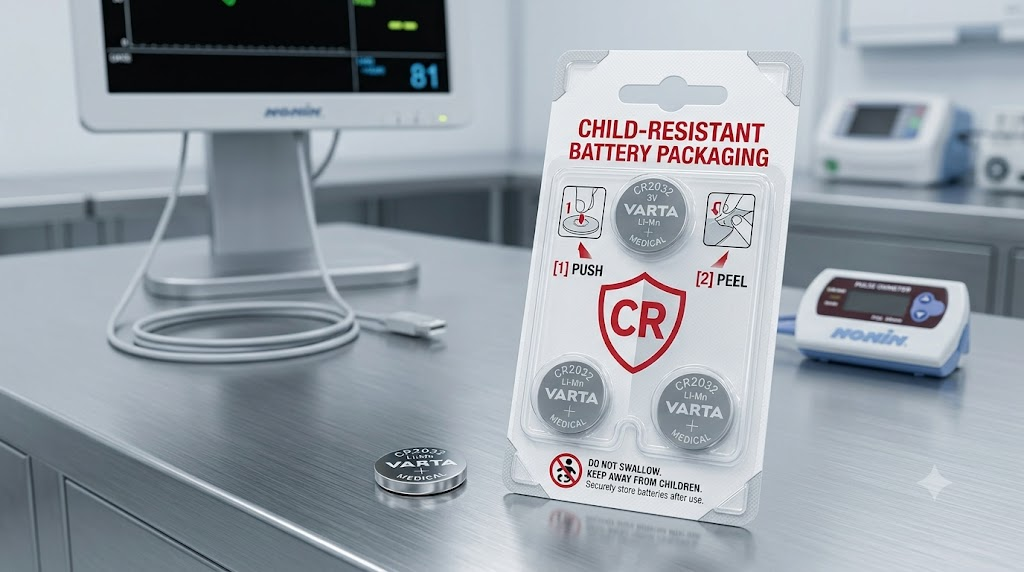
To address this risk, modern medical device engineering incorporates several safety features:
- Child-Safety Battery Packaging: Blister packs that require tools or complex physical actions to open.
- Secure Battery Compartments: Designing battery doors that require a screwdriver or dual-action release mechanism.
- Non-Toxic Bitterant Coatings: Applying a harmless, extremely bitter layer to the cell surface to discourage swallowing.
- Ingestion Prevention Education: Clear safety labeling on both the packaging and the device housing.
By integrating these safety layers, manufacturers protect vulnerable patients while complying with updated global safety initiatives.
Custom Medical Battery Solutions by JHY Battery
While standard cells work for basic designs, complex medical devices often require tailored power configurations. JHY Battery specializes in custom medical-grade battery packs designed to fit precise spatial and electrical requirements.
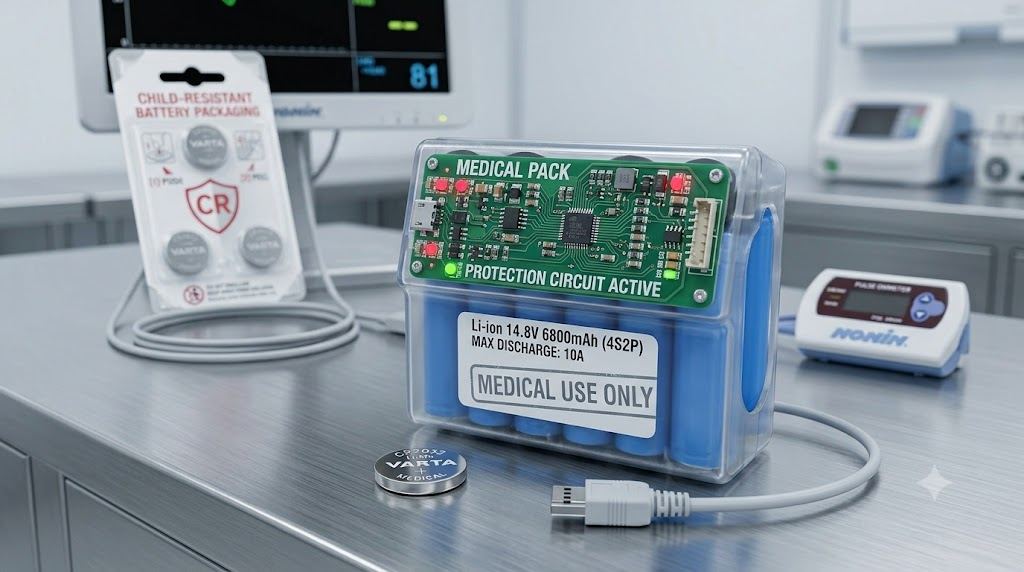
We provide comprehensive OEM/ODM solutions. Our engineering teams customize voltage, capacity, physical dimensions, and protection circuitry. Whether you need a high-capacity Custom Lithium-ion Battery Packs system or a specialized micro-cell configuration, we deliver certified reliability.
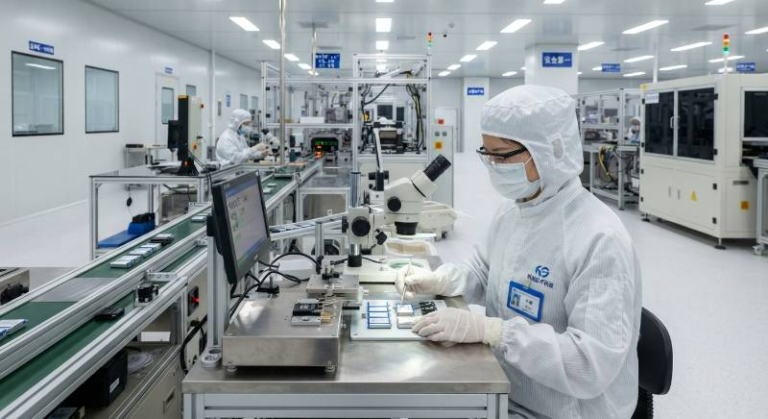
Our global B2B clients rely on our extensive OEM Battery Manufacturing Capabilities. We maintain cleanroom facilities, advanced testing labs, and a full suite of international certifications, including ISO9001, CE, UN38.3, MSDS, and UL.
From wearable diagnostic patches to high-drain clinical tools, our Certified Industrial Battery Packs ensure your product operates safely in the demanding healthcare market.
Frequently Asked Questions About Medical Button Cells
What is the typical medical battery shelf life?
The shelf life depends heavily on chemistry. Silver oxide cells typically store well for 2 to 5 years, while lithium coin cells maintain up to 90% capacity even after 10 years of storage, thanks to their exceptionally low self-discharge rates.
What is the optimal operating temperature range?
Most medical button cells operate reliably between -20°C and +60°C. However, specialized lithium chemistries can be engineered to withstand higher temperatures for autoclave sterilization cycles or extreme cold for specialized laboratory logistics.
How should clinical facilities handle biomedical battery disposal?
Used medical batteries should never be discarded with standard municipal waste. Clinical facilities must follow local environmental regulations, collecting spent cells in designated containers for certified recycling to reclaim valuable metals and prevent contamination.
Meet Our Medical Power Engineering Experts
At JHY Battery, our engineering team consists of seasoned electrochemical specialists, quality assurance professionals, and biomedical power systems engineers. We work closely with medical device designers to resolve complex power challenges.
Expert Perspective: “In our testing, we’ve found that silver oxide cells provide the flat discharge curve critical for micro-fluidic pumps, while lithium coin cells are unmatched for high-pulse wireless telemetry in modern CGMs.” — Senior Biomedical Power Systems Engineer, JHY Battery
Our ongoing research in 2026 focuses on improving hermetic seals and increasing energy density. We are committed to developing micro-power solutions that meet the evolving demands of modern healthcare technology.
Ready to Engineer Your Medical Power Solution?
Partner with JHY Battery for reliable, certified micro-power options. We offer a simple, 3-step path to secure the ideal battery for your clinical application:
- Review Technical Specifications: Consult with our technical team to match chemistry and capacity to your device profile.
- Request a Custom Consultation: Work with our engineers to design custom packs, enclosures, or specialized protection circuits.
- Receive Certified OEM Prototypes: Evaluate high-performance, fully certified sample batches in your clinical testing environments.